Roasted Tomatoes Change Everything They Touch
What actually happens to a tomato in a hot oven? These five Italian recipes, from a five-ingredient pesto to a Caprese turned soup,…
Pizza is worth the trip to Naples on its own. These six dishes are why you should stay longer — and eat more.
Naples invented pizza, and Neapolitans have never forgotten it. The cornicione, the San Marzano tomatoes, the fior di latte, the ninety seconds in a wood-fired oven at 900°F — these are not details but convictions, and anyone who has eaten pizza in Naples and then eaten it elsewhere understands immediately what was lost in translation. Pizza is worth the trip to Naples on its own. But it is not the whole story.
The city has a food culture that runs deeper and stranger than any single dish can suggest — slow-cooked ragù that perfumes the whole building on a Sunday morning, a pasta dish named after Genoa that has nothing to do with Genoa, a rice timbale that arrived from France and became one of the most Neapolitan things imaginable. And then the pastry: sfogliatelle and babà, which are in a category of their own.
These six dishes are where the rest of Naples lives. Before you go, make note of them. While you are there, find them. After you leave, you will spend some time trying to recreate them.
The Neapolitan ragù is not a pasta sauce in the conventional sense. It is a project. Pork ribs, beef brisket, Neapolitan sausage, pork rind, and braciole — beef rolls filled with pecorino, raisins, pine nuts, garlic, and parsley — are all browned separately, then brought together in a pot with onion, tomato purée, red wine, and water. The whole thing simmers on the lowest possible heat for four hours, occasionally stirred, never rushed. The result is a sauce that is dark, dense, and deeply savory — served over ziti or paccheri, with the meat eaten separately as a second course. It is the Sunday lunch of Naples, and it smells like the city on a weekend morning.
Discover Ragù alla Napoletana
Pasta and potatoes sounds like something humble, and it is — this is peasant food, a dish born from the necessity of making something filling from almost nothing. But the Neapolitan version has a detail that elevates it completely: a piece of Parmigiano rind, added to the pot and left to soften slowly in the cooking liquid, releasing all the concentrated flavor of the cheese without dissolving. The pasta cooks directly in the water with the potatoes, absorbing the starch and lard and tomato paste until the whole thing becomes dense and creamy. Eat it immediately, with a grind of black pepper.
Discover Pasta e Patate alla Napoletana
Despite the name, pasta alla genovese has nothing to do with Genoa — a fact that every Neapolitan will tell you before you even ask. The leading theory traces it to the 15th century, when Genoese merchants at the port of Naples are said to have introduced a meat-based sauce that the city eventually made entirely its own. What remains is one of the most counterintuitive dishes in Italian cooking: more onions than beef, by a significant margin, cooked together for four hours until the onions dissolve completely into a sweet, amber-colored sauce of extraordinary depth. The beef comes out tender enough to shred with a fork and is traditionally served as a second course. The pasta — ziti, broken by hand — comes first.
Discover Pasta alla Genovese
The sartù is what happens when French technique meets Neapolitan generosity and refuses to back down. The dish arrived in Naples through the French chefs — the monsù — who worked in aristocratic kitchens in the 18th century. What they introduced as a rice timbale, Neapolitans transformed into something almost operatic: rice cooked in Neapolitan ragù, packed into a mold lined with breadcrumbs, filled with tiny meatballs, sausage, hard-boiled eggs, peas, and mozzarella, sealed, and baked until the outside is golden and the inside is a layered cross-section of the Neapolitan Sunday table. Sliced at the table, it is one of the most dramatic things you can put in front of a guest.
Discover Sartù di Riso
There are two kinds of sfogliatelle: the riccia, made with razor-thin layers of pastry that shatter into flakes at the first bite, and the frolla, made with shortcrust pastry, softer and more forgiving. Both contain the same filling — semolina, ricotta di bufala, candied orange peel, cinnamon, and vanilla. Both are best eaten warm, standing up, outside a pasticceria, with an espresso. The frolla version in this recipe comes from Alfonso Pepe, one of the most respected pastry chefs in Campania, whose version uses citrus zest from the territory directly in the pastry dough — a detail that makes the difference between good and unforgettable.
Discover Sfogliatelle Frolle
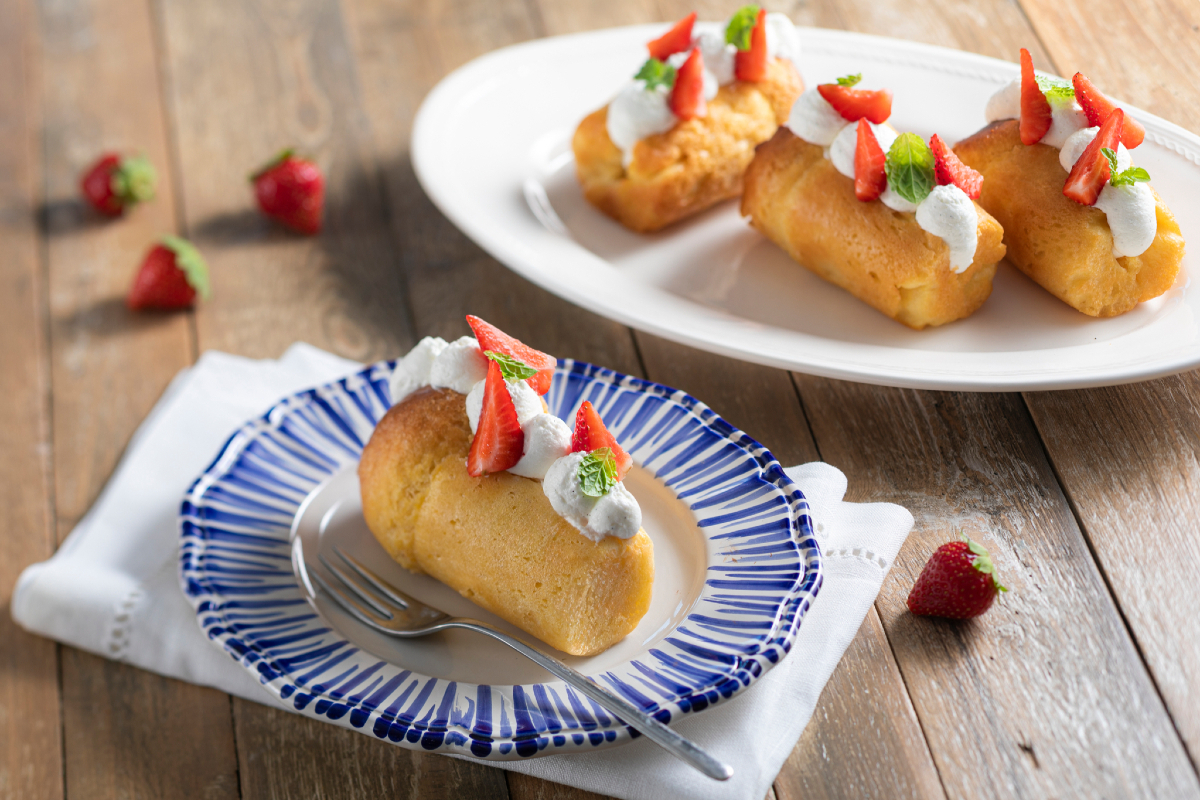
The babà arrived in Naples from Poland via the French court — a dry, yeast-leavened cake that Neapolitan bakers transformed by soaking it in a rum syrup until it became soft, yielding, and intensely perfumed. The version in this recipe comes from the Gran Caffé Gambrinus, the historic café in Piazza del Plebiscito that has been open since 1860. Pastry chef Stefano Avellano's recipe is precise about temperatures and timing — the eggs must be cold, the dough must not overheat, the babà must be completely dry before it goes into the syrup. The reward is a dessert that is impossible to reproduce exactly outside Naples, and worth trying to get close to everywhere else.
Discover Rum Babà
The pizza will be there when you arrive, and it will be as good as you have heard. But leave room for the rest. The ragù takes four hours to cook and tastes like it. The genovese asks for patience and rewards it in direct proportion. The sartù requires an occasion worthy of its ambition. And the sfogliatelle — eat at least two. You will not regret it.
Related: The Roman Food Nobody Talks About / Planning a Trip to Italy? Eat Where the Locals Do / Italian Pasta Hacks That Actually Work