Roasted Tomatoes Change Everything They Touch
What actually happens to a tomato in a hot oven? These five Italian recipes, from a five-ingredient pesto to a Caprese turned soup,…
Everyone knows carbonara. These are the six Roman dishes worth knowing next — from fried rice balls to semolina gnocchi that have nothing to do with potato.
Everyone arrives in Rome with the same list. Carbonara at a trattoria at Campo de' Fiori, cacio e pepe somewhere in Trastevere, amatriciana if there's time. These are not bad instincts — carbonara, cacio e pepe, and amatriciana are Roman classics for a reason, and eating them well, in the right place, is worth every effort. But they are also the beginning of the list, not the end of it. Roman food is broader, stranger, and considerably more interesting than the pasta trilogy suggests. These six dishes are where the rest of the city's cooking lives.
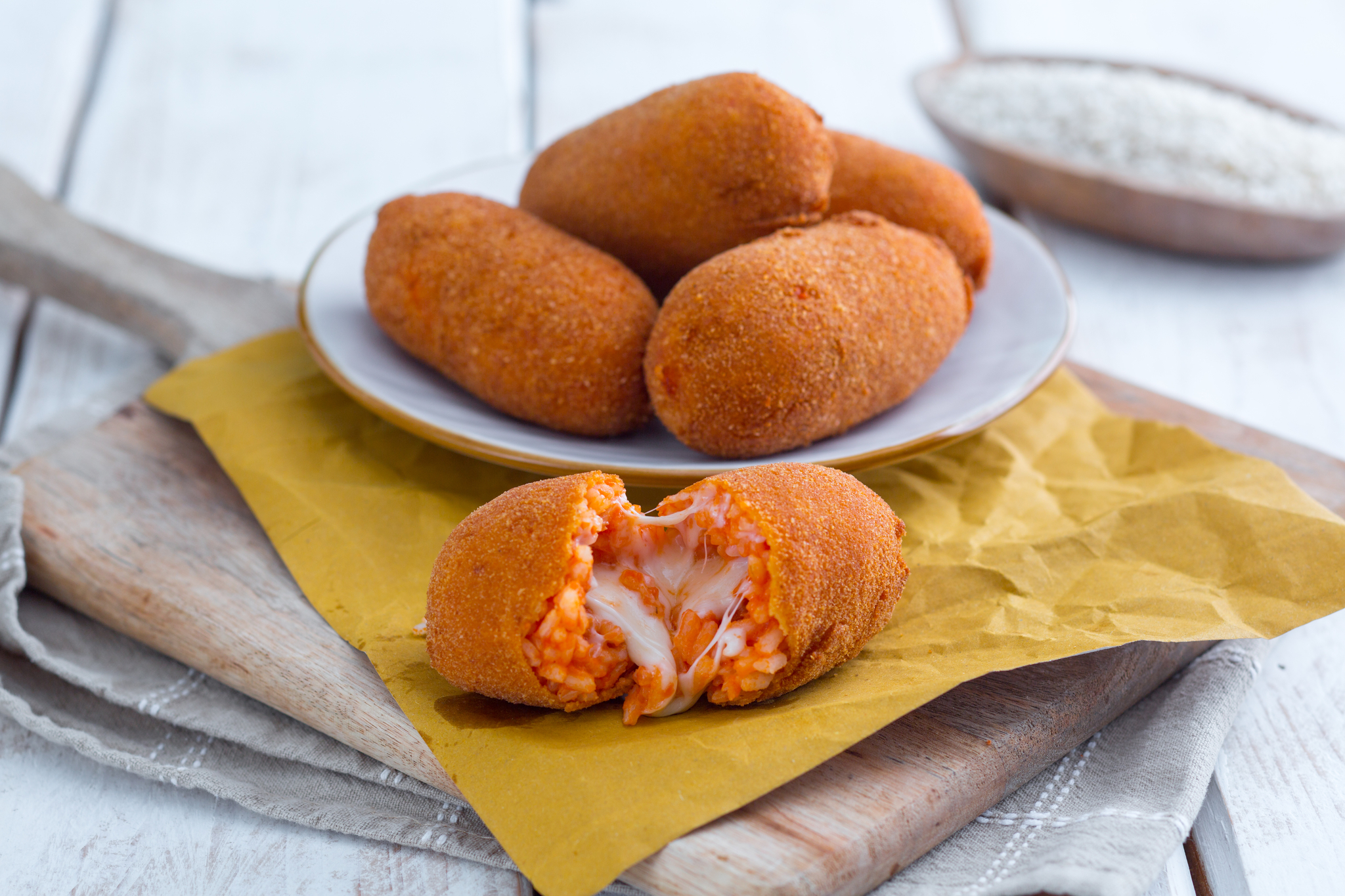
Before you sit down anywhere, eat standing up. The supplì is Rome's street food — a fried rice ball, elongated, filled with mozzarella and tomato-braised rice, breaded twice for a crust that shatters when you bite through it. Romans call it supplì al telefono because the mozzarella stretches into strings when you pull it apart, like an old telephone cord. You find them in pizza al taglio shops, in friggitorie, at market stalls. They cost almost nothing and disappear in two bites. Eat them hot.
Discover Mozzarella and Tomato Supplì
Pizza has its defenders, and they are right. But pinsa is something else — a highly hydrated dough made with a blend of wheat, rice, and soy flour, fermented for at least 34 hours, shaped into an oval, pre-baked, then topped and finished in the oven. The crust is simultaneously crispy and airy in a way that regular pizza rarely achieves. It is a recent invention — the name is ancient, the product is modern — and it has spread from Rome across Italy and beyond. Try it topped simply, the way Romans prefer it: good tomato, good mozzarella, nothing competing.
Discover Roman Pinsa
The name means "jumps into your mouth," which is either Roman confidence or an accurate description, depending on whether you have tried it. Thin veal, a slice of prosciutto crudo, a single sage leaf — skewered together, floured on the bottom, cooked in butter and oil until the prosciutto crisps and the veal stays tender. Deglazed with white wine. Done in twenty minutes. It is the kind of dish that makes elaborate cooking feel unnecessary, and the cooking juices mopped up with bread are not optional.
Discover Saltimbocca alla Romana
If you are expecting something that resembles potato gnocchi, stop. Gnocchi alla romana are rounds of semolina cooked in milk, set, sliced into discs, layered in a baking dish with butter and Pecorino Romano, and gratin-ed until the top is golden and the inside is soft and yielding. They have more in common with polenta than with anything else called gnocchi. They are a Thursday dish in Rome — the city has an unofficial calendar for these things — and they are the kind of thing that is difficult to explain and impossible to forget.
Discover Gnocchi alla Romana
Rome has two ways of cooking artichokes, and they could not be more different. Carciofi alla giudia — the Jewish-style — are fried whole until they open like flowers. Carciofi alla romana are braised: stuffed with garlic and mentuccia (a wild Roman mint smaller and more delicate than the common variety), turned upside down into a pot with olive oil and water, and cooked slowly until the leaves are completely tender. The cooking liquid becomes a fragrant herb oil you will want to pour over everything else on the table. Spring is the season; do not wait for it to pass.
Discover Carciofi alla Romana
This is what Romans actually cook on Sunday when they are not making pasta. A whole free-range chicken, cut into pieces and browned in olive oil with garlic, deglazed with white wine, then braised with ripe tomatoes and thick strips of red and yellow pepper until the meat falls from the bone and the sauce is deep and sweet and slightly sticky. It is rustic in the best possible way — the kind of dish that gets better the longer it sits on the stove, and the kind that tastes better the next day. Order it when you see it on a Roman menu. Make it when you get home.
Discover Roman-Style Chicken with Peppers
Rome rewards the curious and punishes the impatient. The best meal you will have there will probably not be at a place with a menu in five languages or a queue of tourists at the door. It will be somewhere unremarkable from the outside, full of locals at lunch, with a handwritten menu and a wine list that covers half a page. These six dishes will help you recognize the right room when you walk into it.
Related: Planning a Trip to Italy? Eat Where the Locals Do / Italian Pasta Hacks That Actually Work / How Italians picnic