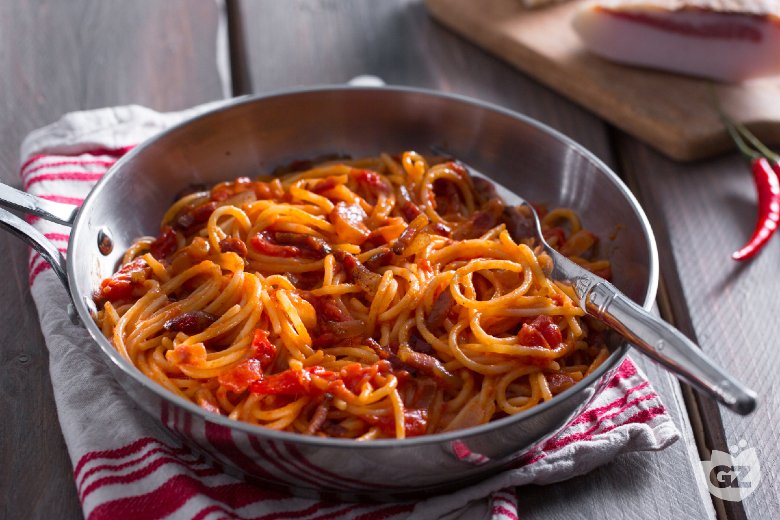
Spaghetti Amatriciana (Spaghetti with guanciale and tomato)

/5

Listen to the recipe

PRESENTATION

Spaghetti Amatriciana (Spaghetti with guanciale and tomato)
4] @w-sm/main:[--thread-content-margin:--spacing6] @w-lg/main:[--thread-content-margin:--spacing16] px-(--thread-content-margin)">

Authentic Amatriciana: a must-try for anyone who loves bold, comforting Italian flavors.

Straight from the heart of central Italy, Spaghetti all’Amatriciana is one of the most iconic pasta dishes you’ll ever taste. Made with just a handful of simple ingredients—pasta, crispy cured pork, tomatoes, and sharp Pecorino Romano cheese—it’s the perfect example of how Italian cooking turns simplicity into something unforgettable.

This classic recipe has roots in the small town of Amatrice and dates back centuries. Over time, it evolved into the rich tomato-based sauce we know and love today, becoming a staple of Roman cuisine and a favorite on menus around the world.

Like many traditional Italian dishes, there are plenty of variations, but the heart of Amatriciana remains the same: high-quality ingredients, bold flavor, and pure comfort in every bite. While spaghetti is the classic choice, many people also love it with bucatini for an extra satisfying twist.

Ready to bring a true Italian classic to your table? Let’s make Amatriciana the authentic way.


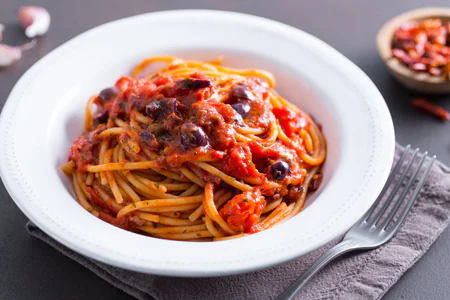
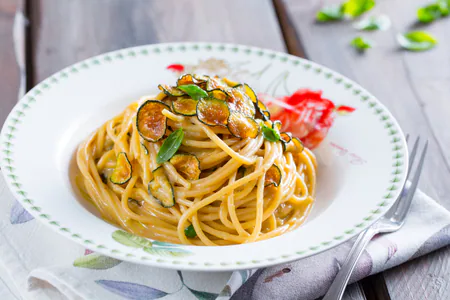
You might also like:

INGREDIENTS
Spaghetti 0.7 lb (320 g)
Peeled tomatoes 0.9 lb (400 g)
Guanciale 5 oz (150 g)
Pecorino Romano PDO cheese ¾ cup (75 g) - for grating
Fine salt to taste
Extra virgin olive oil to taste
Fresh chili pepper 1
White wine ¼ cup (50 g)
Preparation

How to prepare Spaghetti Amatriciana (Spaghetti with guanciale and tomato)

To prepare spaghetti Amatriciana (spaghetti with tomato and bacon), first boil the water to cook the pasta in, then add salt. Prepare the sauce: take the guanciale, remove the pork rind 1 and cut it into slices about 1/4-inch (1 cm) thick 2 then into strips about 1/8-inch (1/2 cm) wide 3.
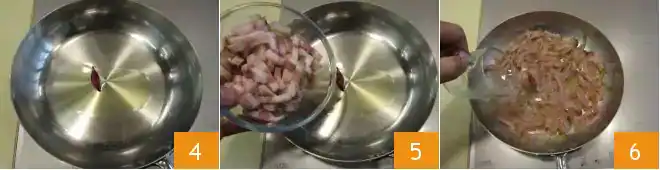
 

Heat a drizzle of oil in a pan, preferably a stainless steel skillet, add the whole chili pepper 4 and the guanciale cut into strips 5; brown over low heat for 7-8 minutes until the fat has melted and the meat is crunchy; stir often to prevent it from burning. Once the fat has melted, pour in the white wine 6, turn up the heat and let it evaporate.
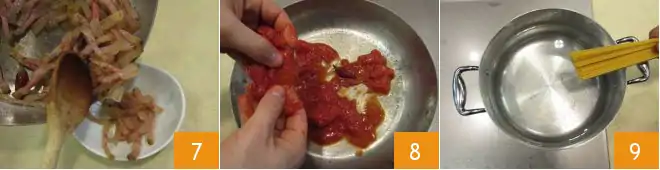
 

Transfer the guanciale to a plate 7 and set aside, pour the peeled tomatoes into the same pan, breaking them up with your hands directly into the cooking liquid 8, continue cooking the sauce for about 10 minutes. As soon as the water boils, pour in the spaghetti 9 and cook them al dente.
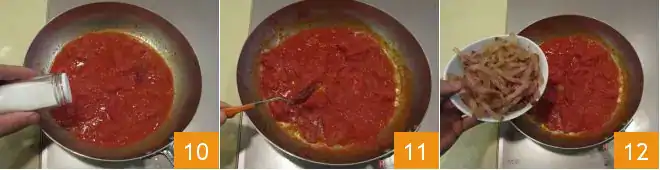
 

Add salt to taste, remove the chili pepper from the sauce 11, add the guanciale strips to the pan 12  and stir to mix.
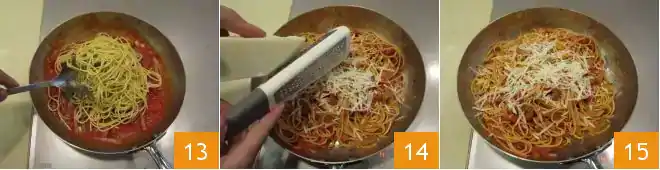
 

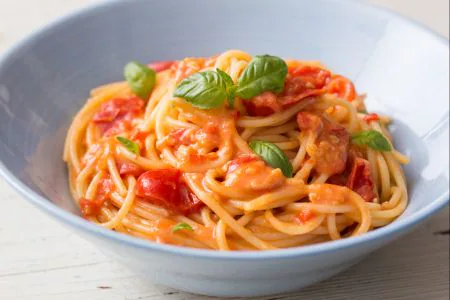
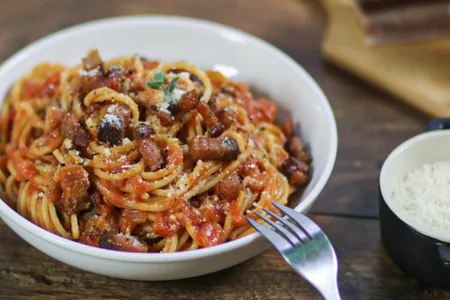
Once the spaghetti are cooked, drain them and add them directly to the sauce in the pan 13. Sauté the pasta very quickly to mix it well with the sauce. If you like the pasta al dente you can turn off the heat otherwise pour a little of the pasta cooking water to continue cooking. To finish, sprinkle with grated pecorino cheese 14: your spaghetti all'Amatriciana is ready to be served 15!
 

Storage

Spaghetti Amatriciana (spaghetti with tomato and bacon) can be stored in an airtight container in the refrigerator for up to one day. Freezing it is not recommended.

Tips

If you are passionate about other real recipes for spaghetti Amatriciana, after tasting our version try the other variations using garlic or onion or sweating with water instead of wine... then choose your favorite! For this version we used spaghetti no. 3, but spaghetti no. 5 and spaghettoni will do just fine too. Try it!

Interesting fact

After the terrible earthquake that destroyed the town of Amatrice, as well as nearby towns and villages, in August 2016, many people around the world showed their support, including restaurants, which contributed to the fundraising for the reconstruction by donating money for each dish of Amatriciana ordered, making this recipe a symbol not only of a country, but of an entire struggling population.

For the translation of some texts, artificial intelligence tools may have been used.