
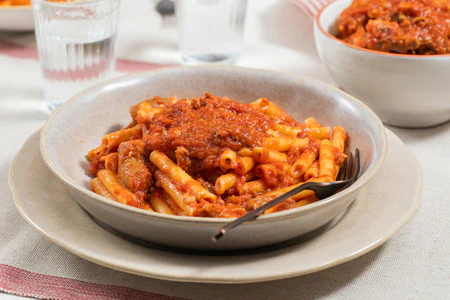
Ziti with Neapolitan Ragù
Ziti with Neapolitan ragù is perfect for Sunday lunch: a first course with a meat-based sauce, ribs, and fresh sausages!
- Easy
- 4 h 45 min
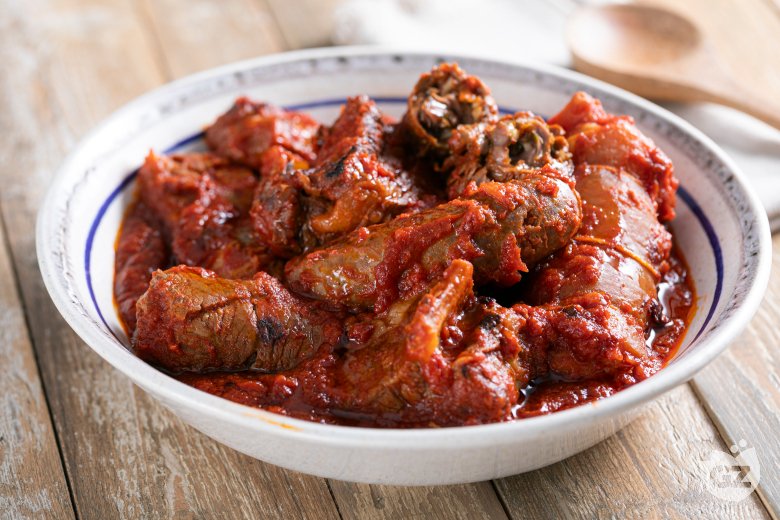
When it comes to Neapolitan ragu, you know, the people of Naples really take pride in this traditional dish. It's not like other ragùs at all. I mean, this version uses big chunks of beef or pork that just sit there, soaking up all the flavor from tomatoes and aromatics. Really, it simmers for hours. This slow process gives the sauce a rich, tender texture and a deep, moist taste. You just cannot rush it, you know? The kitchen fills up with that sweet tomato aroma as the sauce bubbles away. Pretty much, folks in Campania make this traditional Italian meat sauce for special occasions, and it's a classic at Sunday gatherings. Most pour the ragu over paccheri or ziti, letting the thick sauce cling to the pasta. And look, you might also find it as a base in other Neapolitan dishes like sartù di riso or braciole.
Here's the deal: in Naples, this sauce is not just food; it's tradition, passed down through families. While the rest of Italy has their own famous ragùs, like the one from Bologna, the authentic Neapolitan ragu recipe brings its own thing to the table. It's super super unique—chunky meat, a little more tangy from the tomatoes, and a sauce that turns almost velvety after hours on the stove. They sometimes call it Sunday sauce because it shows up at big meals when everyone gets together. Which is great.
What's cool about this slow-cooked ragu is how it can work as a pasta sauce or as the backbone for other Italian meat stew dishes. The flavors settle in, making every bite rich and comforting. You really see how much care and patience go into this dish. And that's what makes Neapolitan cooking feel so homey and real. There's just something about a big pot of homemade ragu bubbling away that brings everyone to the table—no fancy stuff, just really really good food made with time and love. It is a dish that not only fills the stomach but warms the heart, reminding everyone of the beautiful traditions and flavors that make Italian cuisine so special. For real.
You might also like:
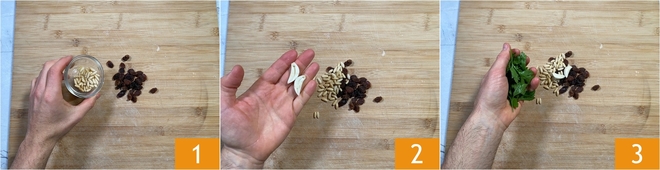
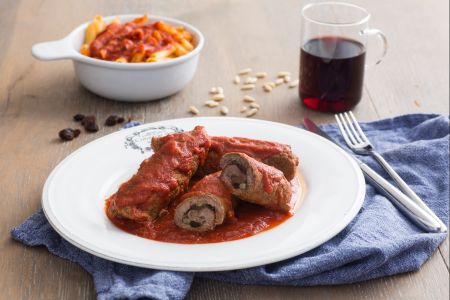
To prepare the Neapolitan ragù, first, prepare the braciole. Place the raisins (without soaking them), pine nuts 1, peeled and degermed garlic 2, and parsley leaves 3 on the cutting board.<\/p>
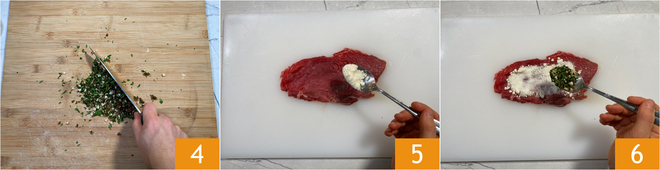
Chop everything quite finely 4. Lay out a slice of top sirloin on a cutting board, if it's too thick, pound it a bit between two sheets of parchment paper. Sprinkle with some grated pecorino Romano cheese 5 and the freshly prepared mixture 6; make sure to leave an edge and not cover the entire slice of meat.<\/p>
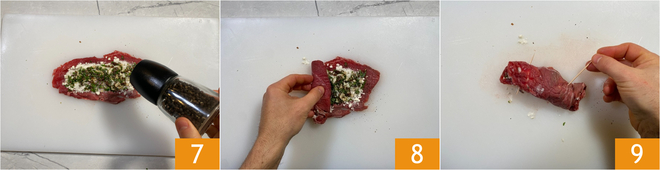
Add a dash of black pepper 7. Roll up from the shorter side like this: tuck the ends inward, then roll the meat 8 and secure the rolls with toothpicks, two on the sides 9 and one in the center 9.<\/p>
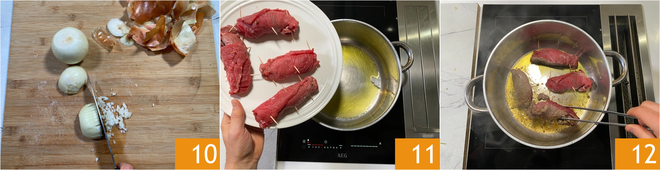
Peel and finely chop the onions 10. Move to the stove. In a large pot, preferably with a double bottom, heat a drizzle of oil and then add the braciole 11, letting them seal over high heat. Turn them gently with tongs 12, browning well on all sides, then set aside.<\/p>
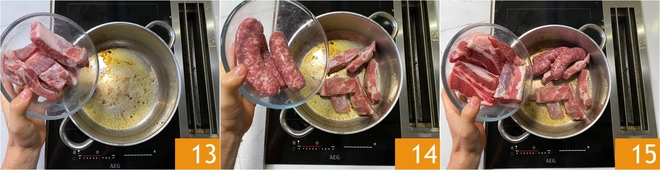
Continue with the other cuts of meat, first adding the pork ribs 13. Then add the sausages 14 and the beef short ribs 15.<\/p>
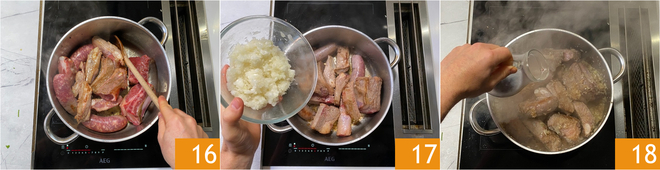
Brown all the pieces of meat well 16. At this point, add the onion 17 and slightly increase the heat. Stew for a couple of minutes and finally deglaze with the red wine 18 to deglaze the bottom.<\/p>
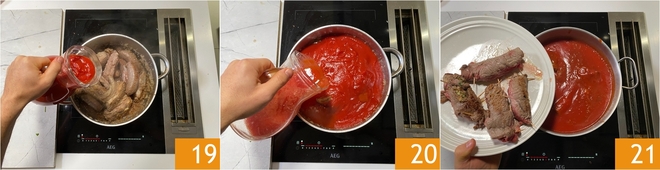
As soon as the alcohol evaporates, add the tomato puree 19, rinse the jug with 2 quarts of water 20, and plunge in the braciole 21.<\/p>
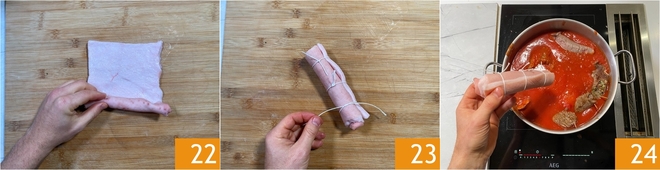
Roll up the pork skin 22 tying it with a string 23. Add it to the sauce 34 and add a good pinch of salt.<\/p>
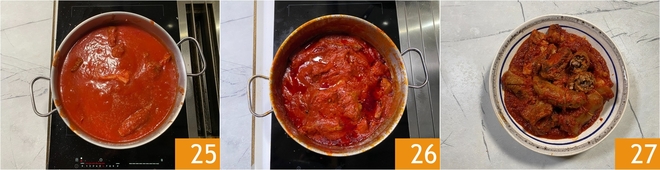
Let it simmer gently 25 over low heat for 4 hours. Occasionally remember to stir, so the onion and sauce don't stick to the bottom 26. Adjust the salt and your ragù is ready to use 27.<\/p>