

Neapolitan-style pasta and potatoes
Neapolitan-style pasta and potatoes is a simple first course with an enveloping creaminess belonging to the Neapolitan cuisine: it will…
- Easy
- 1 h 10 min
- Kcal 844
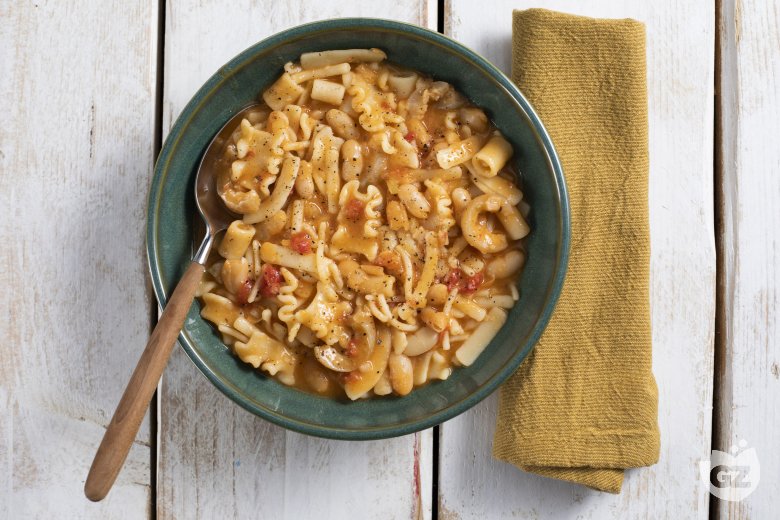
Neapolitan pasta and beans? It’s one of those dishes that just transports you right to Campania. You know, deep in the traditions of old Neapolitan kitchens, this pasta e fagioli recipe really comes alive over a slow wood fire. The beans, they bubble away in a clay pot, soaking up every bit of that smoky flavor. In Naples, they skip soaking the beans. Makes them more tender, but never mushy. The thing that really makes this dish different is the mixed pasta—"ammescata"—that locals toss in. All those different shapes give every spoonful a new surprise, and they hang onto the thick, hearty broth in a way that’s just unbeatable. Trust me, the wait is worth it. Every minute adds to the rich, traditional Italian pasta and beans taste loved for generations.
In Campania, this isn’t just another hearty pasta and bean dish. No way. It’s a true family classic, passed down like a secret between grandparents and grandkids. The slow simmer and rustic method really bring out that earthy, moist feel you want in good authentic Neapolitan pasta e fagioli. Some folks debate over which beans are best or what pasta mix to use, but honestly, it’s the method that matters most. The wood fire, the time, the patience. It’s just real, simple food with deep roots in traditional Neapolitan cuisine. And the sauce? Oh, the golden broth and a bite of creamy beans, super satisfying. It’s the kind of meal people gather around. For sure, a pot in the center of the table, everyone dipping in. Whether you call it Neapolitan pasta and beans or just pasta fazool, this dish tells its story through every bowl, showing off the best parts of classic Italian comfort food in the most satisfying way. It’s not just food. It's a taste of history and a reminder of simpler times.
You might also like:
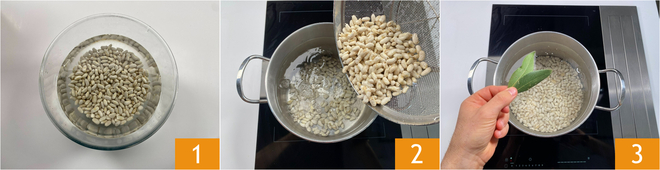
To prepare Neapolitan pasta and beans, first, soak the beans for 8-12 hours 1. Then drain them, rinse them, and place them in a large pot with cold water until covered 2. Add the bay leaf 3 and cook for 2-3 hours. The times are indicative; we recommend not salting the beans and checking the cooking from time to time.
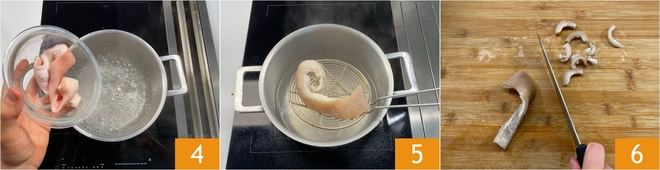
When the beans are almost cooked, take care of the pork rind. Remove any bristles by scraping with the blade of a knife and immerse it in boiling water 4. Cook for 20 minutes until it is soft. Drain it 5 and let it cool slightly, then cut it into ½-inch strips 6.
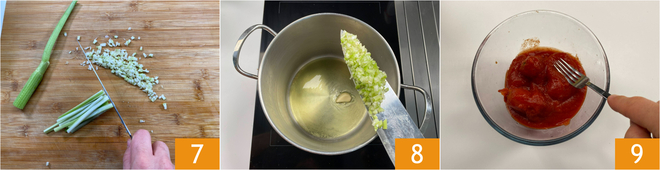
Finely chop the celery 7, then let it flavor in a pot over low heat with a little oil and the garlic cloves 8. Meanwhile, mash the canned tomatoes with a fork 9.
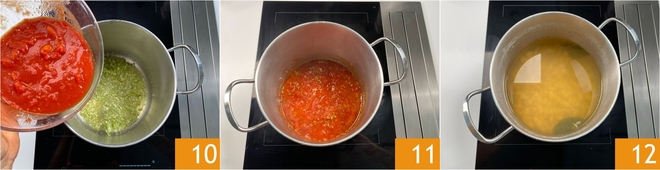
When the base is well browned but not burned, remove the garlic and add the canned tomatoes 10. Let cook for about ten minutes. At this point, the beans will be cooked 12.
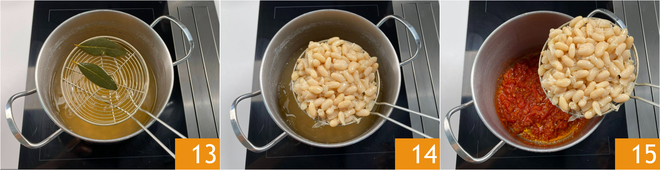
Remove the bay leaf 13, scoop the beans with a slotted spoon 14, and pour them into the sauce 15.
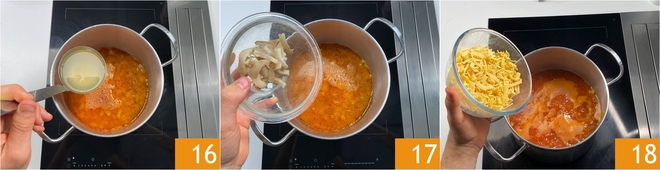
Also add 2-3 ladles of the beans' cooking water 16. As soon as it reaches a boil, add the pork rind 17, stir, and add the pasta 18, then season with salt.
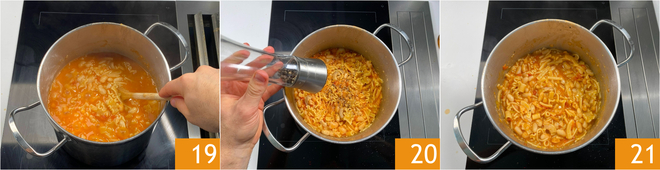
Cook the pasta al dente this way, adding more bean cooking water if necessary and stirring often 19. Turn off the heat, add plenty of black pepper 20, and let it rest for 10 minutes before serving: this way, the starches will make the Neapolitan pasta and beans even creamier 21!