

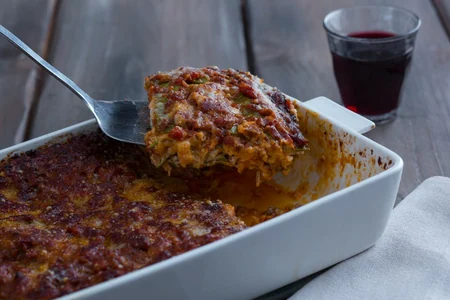
Lasagne alla Bolognese
Fresh spinach pasta, two-hour ragù, and béchamel — not ricotta. The authentic Lasagne alla Bolognese recipe from Emilia-Romagna by GialloZafferano.
- Average
- 5 h
Prefer to listen to an audio summary? We use an advanced AI-generated voice to make our content accessible to everyone.
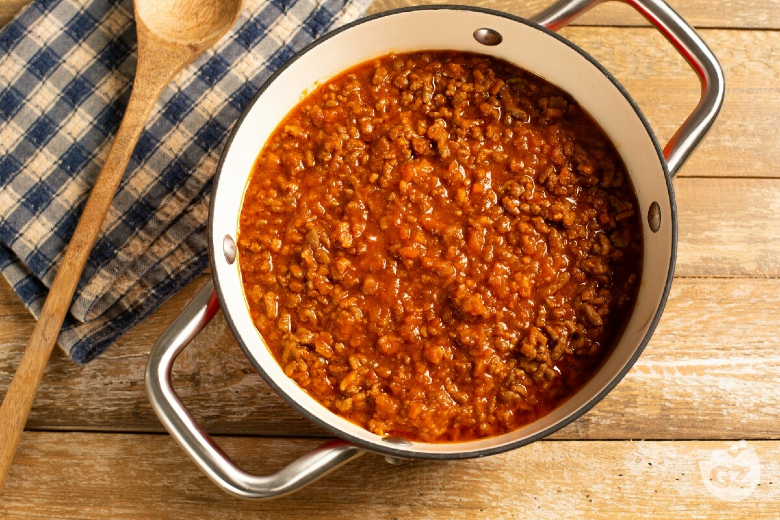
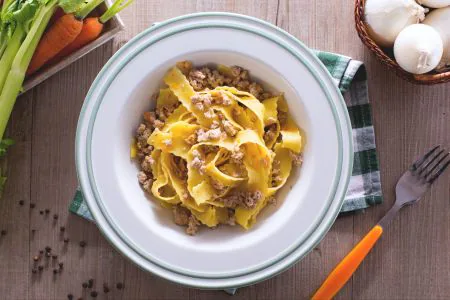
Bolognese is not a tomato sauce with meat in it. The distinction matters: the meat comes first, browned until the moisture has evaporated and the proteins have developed color; the wine goes in next and reduces completely; the tomato — a modest amount, by Italian standards — arrives last, more for acidity than volume. What emerges after two hours of low, patient cooking is something the Italians call a ragù: a meat-based sauce in which the tomato plays a supporting role.
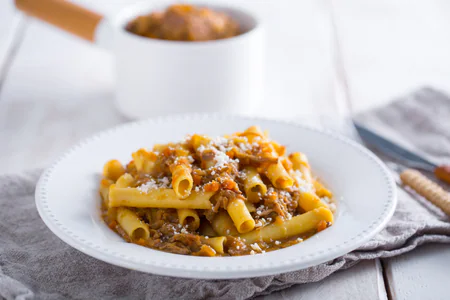
The recipe comes from Bologna, where it has been made the same way for centuries and where the Chamber of Commerce officially registered the ingredients in 1982 to settle, or at least document, the argument. This ragù alla bolognese recipe follows the original Bologna method. Beef is the base; pancetta adds fat and depth; soffritto — onion, celery, carrot — builds the foundation. The sauce is traditionally served with fresh egg tagliatelle, never spaghetti, though it works equally well layered into lasagna or tossed with rigatoni on a weeknight when fresh pasta isn't an option. The two-hour cook is not negotiable. The flavor at ninety minutes and the flavor at two hours are not the same thing.
Once you've made this version, try the variations: a splash of whole milk toward the end rounds out the acidity of the tomato and softens the meat — a step that fell out of fashion but deserves a comeback. A mix of beef and pork, or a fattier cut like skirt steak instead of lean ground beef, moves the sauce in a richer direction. Red wine is traditional; white wine gives a cleaner result. Each choice is a small decision about what kind of Bolognese you want, and all of them are worth making at least once.
You might also like:
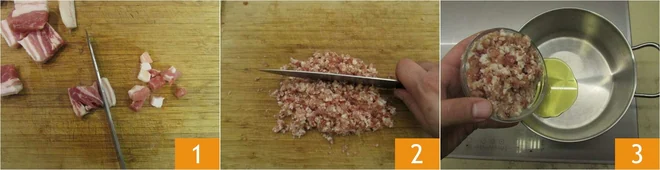
To prepare the Bolognese sauce, first take the pancetta. First cut into slices and then into strips 1, without being too precise. Then with a knife chop it well 2. In a pre-heated saucepan pour a drizzle of oil and add the pancetta 3.
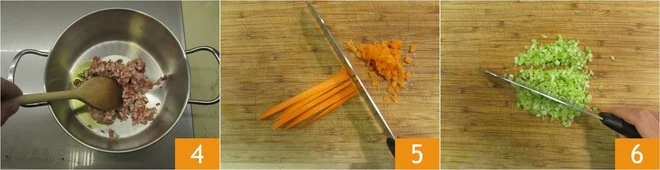
Shell it well 4 and let it brown. In the meantime, take care of the vegetables. Peel the carrot and chop it finely 5. Then clean the celery and chop it too of the same size as your carrots 6.
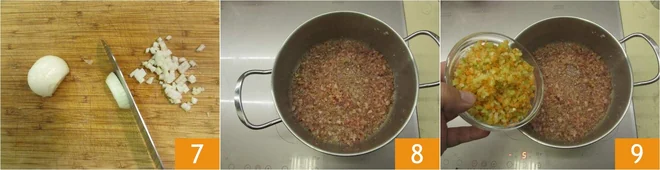
Finally, peel the onion and chop it 7. As soon as the pancetta is well browned 8, add the chopped vegetables 9.
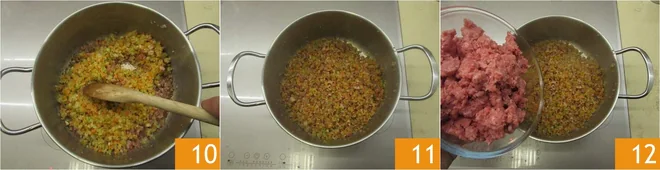
Stir 10 and let simmer for 5-6 minutes 11. Add the ground beef 12,
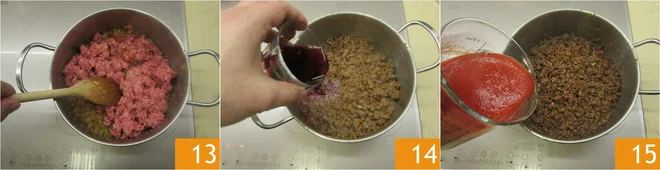
stir 13 and raise the heat. Let it brown without haste, the meat must seal well. Deglaze with red wine 14 and mix again. As soon as the alcohol has evaporated, add the tomato puree 15.
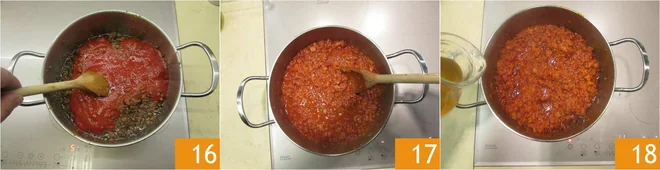
Stir and incorporate it 16 17. Add a couple of ladles of hot vegetable broth 18.
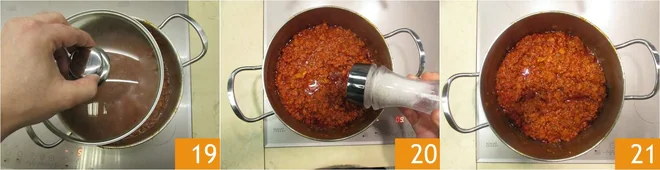
Cover with the lid, but do not close completely 19. At this point the Bolognese sauce must cook for at least 2 hours. Check it every 20 minutes and add more broth as needed. After two hours, taste the sauce and season with salt and pepper 20. Stir again and your sauce will be ready 21.




Questions from our community83