
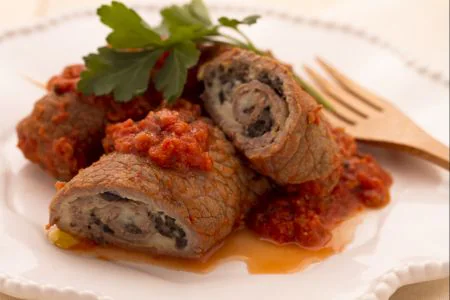
Involtini alla pizzaiola
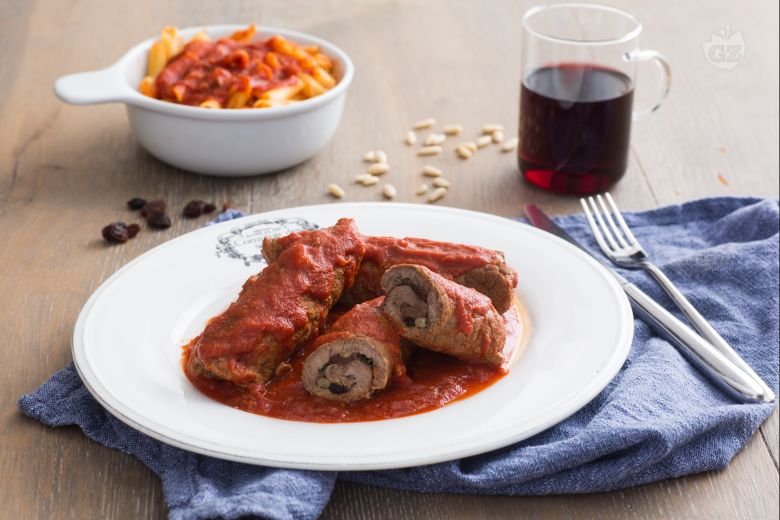
The pizzaiola rolls are tasty beef rolls, stuffed with mozzarella and olives and cooked in a tasty tomato sauce.
- Easy
- 50 min
- Kcal 372
Neapolitan braciole is a dish that totally captures the essence of Campania’s colorful food culture. These Italian beef rolls owe their tender texture to being simmered in a rich braciole in tomato sauce—alongside pork ribs, sausages and meatballs. And here's the thing: the slow cooking process is key. Really key. It transforms the meat into moist, flavor-packed bites. In Campania, preparing ragù is more than just cooking; it's, like, a family tradition. The day is spent together, as the kitchen fills with the inviting aroma of bubbling sauce. The braciole recipe isn’t just about the meal; it’s about sharing stories and creating memories while waiting for the food to become even better with time. And when it's finally ready, dipping crusty bread into the sauce captures all those tangy and sweet notes from the tomatoes and meats.
Across Naples and Southern Italy, you’ll notice slight variations in these traditional braciole. Some families add pine nuts and raisins to the filling, while others go for a simpler mix of parsley, cheese and garlic. But really, despite these differences, the result is always the same—Neapolitan braciole so tender that a knife is pretty much unnecessary. The braciole cooking method emphasizes low and slow heat, allowing flavors to develop until the sauce is rich and the beef just falls apart. Whether served with pasta or on their own with extra sauce, everyone agrees that the wait is worthwhile. Seriously good. This dish turns a Sunday into something special, highlighting the joy of spending time together and continuing a cherished tradition. Each bite offers a taste of Campania’s history and the kind of home-cooked meal that draws people back to the table, time and again.
The warmth and love poured into making Neapolitan braciole are what make it a beloved staple in Italian cuisine, providing not just nourishment but also a sense of connection and celebration. It's a culinary experience that brings a piece of Southern Italy into homes everywhere, reminding us of the beauty found in tradition and togetherness. So... So good.
You might also like:
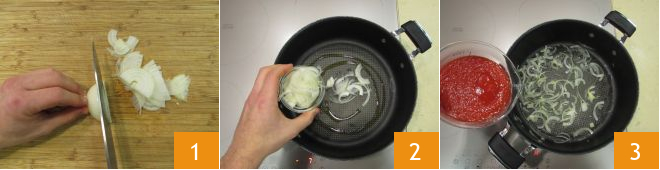
To prepare the Neapolitan braciole in sauce, start with the latter. Thinly slice a cleaned onion 1, place it in a saucepan where you've poured some oil and let it stew for 5 minutes on low heat 2. Once the onion is sweated, add the tomato purée 3,
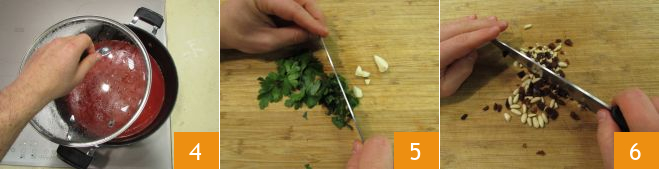
stir and let it cook for half an hour to reduce, covering with a lid; season with salt 4. Meanwhile, prepare the filling for the braciole. Finely chop the parsley and garlic 5. Then coarsely chop raisins and pine nuts 6
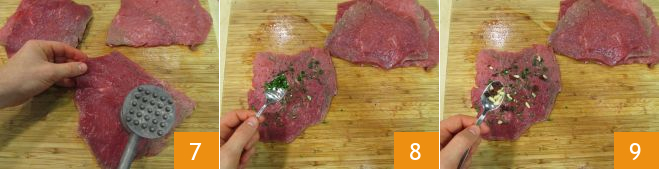
and now that you have everything, pound the meat slices to thin them 7. On the first meat slice, place some parsley and garlic 8, then raisins and pine nuts, and finally a sprinkle of pecorino and pepper 9.
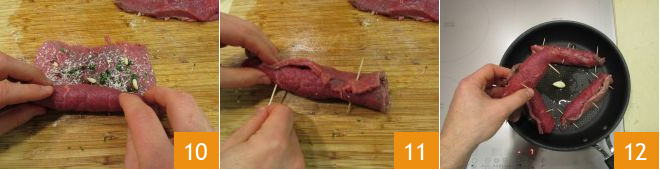
Roll up 10 and secure with skewers 11. Repeat for all. Then, in a pan, heat the oil and a clove of garlic, add the meat slices 12
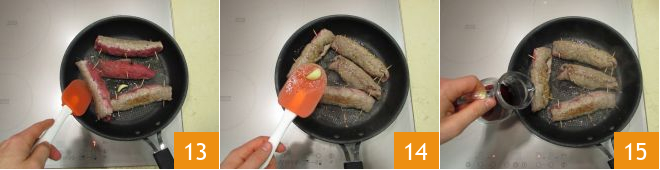
and quickly brown them to seal the surface 13. Remove the garlic 14 and deglaze with red wine 15.
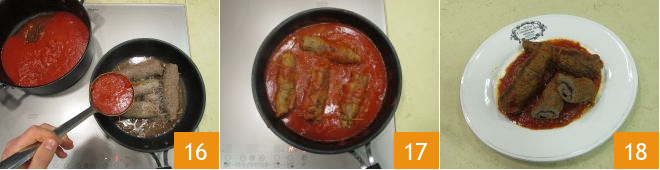
As soon as the alcohol has evaporated, add the cooked sauce 16 and let it infuse for a few more minutes, avoiding overcooking the meat 17. Here are your Neapolitan braciole in sauce ready, enjoy your meal 18.