Roasted Tomatoes Change Everything They Touch
What actually happens to a tomato in a hot oven? These five Italian recipes, from a five-ingredient pesto to a Caprese turned soup,…
Italian fish cooking looks simple. These five techniques are why it actually is — once you know what you are doing.
Italian fish cooking has a reputation for simplicity that is sometimes mistaken for ease. The simplicity is real — olive oil, lemon, salt, a handful of herbs — but it rests on a set of decisions that most recipes mention in passing, if at all. These five techniques come from Italian home kitchens and coastal traditions, where fish is treated with a seriousness that has nothing to do with complexity.
Italian fish markets sell whole fish because Italian cooks prefer them that way — and for good reason. A whole fish retains moisture better than fillets, the bones add flavor during cooking, and the skin protects the flesh from direct heat. Roasted in the oven with olive oil, garlic, and a few herbs, a whole sea bass or sea bream takes forty minutes and requires almost no intervention. The flesh should pull cleanly away from the bone at the thickest part — no resistance, no translucency. That is how you know it is done.
Salt draws moisture out of fish — useful when you want a crust, damaging when you want the flesh to stay juicy. Salt fillets immediately before they go into the pan or oven, not in advance. For whole fish, salt the cavity generously before cooking to season from the inside out. For soups and brodetti, salt the broth, not the fish directly. A few minutes too early and the fish weeps before it even hits the heat.
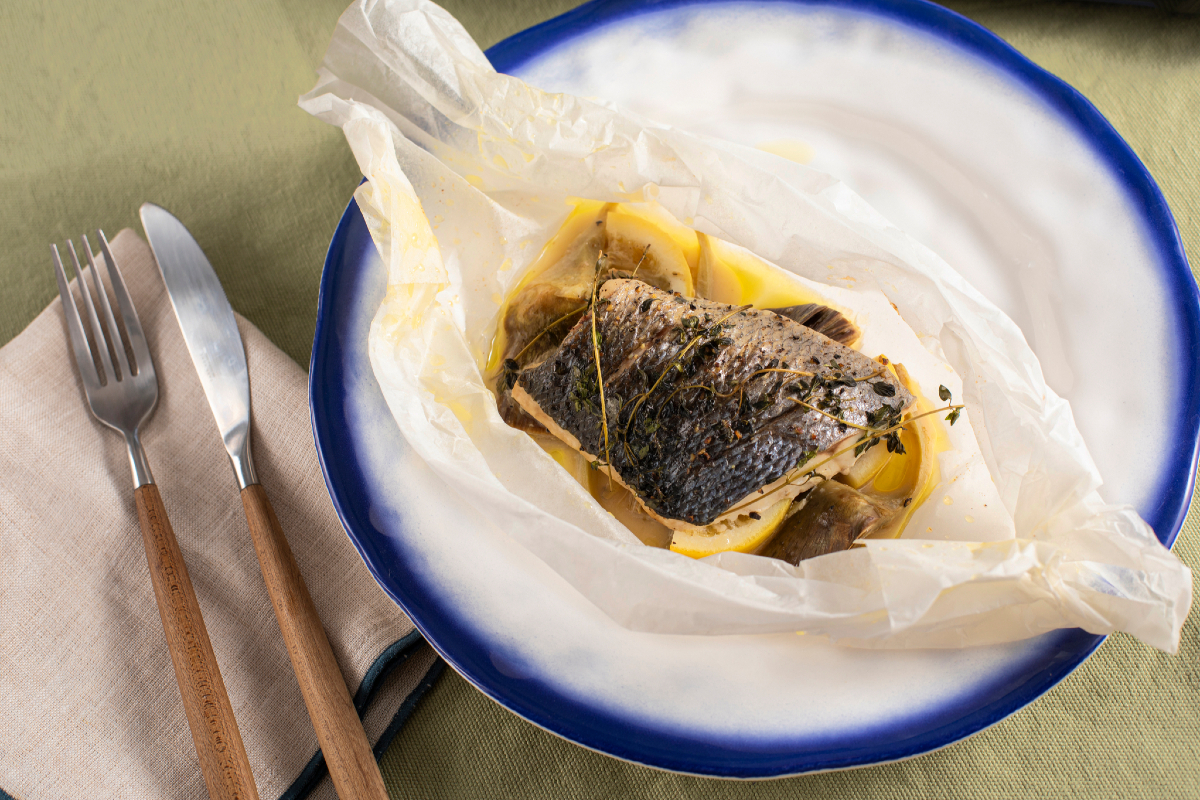
The cartoccio — a parcel of parchment or foil sealed around the fish with olive oil, lemon, herbs, and whatever vegetables you want alongside — is one of the most reliable techniques in Italian cooking. The fish steams in its own moisture, absorbs the aromatics, and arrives at the table sitting in its own cooking juices. No attention required once it goes into the oven. No extra sauce to make. Open the parcel at the table — the steam that escapes is half the experience.
Discover Foil-Baked Sea Bream
Italian fish cooking generates flavor at every step — the juices from a roasted whole fish, the liquid left in a cartoccio, the shells and heads from cleaned shrimp and prawns. None of it gets discarded. The fish juices get spooned back over the flesh. The shells go into a quick stock with onion, celery, carrot, white wine, and water — simmered for thirty minutes, strained, and frozen in portions for whenever you need a base for risotto, pasta sauce, or soup. This is the fumetto, one of the foundations of Italian seafood cooking. Once you start making it, you will wonder why you ever threw the shells away.
Discover Fish Stock / Shellfish Stock
Fish skin, cooked correctly, is not something to remove before serving — it is one of the best parts of the fish. Score it lightly with a knife, press it flat against a hot pan with a spatula for the first two minutes of cooking, and it crisps into something that contrasts completely with the soft flesh underneath. The skin also protects the flesh during cooking, keeping it from drying out before the center is done. In Italian kitchens, crispy-skinned fish served skin-side up is a point of pride. Cook with the skin always. Remove it after, if you must.
None of this requires special equipment or hard-to-find ingredients. A piece of foil, a hot pan, the shells you were about to throw away. Small decisions that Italian cooks make without thinking — and that make the difference between fish that is fine and fish that is worth making again.
Related: Italian Pasta Hacks That Actually Work / Italian Vegetable Hacks That Actually Work / Fast, Light, Crispy: Italian Seafood in the Air Fryer