Roasted Tomatoes Change Everything They Touch
What actually happens to a tomato in a hot oven? These five Italian recipes, from a five-ingredient pesto to a Caprese turned soup,…
In Italy, a well-stocked aperitivo table is sometimes all you need. No restaurant, no reservation, no proper dinner — just good food, good company, and a Negroni Sbagliato.
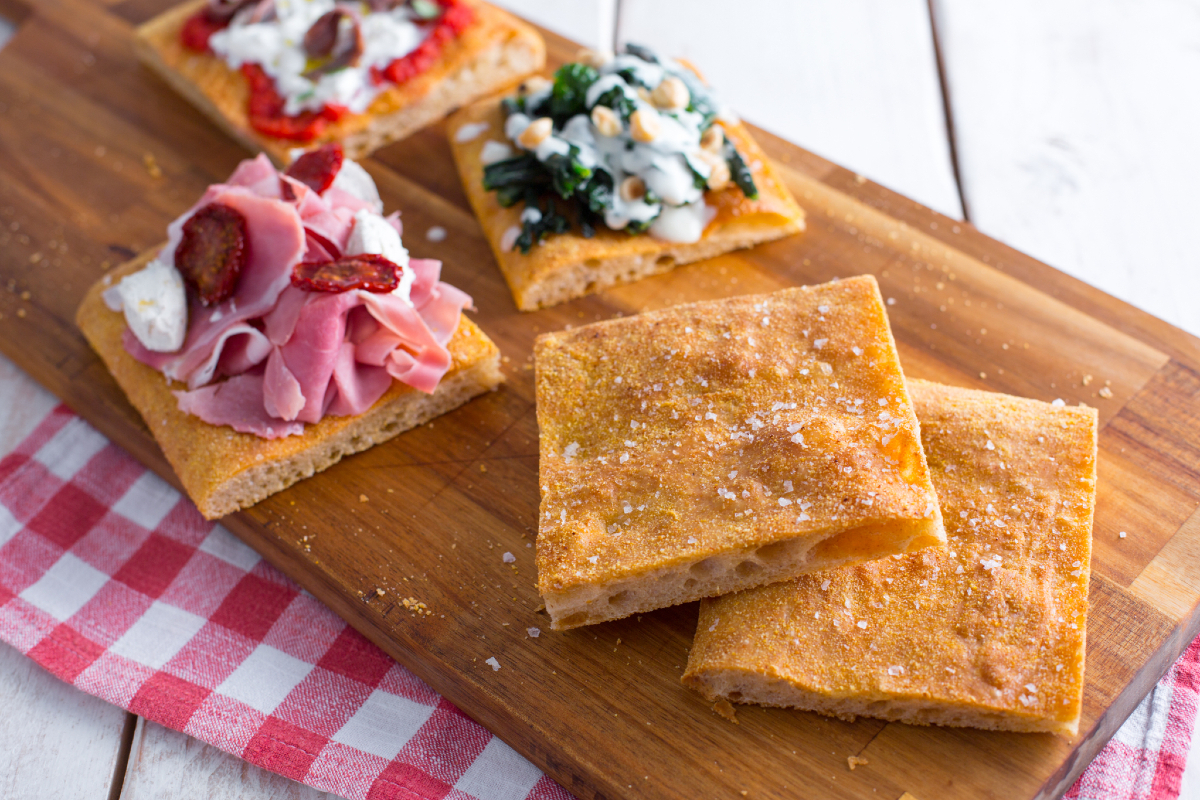
In Italy there is a version of the aperitivo that does not require dinner afterward. It is called aperitivo rinforzato — reinforced aperitivo — and it works exactly as it sounds: a drink, then another, and between them enough food on the table that by the time you leave you are full, happy, and have no interest in finding a restaurant. It happens after work, with friends, standing or sitting depending on the place. No reservations, no courses, no bill at the end that makes you regret your choices. Just a well-stocked table and a good drink to anchor the evening.
If you want to try it at home — friends coming over after work, no time to cook a proper dinner — these five dishes and one drink are a good place to start. All five dishes can be made in advance — most of them are actually better that way.
The Negroni Sbagliato was born at Bar Basso in Milan in the 1970s, when bartender Mirko Stocchetto reached for Prosecco instead of gin while making a Negroni. The mistake stuck. Equal parts red bitter, red vermouth, and Prosecco — stirred once, served over a single ice cube with an orange peel rubbed around the rim. Lighter than a classic Negroni, more complex than a Spritz, and exactly right for an evening that is not in a hurry.
Discover Negroni Sbagliato
Cold sliced veal under a sauce of tuna, anchovies, capers, and hard-boiled eggs — vitello tonnato is one of those combinations that sounds improbable and tastes inevitable. It comes from Piedmont, it has been on Italian tables since the eighteenth century, and it is still the most elegant thing you can put out without turning on the oven the day of. Make the veal and the sauce the day before. Slice thin, cover completely, refrigerate. Serve cold with nothing else alongside.
Discover Vitello Tonnato
Sicily's sweet and sour eggplant — fried in olive oil, then braised with celery, onion, tomato, olives, capers, pine nuts, vinegar, and sugar until the whole thing becomes something richer and more complex than any of its parts. Caponata is always better the next day, which makes it the ideal aperitivo dish: make it in the morning, let it sit in the refrigerator, bring it to room temperature before serving. Eat it with bread, with cheese, or on its own with a fork directly from the bowl.
Discover Caponata
Liguria's contribution to the aperitivo table and one of the great breads of the Italian repertoire. The dough is highly hydrated, dimpled with three fingers to create the characteristic holes, flooded with a brine of water and salt and a generous pour of olive oil, then baked at high heat until the surface is golden and slightly crisp and the inside stays soft and airy. In Genoa, people eat it for breakfast. At an aperitivo rinforzato it disappears faster than anything else on the table. Make two trays.
Discover Focaccia alla Genovese
Tuscan peasant food at its finest — stale bread soaked in tomato juice extracted from datterino tomatoes, macerated with vegetables and herbs for up to twenty-four hours, then finished with olive oil and a spoonful of burrata. It requires almost no cooking, tastes of summer, and is the kind of dish that makes people ask for the recipe after the first spoonful. Serve it cold in small bowls as part of the spread. The burrata on top is not optional.
Naples has its own answer to the question of what to eat between a snack and a meal, and it is this: a pizza dough base topped with tomato, cooked ham, and caciocavallo cheese, then covered with a sheet of puff pastry and baked until the top is shatteringly crisp and the cheese underneath is completely melted. It is sold in delis and bars across Naples, cut into squares, eaten standing up. Cut it into pieces, put it on the table warm, and watch it disappear.
Discover Parigina
The aperitivo rinforzato has no fixed end time and no official rules — just the understanding that if the table is good enough, nobody needs to go anywhere else. The other advantage: since everything is prepared in advance, you are not in the kitchen when your guests arrive. You are already at the table. Set everything out at once, let people help themselves, and let the conversation do the rest. Dinner, if anyone still wants it, can wait.
Related: The Italian Aperitivo: How to Do It Right / The Roman Food Nobody Talks About / Planning a Trip to Italy? Eat Where the Locals Do