Roasted Tomatoes Change Everything They Touch
What actually happens to a tomato in a hot oven? These five Italian recipes, from a five-ingredient pesto to a Caprese turned soup,…
In Italy, the aperitivo table has its own logic. These five creams and mousses cover every flavor direction — and all of them can be made before your guests arrive.
You know dips. Italians have something similar but with a different logic — a collection of creams, pestos, and mousses that sit at the center of the aperitivo table and work in two directions: spread on crostini and bread, or used as a dip for raw vegetables, grissini, and whatever else is on hand. The tradition of pinzimonio — raw vegetables eaten with olive oil and salt — extends naturally to these preparations, which are richer, more varied, and more interesting than a bottle of dressing. All five of these can be made in advance. All five disappear quickly.
Pesto exists in Italy far beyond the basil-and-pine-nut version the world knows. This one starts with raw pistachios — blanched briefly to loosen the skins, then blended with Grana Padano, lemon zest, garlic, basil, olive oil, and a little water until smooth. The flavor is earthy and slightly sweet, with a richness that makes it one of the more elegant things you can spread on a piece of toasted bread. Sicilian pistachios are the best you can find; use the best available.
Discover Pistachio Pesto
Roasted eggplant — baked whole at high heat until the skin collapses and the inside is completely soft — blended with garlic, Parmigiano, almonds, basil, and olive oil into a smooth, smoky cream. It is lighter than babaganoush, less assertive, and distinctly Italian in character. Serve it in a small bowl with a drizzle of olive oil and a pinch of chili pepper on top. Dip vegetables into it, spread it on crostini, or use it as a base for a bruschetta. It works for all three.
Discover Eggplant Cream
Mortadella blended with ricotta and whipped cream until light and airy — finished with chopped pistachios on top. The mousse is delicate where the salami is assertive, and the pistachios add crunch to something entirely soft. It is the kind of thing that appears at Italian holiday tables and disappears immediately. Spread it on bread, pipe it into vol-au-vent, or serve it with grissini. The pistachios on top are not a garnish — they are part of the dish.
Discover Mortadella Mousse
Canned tuna in oil — good canned tuna, the kind packed in olive oil — blended with ricotta, cream, lemon zest, and pink peppercorns into something much more refined than its ingredients suggest. The ricotta makes it light, the lemon zest keeps it fresh, and the pink pepper adds a subtle heat that builds slowly. Serve it cold, straight from the refrigerator, with crostini or raw vegetables alongside. Takes ten minutes to make and improves with an hour in the refrigerator before serving.
Discover Tuna Mousse
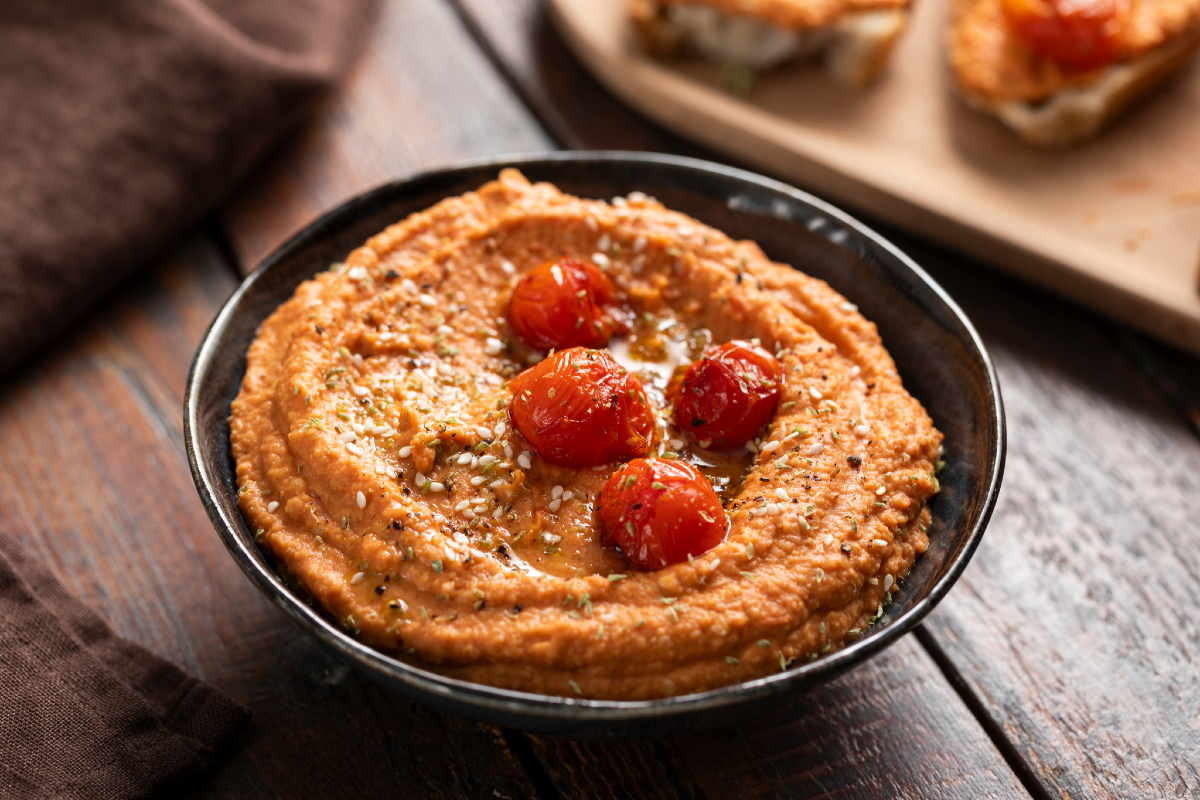
Not the classic Middle Eastern version — this one starts with cherry tomatoes cooked briefly in olive oil with garlic, oregano, and a pinch of sugar, then blended with chickpeas, tahini, and sesame seeds. The result is somewhere between hummus and a tomato cream — brighter, more acidic, and distinctly summer. It works as a dip for vegetables and bread, or as a sauce for falafel and flatbreads. Make it when the cherry tomatoes are good. That means now.
Discover Cherry Tomato Hummus
Five small bowls, a plate of crostini, some raw vegetables, a few grissini — that is the format. No serving order, no instructions. The table does the work. These five preparations cover every flavor direction: something nutty, something smoky, something rich, something light, something bright. Between them, no one will go hungry.
Related: The Italian Aperitivo: How to Do It Right / Skip Dinner. Make an Italian Aperitivo. / Italian Vegetable Hacks That Actually Work