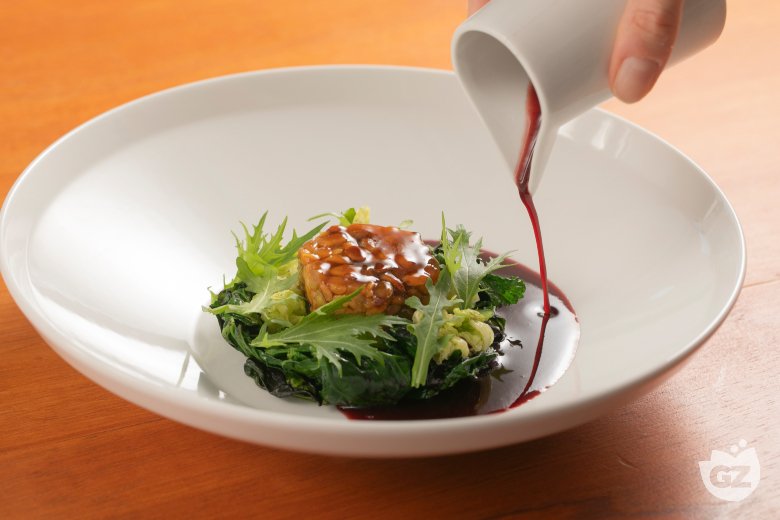


Tempeh with vegetables
Tempeh with vegetables is a tasty and nutritious dish inspired by the flavors of Southeast Asia, perfect for those following a vegan or…
- Very easy
- 25 min
- Kcal 315
You might also like:
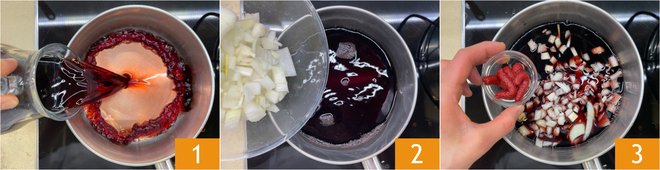
To prepare the glazed tempeh with vegetables and Bordelaise sauce, start with the latter: in a small saucepan pour the red wine 1, the onion cut into large pieces 2 and the tomato paste 3.
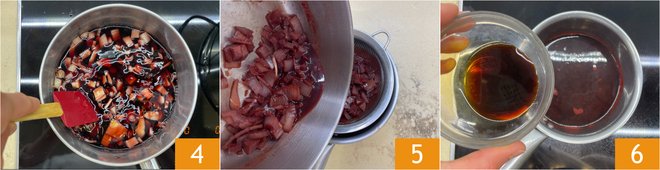
Cook over medium heat for about 8 minutes 4. When the liquid has reduced by about half (about 9 oz / 250 g), strain the mixture through a sieve 5 and return it to the saucepan. Add the tamari 6.

Add the sugar 7 and the umeboshi vinegar 8. Heat the mixture just long enough to dissolve the sugar. Meanwhile, in a small bowl, dissolve the kuzu in a little water 9.
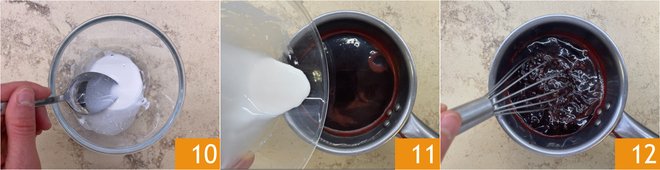
Stir to dissolve the kuzu 10, then pour it into the saucepan off the heat 11 and whisk to combine 12. Set aside.
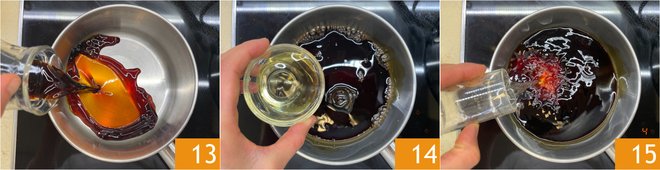
To make the glaze, pour the tamari 13, the white wine 14 and the mirin 15 into a small saucepan.

Also add the sugar 16 and the water 17, then heat over medium heat for 4–5 minutes 18.
Remove the saucepan from the heat and add the ginger juice 19 and the kuzu, which you will have dissolved in a little water 20. Stir to combine 21 and set aside.
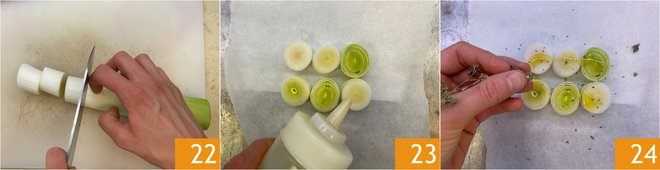
Trim the leek and cut 6 rounds from the white part about 3/4 in (2 cm) thick 22. Transfer the rounds to a baking sheet lined with parchment paper and season with extra virgin olive oil 23 and oregano 34. Bake at 392°F (200°C) for about 20–30 minutes, in conventional (static) mode.
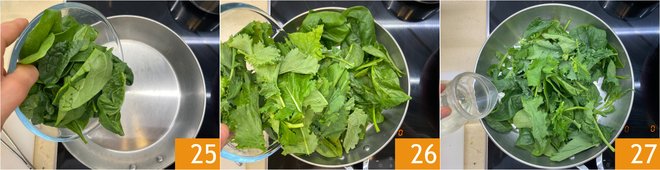
Meanwhile, take care of the other vegetables: put the spinach leaves 25 and the broccoli rabe (rapini) leaves 26 in a pan, add neutral vegetable oil 27 and cook over high heat for 2–3 minutes.
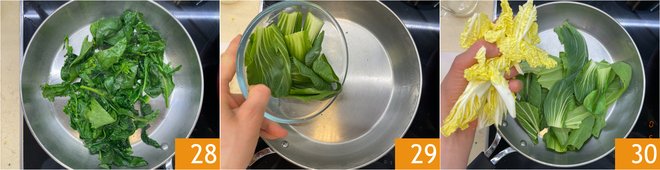
They should be slightly wilted 28. Set aside and, in the same pan, add the pak choi leaves 29 and the Chinese cabbage leaves 30.
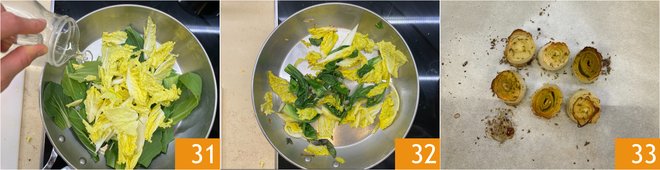
Season with the neutral vegetable oil 31 and sauté everything for 2–3 minutes 32. When the leek is roasted, remove from the oven and set aside 33.
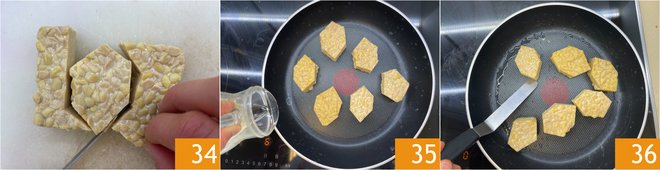
Cut the tempeh with a ring mold or a knife to make 6 hexagons approximately 2 in (5 cm) from side to side 34. Place them in a nonstick pan with a drizzle of neutral vegetable oil 35 and brown over medium heat for 5 minutes, then flip them 36.

Brown the other side for 5 minutes as well 37. Once golden, dip the tempeh in the glaze 38 and let it absorb the flavors 39.
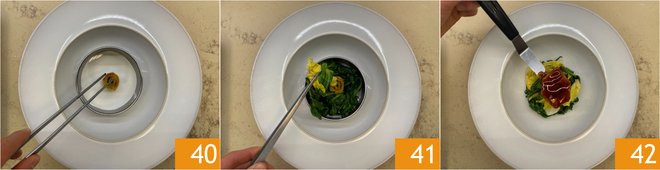
Place a leek round in the center of the plate 40, then arrange the sautéed vegetables all around, using a 4 in (10 cm) ring mold to help 41. Lay the tempeh on top of the leek 42.

Garnish with wild arugula leaves and green mizuna 43 and season with salt. Finally, drizzle with the Bordelaise sauce 44. Your glazed tempeh with vegetables and Bordelaise sauce is ready to be served 45!