Pizza by the slice
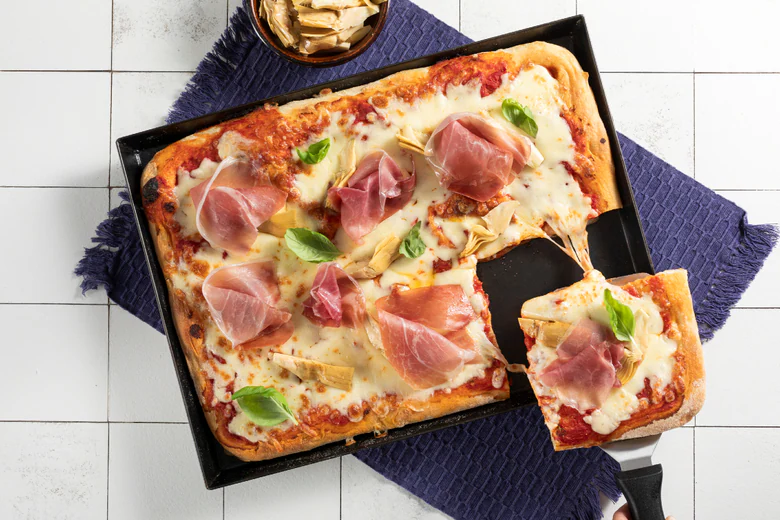
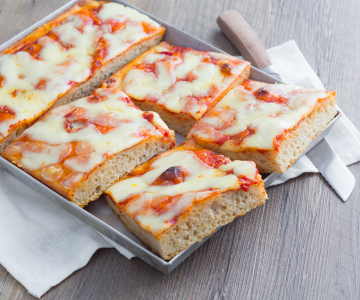
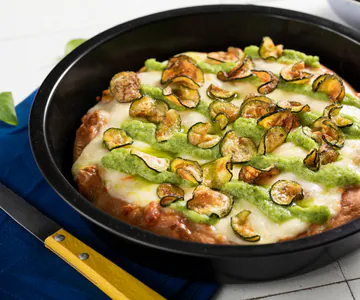
Pizza in teglia is one of the most practical and satisfying ways to make pizza at home. This guide explains how to achieve a crispy base and airy interior using simple techniques and standard ovens.
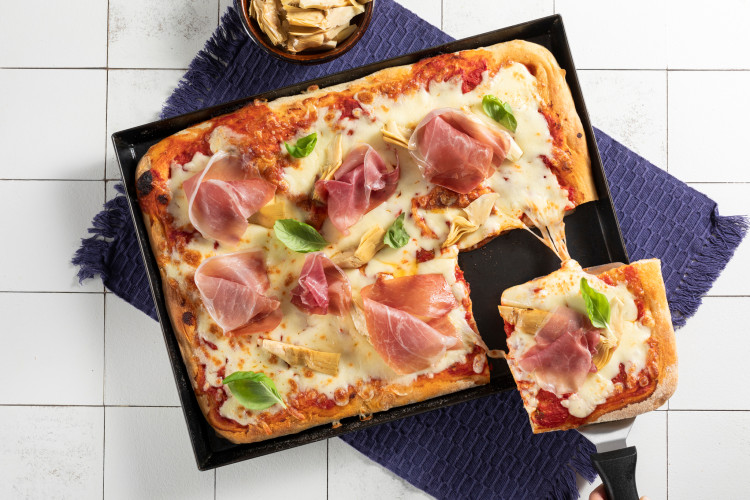
If there’s one Italian pizza style that feels tailor-made for home cooking, it’s pizza in teglia.
This isn’t a compromise—it’s a solution. A way to achieve excellent results without professional ovens, while still staying true to Italian technique.
And once you try it, it’s hard to go back.
Pizza in teglia is a tray-baked pizza known for its contrast in textures.
It’s not thin and crisp like Roman Pizza - Cookies.
It’s not soft and delicate like Neapolitan.
Instead, it’s defined by:
It’s one of the most common formats in Italian home kitchens—and for good reason.
Pizza in teglia is built around adaptability.
It’s designed to:
This makes it incredibly reliable.
One of its defining features is hydration.
The dough contains more water, which creates:
This is what sets it apart from other styles.
Oil plays a key role here—much more than in classic pizza.
The result: a crispy, almost fried bottom layer.
Pizza in teglia is typically baked in stages:
This prevents sogginess and ensures even cooking.
This style fits perfectly into U.S. cooking habits:
It’s approachable without sacrificing quality.
Compared to Neapolitan pizza, this style is more flexible.
You can use:
The structure supports variety without collapsing.
Watch out for:
Timing and layering matter here.
They are similar, but not identical. Italian pizza in teglia focuses more on high hydration dough and airy texture, while American pan pizza is often thicker and richer.
This usually happens when the dough hasn’t fermented long enough or hasn’t been handled gently. High hydration and proper resting are key to achieving an airy texture.
You should use enough oil to coat the entire tray generously. This helps create the signature crispy bottom and prevents sticking.
Yes, you can prepare the dough ahead of time and refrigerate it. You can also partially bake the base and finish it later with toppings.
A standard rectangular baking tray or sheet pan works perfectly. The key is to spread the dough evenly without overcompressing it.
Pizza in teglia is where tradition meets practicality.
It’s forgiving, versatile, and incredibly satisfying—making it one of the smartest ways to bring authentic Italian pizza into a home kitchen.
You might also like:
Italian Pizza Dough: The Ultimate Guide to Making It Like in Italy
Neapolitan Pizza: The Original Italian Pizza Explained
Pizza Margherita: Why Simplicity Is the Ultimate Test
Roman Pizza - Cookies: Thin, Crispy, and Completely Different