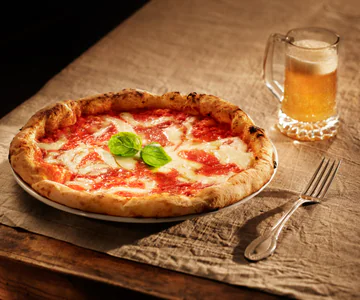
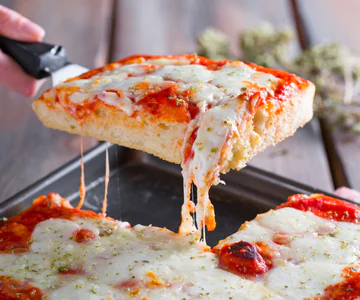
Pizza dough

Mastering pizza dough is the first step to making real Italian pizza at home. In this complete guide, you’ll learn how to prepare, knead, and ferment dough using traditional techniques, with practical tips adapted for home kitchens.
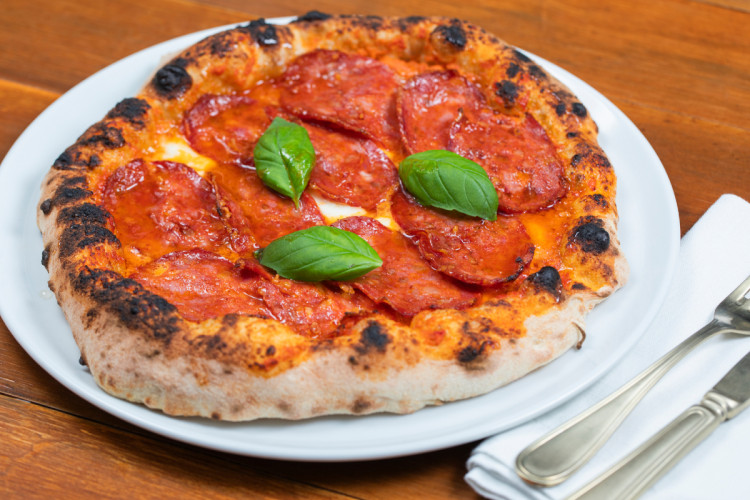
If there’s one thing that separates a good pizza from a great one, it’s the dough.
In Italy, pizza dough isn’t just a base—it’s the foundation of everything. It determines texture, flavor, digestibility, and even how toppings behave during baking.
And here’s the truth: most people outside Italy get it wrong.
This guide breaks down how Italian pizza dough really works, based on the traditional method used in recipes from GialloZafferano, with practical tips adapted for home kitchens.
Authentic Italian pizza dough is incredibly simple:
That’s it. No sugar, no oil (in the classic version), no shortcuts.
But simplicity doesn’t mean easy. Each ingredient plays a precise role.
In Italy, pizza dough is typically made with “00” flour, which is finely milled and creates a smooth, elastic dough.
For home kitchens:
Why it matters:
Protein content affects gluten formation, which controls elasticity and chew.
Water activates gluten and yeast.
You can use:
Italian recipes often use very small amounts of yeast and rely on long fermentation for flavor.
Salt:
Important: never mix it directly with yeast at the start.
This is where most people fail.
Italian pizza dough is not rushed.
👉 GialloZafferano method: controlled rise + resting phases
Bottom line:
Time is an ingredient.
Mix until a rough dough forms.
Kneading develops gluten.
You’re looking for:
Time:
Typical time:
This step is key for structure.
Let the dough balls rest:
2–4 hours at room temperature
Now they’re ready to stretch.
Forget the rolling pin! Italian pizza is shaped by hand.
This creates:
Even perfect dough can fail with poor baking.
Different pizzas require slightly different dough approaches.
👉 All variations stem from the same base technique.
Cause: not enough fermentation
Fix: increase rising time
Cause: too much water or poor kneading
Fix: knead longer, resist adding too much flour
Cause: tight gluten
Fix: let it rest longer before shaping
Cause: low hydration or overbaking
Fix: adjust water and reduce baking time
Cause: weak dough structure
Fix: improve kneading and fermentation
Let’s be practical.
If you can’t find Italian ingredients:
You can still get excellent results.
Yes, and you should.
The best flour for pizza dough is “00” flour, which creates a soft and elastic texture. In the U.S., bread flour is a great alternative because of its higher protein content, which helps develop gluten and gives structure to the dough.
Pizza dough should rise for at least 8 hours for optimal flavor and texture. Longer fermentation, up to 34 hours, improves digestibility and creates a lighter, airier crust.
If your dough is not stretchy, it likely needs more resting time. Gluten needs time to relax after kneading, so letting the dough rest for 20–30 minutes can make it easier to shape.
Yes, pizza dough can be made in advance and stored in the refrigerator for up to 48 hours. This actually improves flavor and texture due to slow fermentation.
Dense dough is usually caused by insufficient fermentation or too much flour. Allowing more rising time and avoiding excess flour during kneading will help create a lighter texture.
Italian pizza dough isn’t complicated—it’s precise.
Once you understand:
you unlock the foundation of real Italian pizza.
And from there, everything else—Margherita, Neapolitan, Roman—becomes infinitely better.
You might also like:
Pizza Margherita: Why Simplicity Is the Ultimate Test
Neapolitan Pizza: The Original Italian Pizza Explained