Roasted Tomatoes Change Everything They Touch
What actually happens to a tomato in a hot oven? These five Italian recipes, from a five-ingredient pesto to a Caprese turned soup,…
Italians eat twice the recommended omega-3-rich fish per week. These 6 recipes — from pasta with sardines to puttanesca — show exactly how they do it.
Every few months, a new study lands on the same conclusion: people who eat more oily fish have better brain health. Better memory, less inflammation, slower cognitive decline. The Mediterranean diet has been pointing at this for centuries. The science is finally catching up.
Americans eat less than half the recommended amount of omega-3-rich fish per week. Italians, on average, eat nearly twice as much. The difference isn't discipline — it's recipes.
Here are six that make it easy.
A can of sardines costs less than a dollar and delivers more omega-3s per serving than almost any other food on the planet. The problem, for most Americans, is knowing what to do with them.
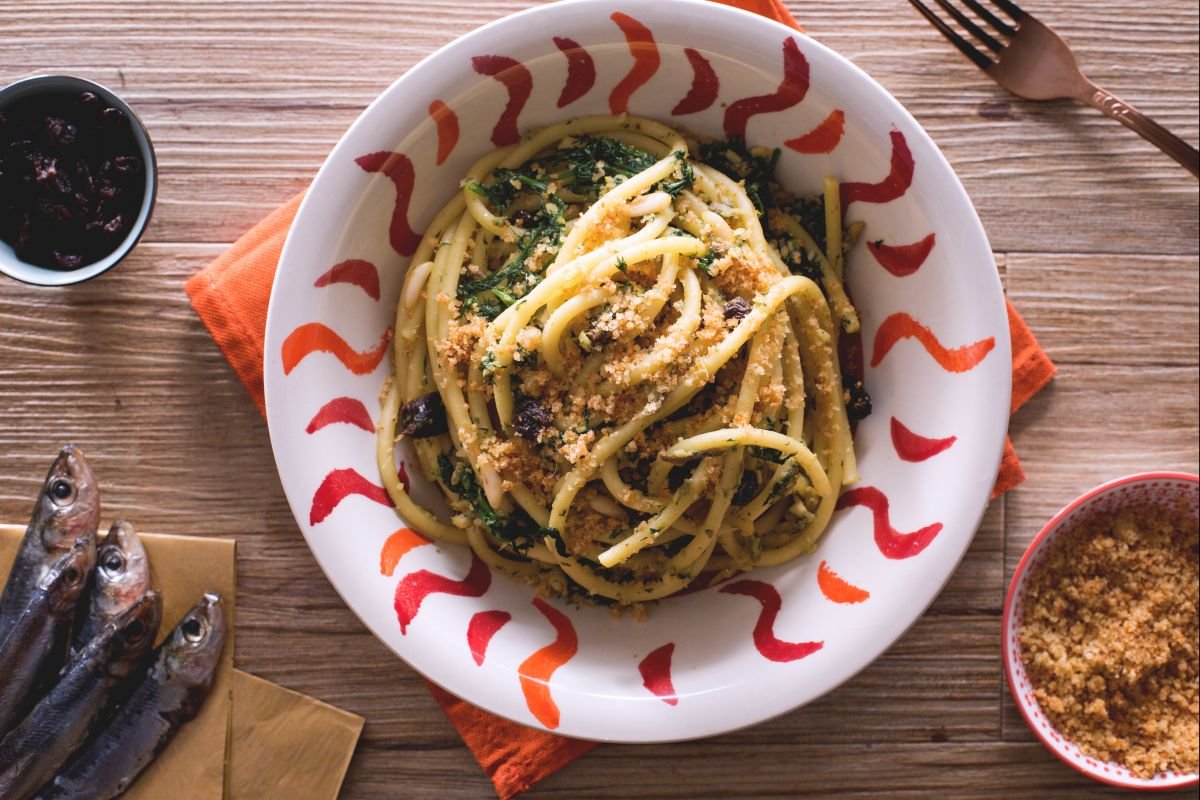
Pasta with Sardines is Sicily's answer — and it's been feeding the island for centuries. Bucatini tossed with fresh sardines, wild fennel, saffron, raisins, pine nuts, almonds, and anchovies, finished with toasted breadcrumbs. Sweet, savory, intensely aromatic. It sounds complicated. It isn't. And once you've made it, the can of sardines starts looking like the ingredient it always was.
Sarde a Beccafico is the other great Sicilian sardine dish — sardines stuffed with breadcrumbs, pine nuts, raisins, anchovies, and parsley, rolled into parcels, arranged in a baking dish, and glazed with a honey and orange juice emulsion. The name comes from a small bird that Sicilian nobles once ate; the people made their own version with what they had. The result is one of the most elegant things you can do with a modest fish.
Sarde in Saor is Venice's version — fried sardines layered with slow-cooked onions, white wine vinegar, pine nuts, and raisins, then left to rest in the refrigerator for at least 34 hours. The saor — the sweet-sour marinade — was originally a preservation technique for sailors at sea. Today it's served as a cicchetto, the Venetian equivalent of tapas, with a glass of Spritz and a view of the Grand Canal. Make it the day before. It gets significantly better overnight.
Mackerel is one of the most omega-3-rich fish available, consistently less expensive than salmon, and dramatically underused in American kitchens. In Italian coastal cooking, it's treated as the serious ingredient it is.
Mackerel in a Pan is the weeknight version — fillets cooked in a tomato sauce enriched with olives, capers, raisins, and pine nuts, deglazed with white wine and finished with oregano. The sauce softens the mackerel's strong flavor without masking it. Serve with toast to catch the sauce. Twenty-five minutes from start to finish.
Anchovies are the secret ingredient behind half of Italian cooking — dissolved into soffritto, melted into pasta sauces, spread on bread. Most people who claim they don't like anchovies eat them constantly without realizing it.
Spaghetti alla Puttanesca is the dish that proves the point. Anchovies dissolve into olive oil with garlic and chili, creating a base that's savory without being fishy — then peeled tomatoes, Gaeta olives, and capers go in, and the whole thing comes together in twenty minutes. Bold, briny, deeply satisfying. And quietly delivering omega-3s to everyone at the table, including the people who said they don't eat fish.
Pasta with Tuna is the Italian version of the weeknight staple — mezze maniche rigate with canned tuna, tomato purée, garlic, anchovies, chili, and parsley. The anchovies dissolve into the base and add the kind of depth that makes people ask what's in it. Twenty minutes, one pan, and everything comes from the pantry.
The omega-3s are in the can. The recipe is the easy part.
Related: The Italian Way to Eat Well Without Trying Too Hard. / Stop Throwing Away Your Scraps. Italian Cooks Have a Better Idea. / This Is How Italians Shop at the Farmers Market.