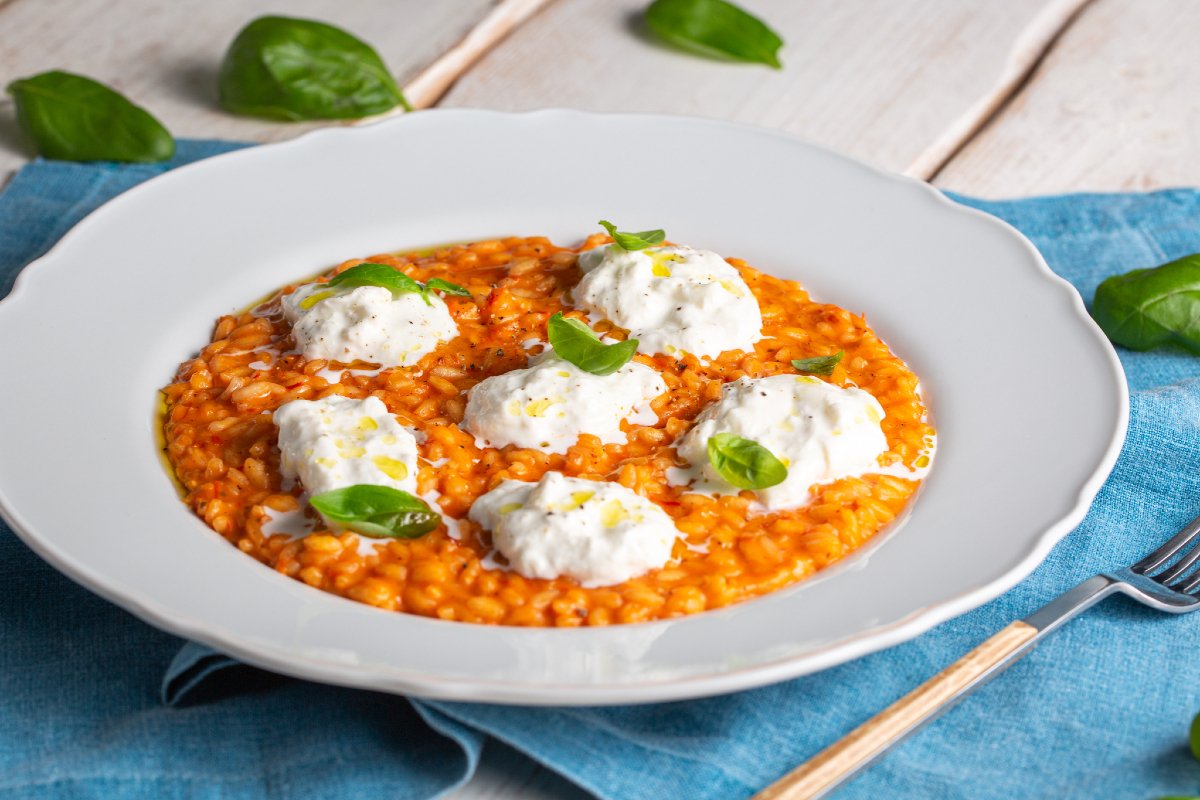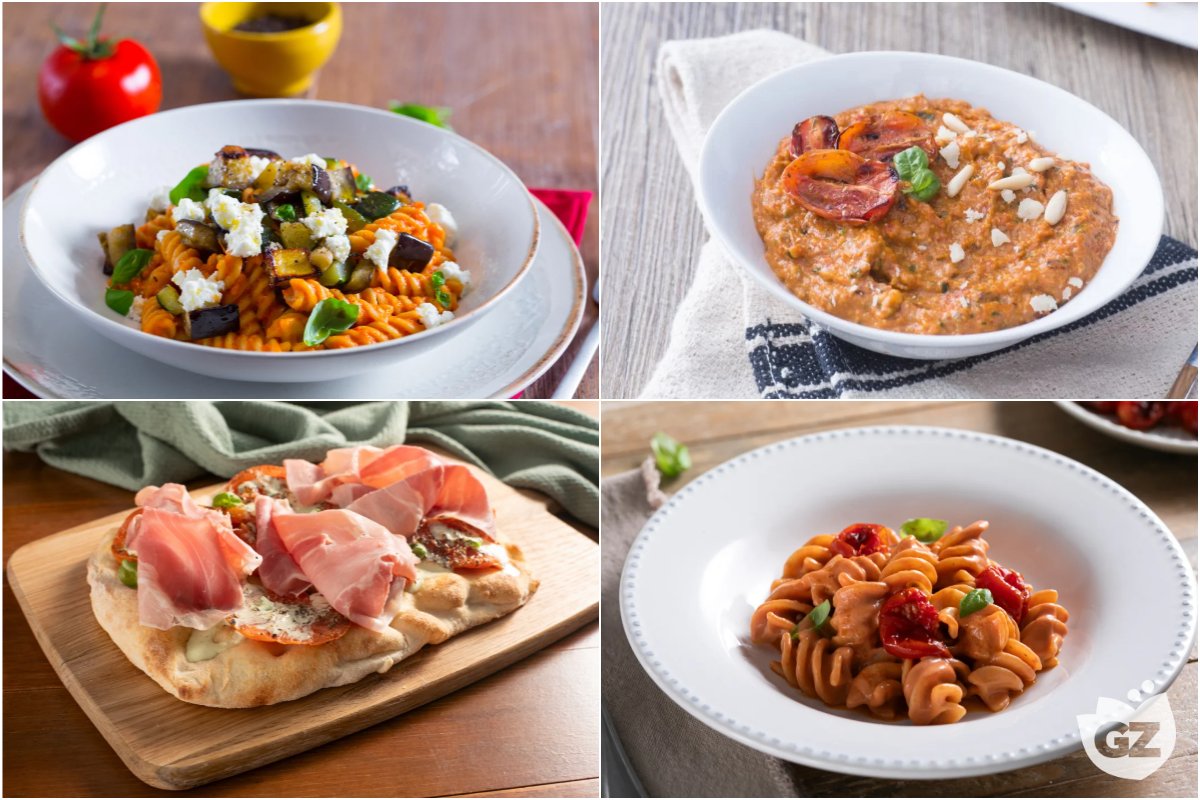
Roasted Tomatoes Change Everything They Touch
What actually happens to a tomato in a hot oven? These five Italian recipes, from a five-ingredient pesto to a Caprese turned soup,…
Italians don't shop with a list — they let the market decide. Here's how they do it, what's worth buying right now, and why the cart is just the beginning.
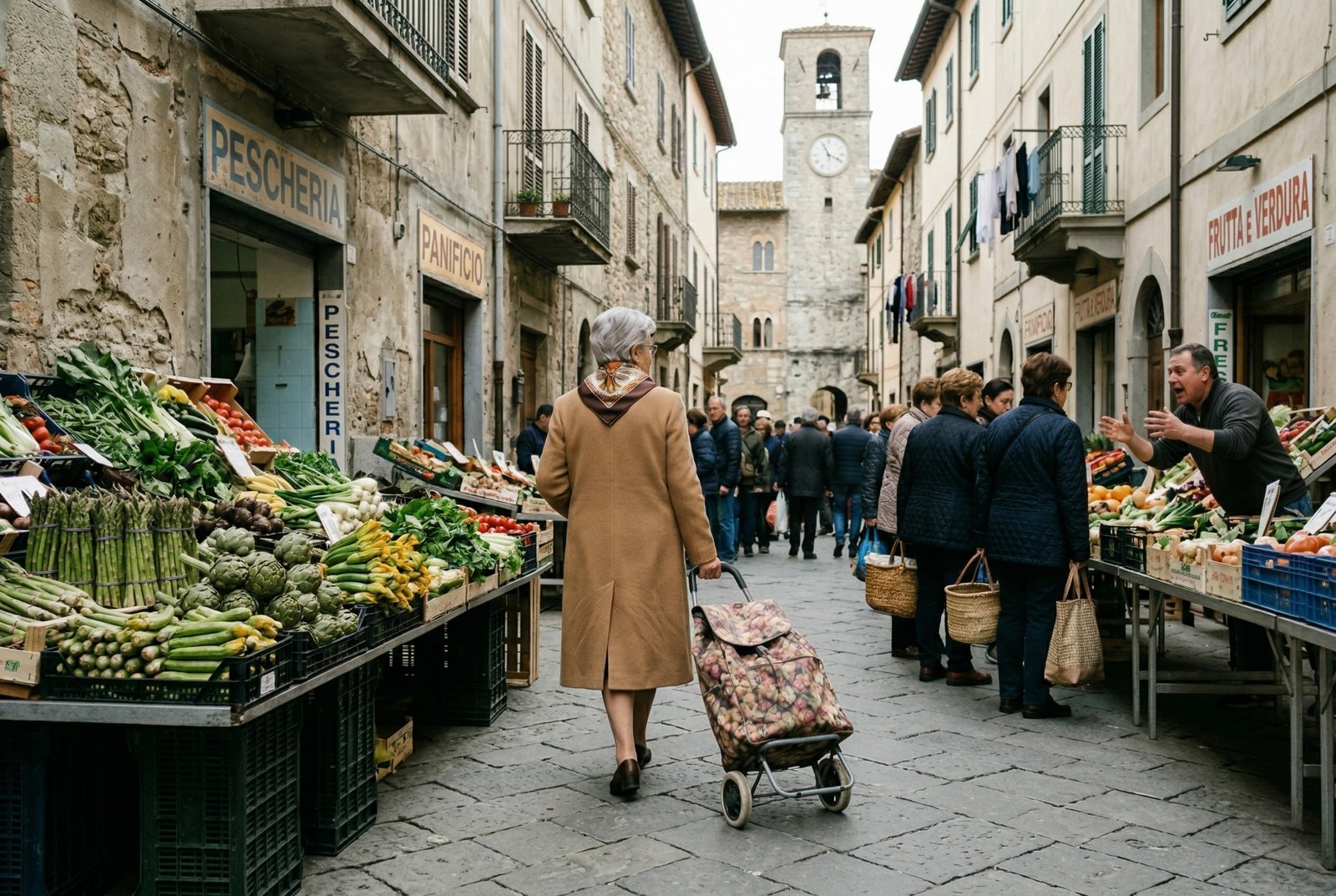
There is a particular kind of person you see at every farmers market in Italy. She arrives early, walks the entire market once before buying anything — touching, smelling, asking questions — and drags behind her a wheeled, slightly battered cart that has recently become, somewhat inexplicably, one of the most viral objects on the American internet.
The cart is not the point. The philosophy behind it is.
An Italian farmers market is not a quiet place. A good vendor doesn't wait for you to stop — he calls out before you've noticed him, holds up a bunch of asparagus and tells you they came in this morning, breaks open a pod of peas and puts it under your nose. If the produce is good, he wants you to know it immediately and with your own senses. The noise is part of the information.
You don't decide what to cook before you shop. You shop first, then decide. If the asparagus looks extraordinary and the zucchini looks tired, you buy asparagus. The menu follows the market, not the other way around. Produce that's in season costs less, tastes better, and needs almost nothing done to it in the kitchen.
Asparagus is at its peak for exactly this window. Look for firm stalks with tight, closed tips — bend one and it should snap cleanly. A good vendor will have already done this for you. Try them in Asparagus Carbonara — the spring variation that keeps the classic egg-and-Pecorino base intact.
Peas in the pod are sweet, protein-rich, and completely different from anything frozen. Buy more than you need and freeze the rest — they keep for up to a year. Calamari with Peas is the simple coastal dish that takes 30 minutes and surprises everyone at the table.
Zucchini should be small and firm — the larger they get, the more watery and flavorless. If your market carries the flowers, buy them without hesitating — they're available for about three weeks a year and never travel well, which is exactly why you'll never find a good one at a supermarket. Stuffed Zucchini Flowers — filled with ricotta, mozzarella, anchovies, and a touch of lemon zest, then fried until crispy — are the classic Italian way to use them.
Strawberries should smell intensely of strawberry from three feet away. If they don't, put them back. A vendor with genuinely good ones will hand you one before you've opened your wallet. Strawberry Chantilly Cup is the Italian way to make them the centerpiece of a dessert worth sitting down for.
Artichokes intimidate most American home cooks. They shouldn't. Look for tight, heavy heads — a little browning on the outer leaves means frost, which makes them sweeter. Carciofi alla Romana — purple artichokes braised slowly with garlic, fresh mint, olive oil, and a squeeze of lemon — is the simplest and most rewarding way to start. The mint is the detail that makes it unmistakably Roman.
The wheeled market cart works because it commits you to a different kind of shopping — slower, more deliberate, built around what you can carry. You fill it stall by stall, and by the time it's full, you already know what you're cooking for the next three days.
You don't need the cart. But the approach it represents — buy what's ready, cook what you bought, let the market decide the menu — is the closest thing to a universal rule that Italian cooking has ever produced.
Related: Why Italians Go Crazy for Peas Every Spring / The Italian Way to Eat Well Without Trying Too Hard / Stop Throwing Away Your Scraps. Italian Cooks Have a Better Idea.