Roasted Tomatoes Change Everything They Touch
What actually happens to a tomato in a hot oven? These five Italian recipes, from a five-ingredient pesto to a Caprese turned soup,…
A few drops of colatura di alici make everything taste more intensely of itself. Here is what it is, where to find it, and five recipes to start with.
If you have ever cooked with fish sauce — the Southeast Asian condiment that makes everything taste more intensely of itself — you already understand the logic of colatura di alici. The principle is the same: anchovies, salt, and time, compressed into a liquid that carries more flavor per drop than almost anything else in the kitchen. But where fish sauce is fermented and pungent, colatura is aged and refined — amber-colored, deeply savory, and with a clean sea fragrance that does not announce itself loudly but makes everything around it taste better.
It comes from Cetara, a small fishing village on the Amalfi Coast, where anchovies caught in spring are salted, pressed, and left to mature in chestnut barrels for up to three years. The liquid that drains from the barrels is colatura — the result of centuries of tradition and an ingredient that most Italian home cooks outside Campania treat as a secret they would rather keep.
In the US, you can find it at Italian specialty stores or online. A small bottle goes a long way — a few tablespoons are enough to season an entire pasta dish. Use it off the heat, always at the last moment. Heat kills it.
These five recipes show what it can do.
The purest version — colatura as the sauce itself. Garlic cloves simmered in olive oil for fifteen minutes until completely soft, then blended with the colatura into a smooth, intensely savory cream. The spaghetti finishes cooking in the pan with this sauce and a ladle of pasta water, then gets topped with toasted breadcrumbs and a scattering of wild fennel and chili. No salt in the pasta water — the colatura provides everything. This is the dish that Cetara fishermen have been making for centuries, and it tastes like it.
Discover Spaghetti with Anchovy Sauce
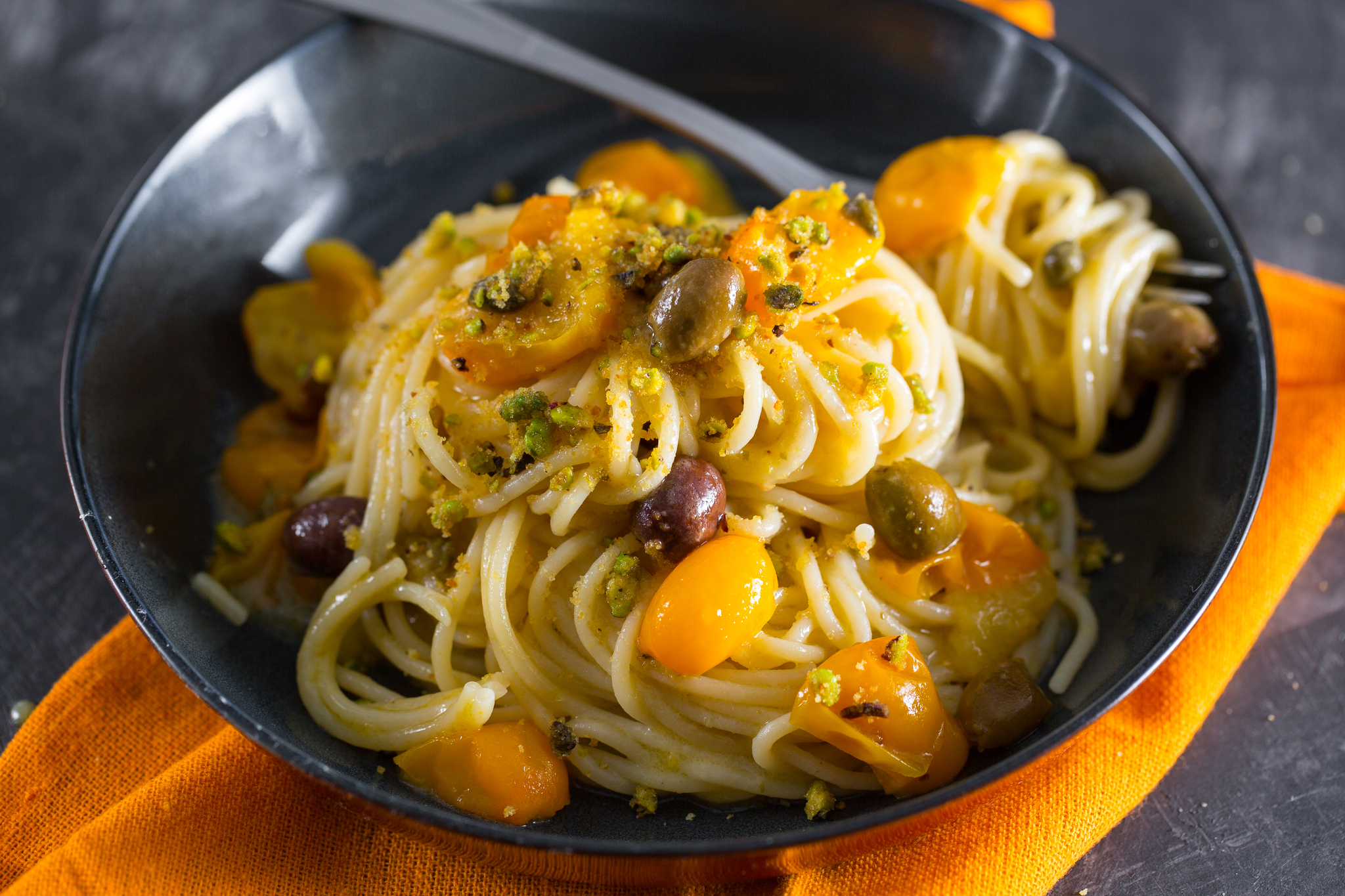
Yellow cherry tomatoes cooked down with garlic, olives, capers, and chili until sweet and concentrated, then finished off the heat with colatura and lemon zest. The colatura goes in last — never into a hot pan — where it dissolves into the sauce and adds a layer of sea salt that the tomatoes alone could never achieve. A pistachio crumble on top adds crunch and a subtle richness. Summer on a plate, and one of the most direct ways to understand what colatura does.
Here colatura disappears into the ricotta — stirred in with a pinch of salt until the cheese takes on a subtle depth that you cannot quite identify but would miss if it were gone. The sun-dried tomato pesto, made with hazelnuts and Parmigiano, provides intensity. The basil oil — blanched, blended, strained — adds freshness. The anchovies cut on top add the final layer of salt. It is a dish built on layers, and the colatura is the quiet foundation of all of them.
Discover Pasta with Sun-dried Tomato Pesto, Ricotta, and Anchovies
Chef Valentina Rizzo's version — the most refined dish on this list. Colatura emulsified with olive oil and tossed with thick spaghettoni off the heat, topped with crushed toasted pistachios, aromatic herbed breadcrumbs, and candied lemon peel made at home from organic lemons. The candied lemon is not optional — its sweetness is what balances the intense saltiness of the colatura, and the combination of the two is the whole point of the dish. Make the candied peel the day before.
Discover Spaghettoni with Anchovy, Pistachios, and Candied Lemon
The dish that surprises everyone. Neapolitan fried pizza — dough left to rise for six to eight hours, then fried in seed oil until golden and puffed — filled with curly escarole, cherry tomatoes, olives, capers, pine nuts, and colatura. The filling is dressed raw and cold, then stuffed into the hot fried dough and finished briefly in the oven. The colatura seasons the whole filling without a drop of added salt. It is street food from the vicoli of Naples, the kind of thing eaten standing up, and it is one of the most convincing arguments for keeping a bottle of colatura in your kitchen at all times.
Discover Fried Pizza with Escarole
Not dramatically — it does not transform dishes, it deepens them. A teaspoon in a tomato sauce. A dash in a vinaigrette. Stirred into ricotta. Drizzled over grilled fish straight from the bottle. Once you start using it, you will find reasons to reach for it everywhere.
Related: The Italian Ingredient You've Never Tried / Nduja: The Spicy Spreadable Salami You Need to Know / Italian Sauce Hacks That Actually Work