Roasted Tomatoes Change Everything They Touch
What actually happens to a tomato in a hot oven? These five Italian recipes, from a five-ingredient pesto to a Caprese turned soup,…
Four ingredients, fifteen minutes, five hours in the fridge. The classic panna cotta recipe — and seven variations worth knowing, from coffee to vegan.
Panna cotta is one of those Italian desserts that looks more difficult than it is — and tastes better than it has any right to for the effort involved. The Piedmontese Langhe gave it to the world sometime in the early twentieth century, and the world has been making variations ever since. The logic is simple: a neutral, silky base that carries whatever sauce or flavoring you put with it. Get the gelatin ratio right, and everything else follows.
Here is the classic, and seven variations worth knowing.
Panna Cotta Heavy cream, sugar, vanilla, and gelatin sheets — heated gently until the gelatin dissolves, poured into molds, and left in the refrigerator for five hours. Unmolded at the table by dipping each mold briefly in hot water, then inverting onto the plate. Serve it plain, with caramel, with melted chocolate, or with a fresh fruit coulis. The base that everything else on this list builds from.
Pro tip: don't let the cream boil — heat it until just before boiling, then turn off the heat. Boiling changes the texture of the cream and makes the final result less silky.
Coffee Panna Cotta The most popular variation — moka coffee stirred into the cream with vanilla extract, set in the same way as the classic, and served with a sauce of dark chocolate melted into hot coffee. The bitterness of the coffee cuts through the richness of the cream in exactly the right way. The one to make for anyone who thinks dessert and espresso should arrive at the same time.
Pro tip: make the chocolate coffee sauce just before serving — it thickens as it cools and is best poured warm over the cold panna cotta.
Almond Panna Cotta Half cream, half almond milk, with a teaspoon of bitter almond extract for intensity — set for five hours and served with a coffee whipped cream and flaked almonds. Lighter than the classic, with a delicate nuttiness that makes it feel completely different. The combination of almond and coffee is one of the great Italian flavor pairings, and this dessert is built around it.
Pro tip: use bitter almond extract sparingly — it's very concentrated. One teaspoon is enough for four portions.
Chocolate and Hazelnut Panna Cotta with Salted Caramel Dark chocolate and hazelnut paste melted into hot cream, set in small molds, and served with a salted butter caramel and chopped hazelnuts. The combination of chocolate, hazelnut, and salt is Piedmont in a single bite — the region that produces both Italy's finest hazelnuts and some of its best chocolate. The most indulgent variation on this list.
Pro tip: the salted caramel darkens quickly — remove it from the heat as soon as it turns amber, before it turns bitter.
Chocolate Panna Cotta with Caramelized Bananas Dark chocolate cream set in molds, unmolded onto a bed of bananas caramelized in butter and sugar until golden and soft. The contrast between the cool, dense chocolate cream and the warm, sweet banana is what makes this work. It sounds like an unusual combination. It isn't.
Pro tip: caramelize the bananas just before serving — they lose their texture if they sit too long.
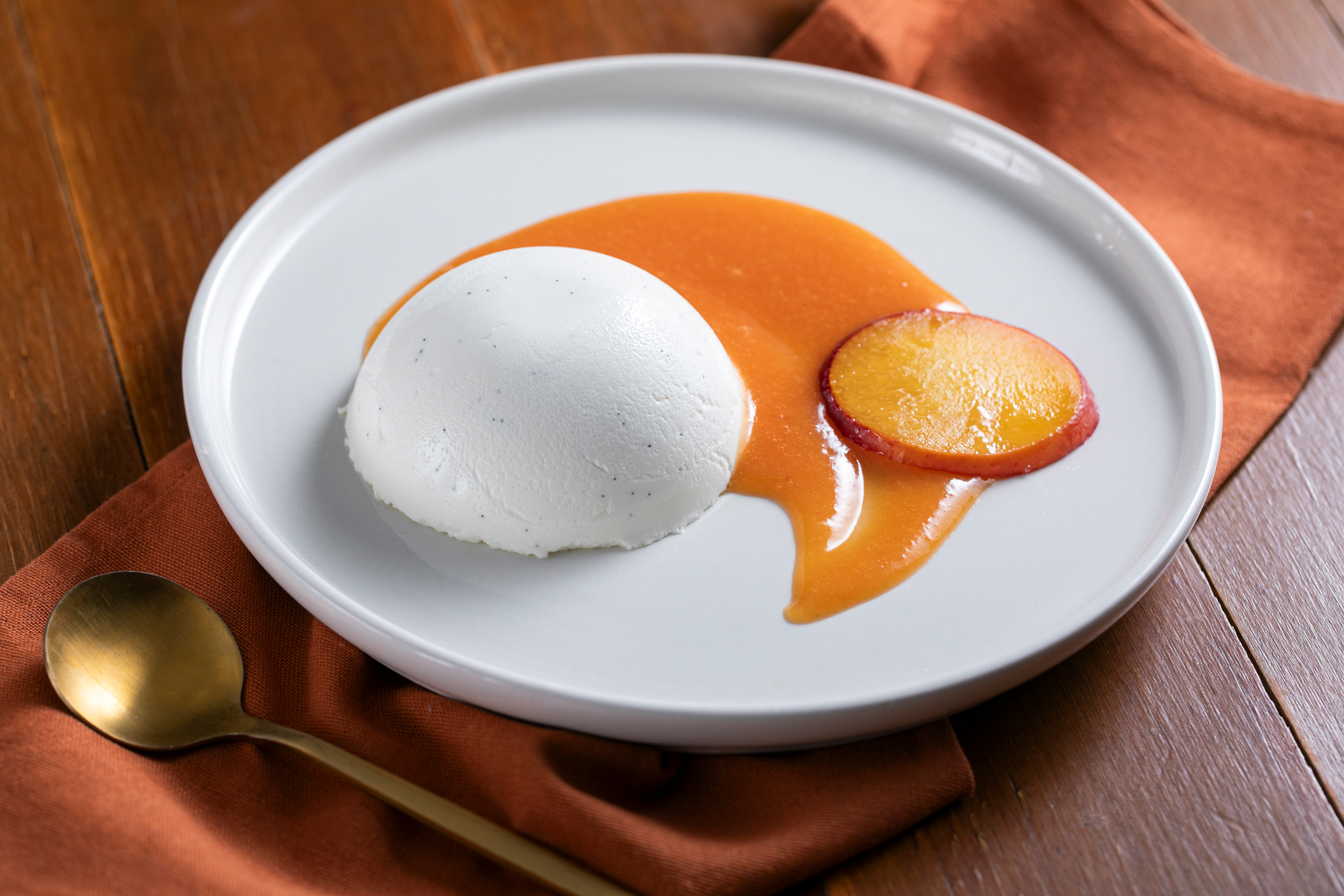
Panna Cotta with Peach Coulis The classic vanilla panna cotta set in dome molds, served over a peach coulis made from cooked and blended nectarines, with slices of caramelized peach alongside. The fruit coulis is the Italian summer answer to caramel — lighter, seasonal, and completely dependent on the quality of the peaches. Make it when nectarines are at their best.
Pro tip: taste the coulis before adding all the sugar — ripe nectarines are already sweet and may need less than the recipe suggests.
Coconut Panna Cotta with Raspberry Coulis Half cream, half coconut milk, with enough gelatin to set cleanly, served with a sharp raspberry coulis of blended raspberries, lemon juice, and powdered sugar. The coconut softens the cream's richness without overpowering it, and the raspberry cuts through both. One of the most visually striking variations on the list — white cream, bright red coulis, fresh raspberries and mint on top.
Pro tip: wet the inside of the molds with water before pouring in the mixture — it makes unmolding significantly easier.
Vegan Panna Cotta Soy milk and plant-based cream set with agar agar instead of gelatin — the plant-based gelling agent that activates with heat and sets slightly firmer than gelatin but with none of the rubbery texture. Served directly in the glass rather than unmolded — no molds needed, no hot water dipping, no knife around the edges. Just pour, refrigerate, and garnish with raspberry coulis, fresh berries, and chopped almonds.
Pro tip: agar agar must reach a full boil to activate — unlike gelatin, it won't set properly if only heated gently. Simmer for at least 3 minutes after it comes to a boil.
The unmolding. Every panna cotta on this list, except the vegan version which is served directly in its glass, is served unmolded — inverted from its mold onto the plate so the smooth, curved top becomes the base. The trick is heat: dip each mold in hot water for three to five seconds, run a small knife around the edge, and invert directly onto the plate. Too long in the water and the cream starts to melt. Too short and it won't release. Three to five seconds is the window.
Get that right, and the rest takes care of itself.
Related: 5 Italian Desserts, Zero Oven / The Italian Guide to Tiramisù / Six Lemon Desserts. Zero Regrets.