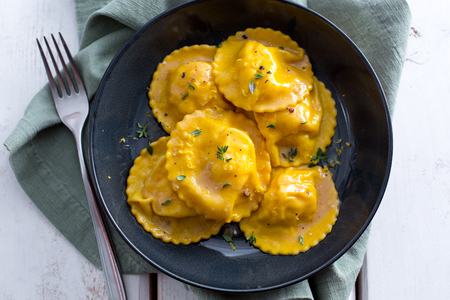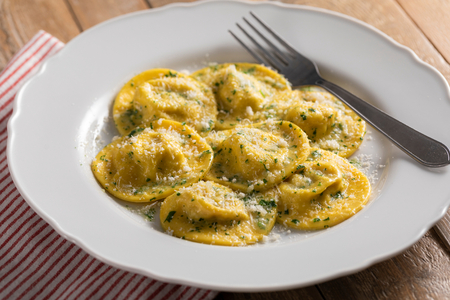


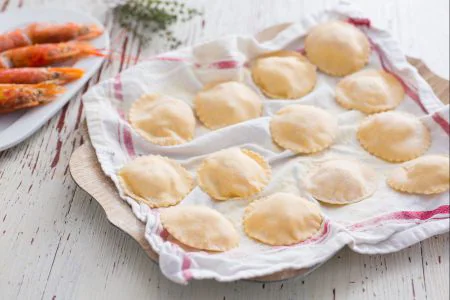
Shrimp and Lemon Ravioli
Shrimp and lemon ravioli are a delicate and refined first course, perfect to prepare for special occasions or holidays!
- Average
- 60 min
- Kcal 398
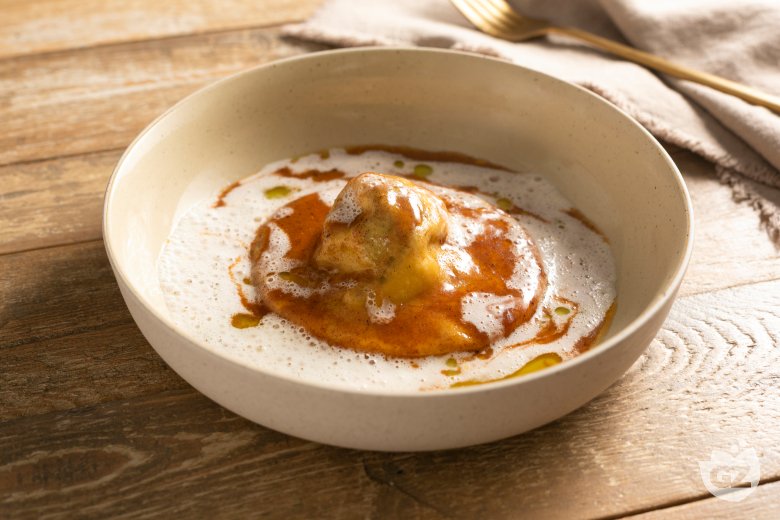
Combining Italian and French culinary traditions, this dish of beef short rib ravioli with lemon foam is truly a celebration of flavors. In the beautiful Piedmont region, fresh pasta is a staple, and this recipe takes it up a notch with ravioli filled with slow-braised beef ribs. So so good. The beef is cooked in red wine, a classic French method that makes it incredibly tender and flavorful. Meanwhile, the pasta is laminated with sage, giving it that earthy, aromatic Italian touch. And look, what really sets this dish apart is the rich sauce made by finishing the beef juices with butter—seriously good—creating a silky coating for the pasta. A drizzle of sage oil adds a colorful pop of green and enhances the herbal aroma. This homemade ravioli with beef ribs becomes a centerpiece for special occasions, perfect for impressing those who appreciate good food.
For those who enjoy lemon foam recipes or want a citrus twist in their pasta, the light lemon cream foam on top is a great addition. I mean, it is not heavy or overly creamy—instead, it acts like a zesty cloud that refreshes the palate and balances the dish's richness. The foam complements the beef and butter sauce—making every bite bright and slightly tangy. Pretty much a flavor burst. This nod to French cuisine adds an element of freshness and surprise. Italian sage and French technique blend seamlessly here, creating a dish that feels like a culinary celebration. Those who love gourmet ravioli recipes or are always seeking new beef-stuffed pasta with lemon sauce will find this fusion memorable. It's one of those meals where you can taste the care in every step. And the sauce? It feels rewarding to invest time into something so special and moist, brimming with character from both cultures.

To prepare the ravioli filled with beef ribs with lemon foam, start with the meat filling: sprinkle the beef ribs with salt on all sides 1, then let them rest uncovered at room temperature for a couple of hours 2. After this time, pat the meat dry with some paper towels to dry it 3.

Take a cast iron pot and heat it well with a drizzle of vegetable oil, then place the ribs in and seal them on all sides, touching them as little as possible 4. When the meat is well browned 5, transfer it to a rack 6 and leave the cooking jus in the pot.

Add the onion to the cooking jus 7, the finely chopped carrots and celery 8, then salt 9 and let it gently fry for about ten minutes, stirring often.

When the sauté is softened, add the tomato paste 10 and toast it for a couple of minutes 11, then put the beef ribs back in the pot 12.

Now pour in the red wine 13 and the Port 14, then add pepper and cover with a lid 15. Transfer the pot to a preheated static oven at 320°F and cook for at least 2 hours and 30 minutes, or until the meat is very tender.

After the cooking time, let the meat cool slightly inside the pot 16. Shred the meat with your hands, removing the bones and cartilage 17, then chop it with a knife 18 and transfer it to a bowl.

Strain the cooking jus into a small pot 19 and reduce it over low heat for about 20 minutes 20 until it's about half. In the meantime, add the remaining sauté in the sieve to the meat in the bowl 21.

Add the grated Parmigiano Reggiano 22 and mascarpone 23. Mix well to combine everything 34, transfer to a piping bag without a nozzle, and keep in the fridge.

Place the flour in a mound on the work surface, then pour the eggs 25 and yolks 26 in the center. Incorporate the flour first with a fork, then continue working on the work surface until you get a smooth and homogeneous dough 27. Wrap the dough in plastic wrap and let it rest at room temperature for 30 minutes.

Divide the dough into 2 portions and roll out the first part of the dough with a pasta machine 28, keeping the second portion covered; you should obtain sheets with a thickness of 1/16 to 1/8 inch. Cut the sheets in half and place sage leaves on one half 30.

Cover with the other half of the sheet 31 and pass everything again through the pasta machine 32 to adhere well: you have thus obtained sage-laminated sheets 33. Also roll out the second portion of dough to obtain sheets of the same thickness, but in this case, do not add sage: these will be the base of the ravioli.

Take a non-laminated sheet of pasta and press lightly with a 3-inch round cutter to mark the outline of about 40 ravioli 34. Squeeze a generous tuft of filling in the center of each disc 35, then spray with a little water and cover with the laminated sheet 36.

Press well with your fingers to expel all the air 37; if necessary, you can poke a small hole in the sheet with a toothpick to remove any remaining air and then seal it again. Finally, cut out the ravioli using the same round cutter used before 38. Place the ravioli on a tray 39 and freeze them for at least 2 hours; this way, they will hold their shape better during cooking.

Bring a pot with water to a boil and blanch the parsley 40 and sage 41 for one minute. Transfer the herbs to ice water to stop cooking and set the color 42.

Drain the excess water well and roughly chop them with a knife 43. Put the herbs in a mixer, add the vegetable oil 44, and blend to get a homogeneous mixture 45.

Pour the mixture into a small pot and let it simmer for 30 seconds 46, then strain it through a sieve lined with a dishcloth or cheesecloth 47. Let the obtained oil rest for 30 minutes 48, then distinguish the color difference: remove the impurities and keep the remaining part.

Heat the milk and cream in a small pot over high heat 49, then add the butter 50 and stir to melt it 51.

Remove the pot from the heat and add the zest 52 and lemon juice 53. Season with salt and white pepper 54, then let it rest.

Take the reduced cooking jus and pour it into a pan with part of the butter 55, then melt it gently. In the meantime, immerse the frozen ravioli in boiling salted water, making sure it doesn't boil too vigorously to avoid them opening 56. Cook the ravioli for about 5 minutes, then drain them and transfer them to the pan with the seasoning 57.

Add the remaining butter 58 and gently move the pan to toss them without the risk of breaking them 59. At this point, take the lemon foam and briefly blend it with an immersion mixer to form a light foam 60.

Plate the ravioli with their sauce, then complete with the lemon foam 61 and the green oil 62. The ravioli filled with beef ribs with lemon foam is ready to be served 63!