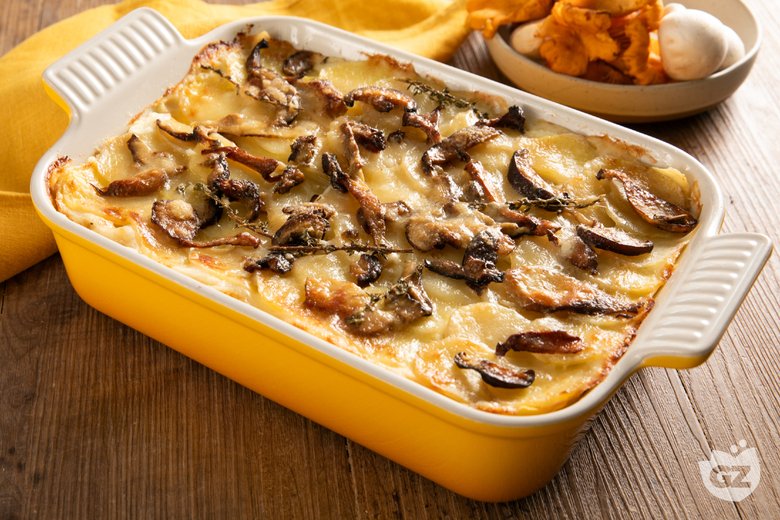


Risotto with dried porcini mushrooms
- tastycorner
Potato and mushroom lasagna is a rich, creamy vegetarian alternative to the classic—built on layers of fresh egg pasta, thinly sliced potatoes, and sautéed mixed mushrooms, all bound together with homemade béchamel. There's no meat ragù here, and none is missed: the potatoes soften fully during baking, and the herb-seasoned mushrooms add a rustic, fragrant depth that makes the dish feel genuinely occasion-worthy. It holds up well as a Sunday lunch centerpiece or as something a little different to set on the table when you have guests.
Béchamel does the work that tomato sauce would in a traditional lasagne, keeping each layer cohesive and creamy without overpowering the earthy quality of the mushrooms. Using mixed mushrooms rather than a single variety gives the filling more complexity, and the thin potato slices melt into the pasta layers in a way that feels natural rather than unexpected. It also assembles well ahead of time, so you can have it ready to go into the oven whenever you need it—which makes it as practical as it is satisfying.
You might also like:
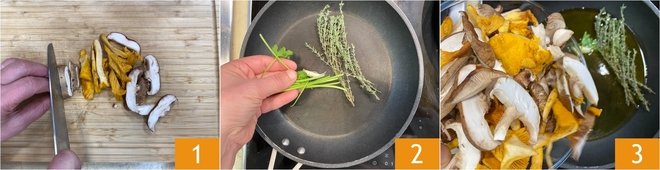
To make the potato and mushroom lasagna, start with the mushrooms: clean them thoroughly to remove any dirt, then slice them into irregular pieces 1. In a pan put the garlic clove, the thyme and the parsley stems 2. Add the olive oil and the mushrooms 3.
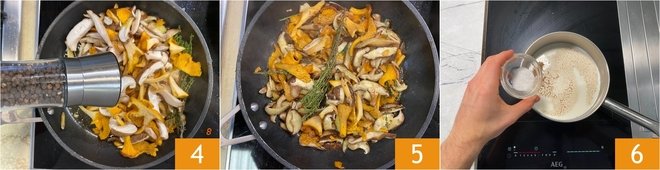
Add salt and pepper 4 and sauté over medium-high heat for about 10 minutes, stirring occasionally 5. Then remove the garlic and the herbs and set the mushrooms aside. Move on to preparing the béchamel. Pour the milk into a small saucepan, add the nutmeg and salt 6, then warm it.
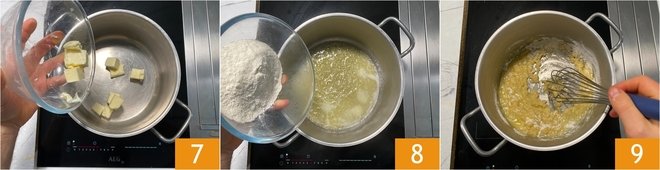
In another small saucepan melt the butter over low heat 7, then add the flour 8 and whisk quickly to obtain a smooth, lump-free mixture 9.
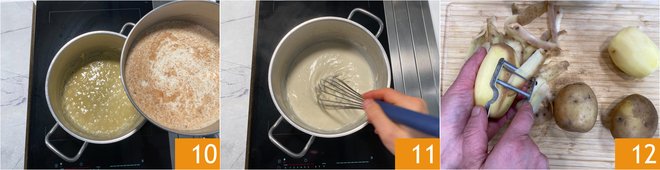
Pour the warm milk in gradually 10, continuing to whisk to incorporate it into the butter-and-flour mixture. Once the first portion is incorporated, add the remaining milk and continue cooking over low heat for about 5–6 minutes, stirring constantly, until you obtain a thick béchamel 11. Transfer to a bowl, cover with plastic wrap touching the surface, and set aside. Now take care of the potatoes: first peel them 12.
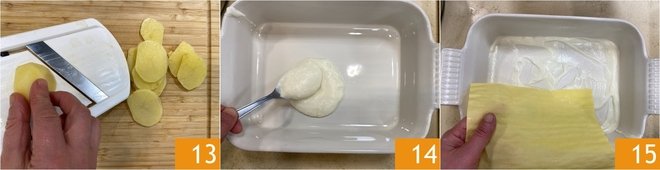
Slice them with a mandoline into very thin slices, about 1–2 mm thick 13 — roughly 0.04–0.08 in. At this point you're ready to assemble the lasagna. Spread a layer of béchamel on the bottom of an 8 x 9.5 in (20 x 34 cm) baking dish 14, then lay fresh egg pasta sheets 15.
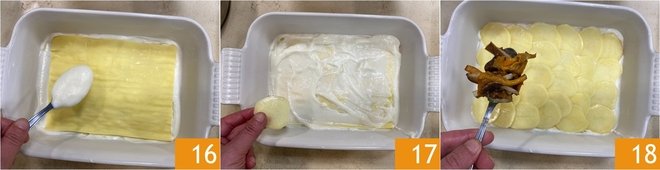
Cover with more béchamel 16 and arrange a layer of potato slices 17. Add some mushrooms 18
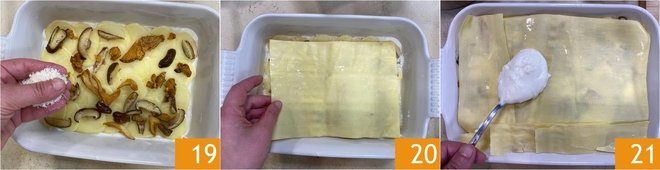
and finish with grated Parmesan 19. Continue in the same way, alternating the ingredients 20 21 until you have 5 layers in total.
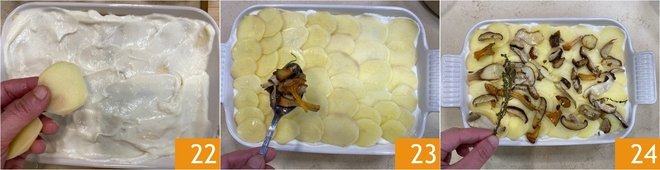
Finish with a layer of béchamel, a layer of potatoes 22, the remaining mushrooms 23 and a little thyme 34.
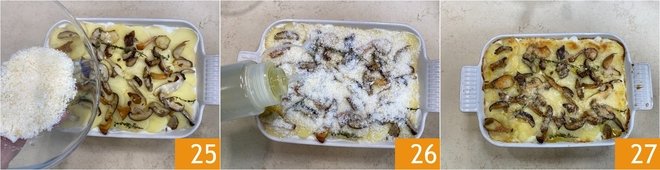
Sprinkle with grated Parmesan 25, then drizzle the surface with a little olive oil 26. Bake in a preheated conventional oven at 392°F (200°C), placing the dish on the lowest rack, for about 60 minutes. After this time, remove the lasagna from the oven and let it rest for 10–15 minutes before slicing and serving. Your potato and mushroom lasagna are ready to enjoy 27!


