


Vegan Bechamel
Vegan bechamel is a sauce similar to the original, but made without butter or cow's milk. Perfect for enriching many dishes! Here's the recipe
- Very easy
- 15 min
Béchamel sauce has a paper trail specific enough to name names. The most widely accepted account holds that Caterina de' Medici brought it to France under its original name, salsa colla, where courtier Louis de Béchameil later claimed it and gave it the name it still carries. Pellegrino Artusi pushed back in his own way, Italianizing it as "balsamella" in his celebrated cookbook — a term that faded, though the sauce itself never did.
It works across lasagna, baked pasta, fennel gratin, and creamy chicken dishes with equal ease. The case for making it yourself comes down to texture. Packaged versions reliably miss the genuine creaminess and lump-free consistency that a proper Béchamel sauce recipe delivers — and once you have that consistency down, reaching for a carton becomes harder to justify.
You might also like:
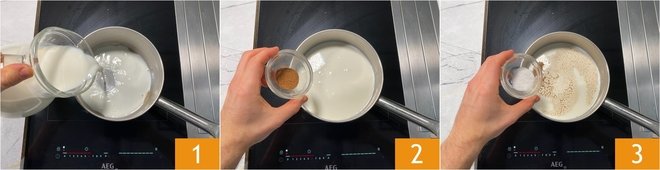
To prepare the béchamel, first pour the milk into a small saucepan 1, add the nutmeg 2 and the salt 3, then heat it.
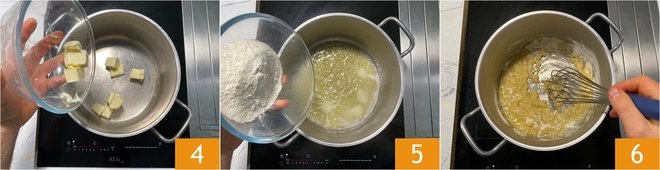
Put the butter in another saucepan 4 and let it melt over low heat, then add the flour all at once 5. Whisk vigorously by hand to prevent lumps from forming 6. Continue stirring until you obtain a golden mixture, the roux.
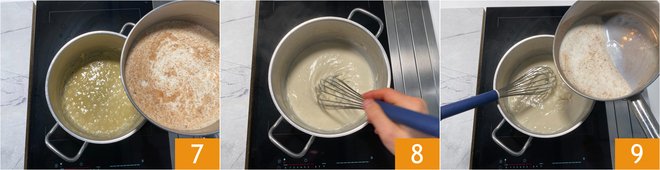
At this point loosen the roux by pouring in a little hot milk first 7, whisk 8, and then add the rest of the milk 9.
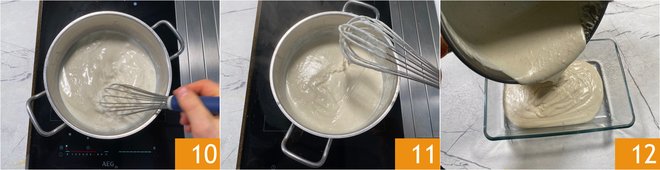
Continue stirring 10 over low heat until you reach the desired consistency 11; cooking the béchamel for 5–6 minutes will give you a medium thickness. The béchamel is ready and can be used immediately or stored. In that case, pour it into a bowl 12.
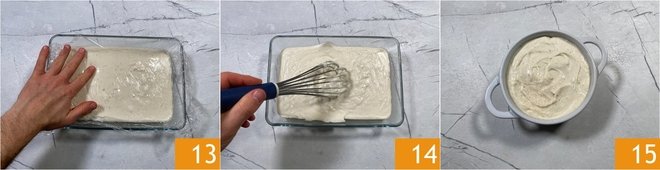
Cover with plastic wrap directly on the surface 13 and let it cool. When you need to use it, whisk it to bring it back to a smooth texture 14. If it is too cold you can heat it in the microwave, adding a little milk. The béchamel is ready 15!


Questions from our community59