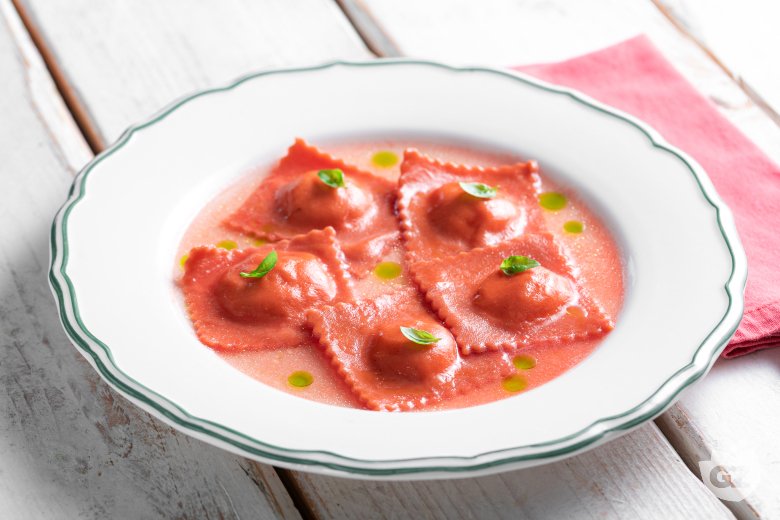


Heart Shaped Ravioli
- sweetandsalty
Egg-free tomato ravioli runs tomato through every layer: concentrate kneaded into the dough, vine tomatoes folded into the ricotta filling, and datterini cherry tomatoes cooked down into a light sauce for the top. The concentrate pulls double duty — it turns the pasta a vivid rust-red and gives it enough flavor that the fresh pasta dough itself is worth noticing before you ever get to the filling.
If you want a way to make egg free ravioli from scratch that goes a little further than the standard version, building tomato into the dough rather than just the sauce is a good place to start. The ricotta and ramati filling is fresh and creamy, which keeps the concentrated dough from feeling heavy, and the datterini sauce stays deliberately loose and bright. A drizzle of basil oil finishes each plate — aromatic without being loud, and clean enough to let the deep color of the pasta show through.
You might also like:
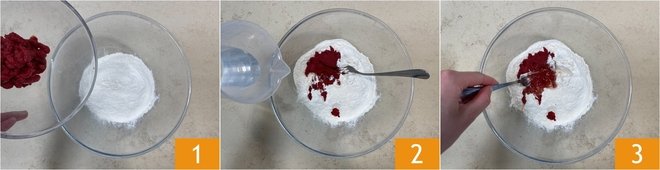
To make the egg-free tomato ravioli, start with the fresh pasta: in a bowl combine the flour, the tomato paste 1 and the water 2, and mix well with a fork 3.
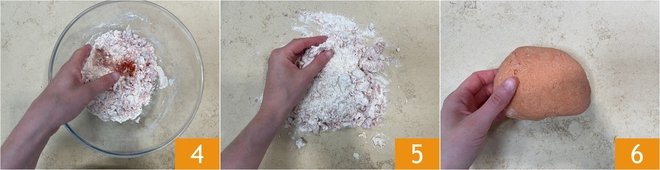
Once the ingredients are combined, start kneading by hand 4, then transfer the mixture to the work surface and work it 5 until you form a smooth, homogeneous dough ball 6.
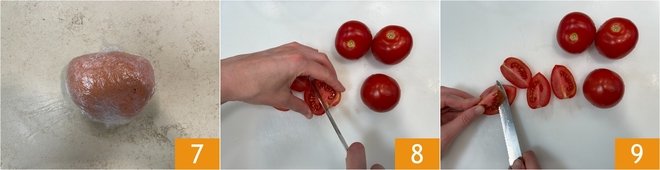
Wrap it in plastic wrap and let it rest in the fridge for 30 minutes 7. In the meantime, cut the ramato tomatoes into quarters 8 and remove the central pulp 9, which you will keep aside.
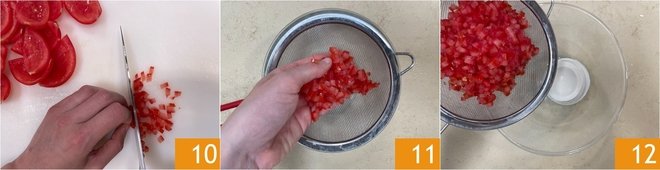
Cut the remaining flesh into very small dice 10, drain it through a sieve 11 and combine everything in a bowl with the ricotta 12.
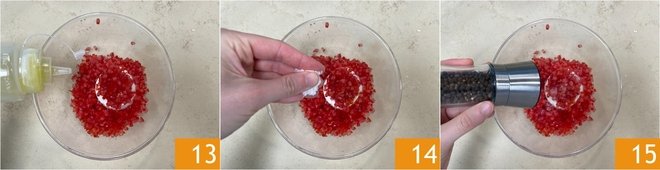
Season with oil 13, salt 14 and pepper 15.
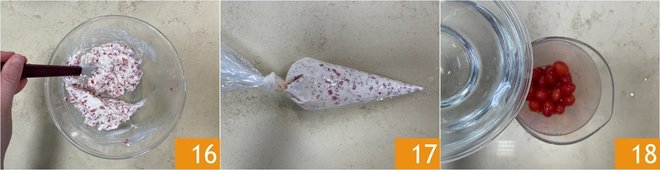
Mix 16 and transfer into a piping bag 17. In a jug put the reserved pulp of the ramato tomatoes, the datterini cherry tomatoes and the water 18.
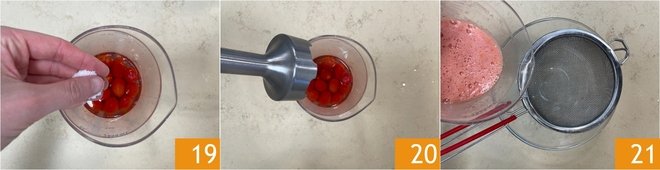
Salt 19 and blend well with an immersion blender 20, then strain through a sieve 21.
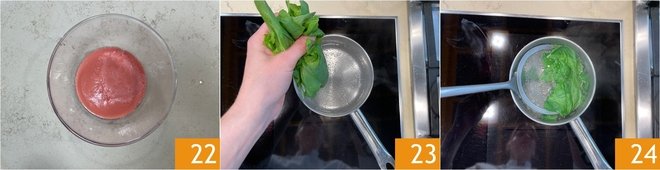
Set the sauce aside 22. In a small pot blanch the basil leaves for a few seconds 23 and drain them 34 directly into a bowl with ice water 25.
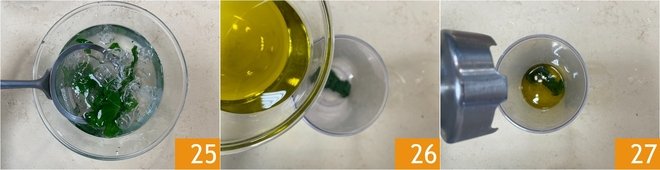
Wrings them out well and put them in a jug with oil 26, then blend well 27.
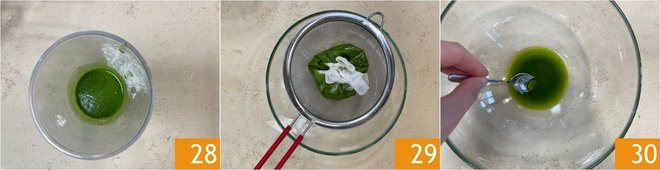
You should obtain a smooth sauce 28, then strain it through a fine-mesh sieve lined with a paper towel 29. Set the resulting basil oil aside 30.
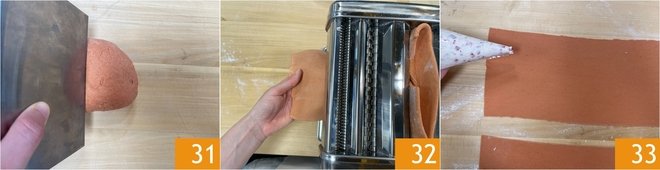
At this point you can form the ravioli: take a portion of the dough 31, roll it out with a pasta machine from the thickest setting to the finest, about 2 mm 32 (≈ 3/32 in). Divide it into two strips and fill with the mixture 33, making sure to space the mounds of filling well so you have room to seal the ravioli.
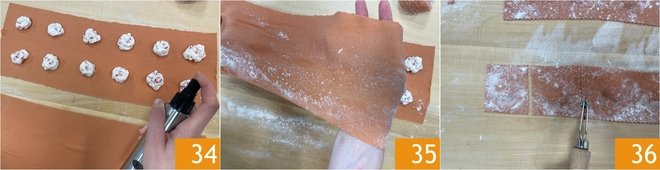
Moisten the sheet with a little water using a spray bottle 34 or a brush, so it will adhere better once closed. Overlap the other sheet of pasta 35 and seal well, taking care to remove the air from inside. Cut them with a fluted wheel to obtain squares approximately 5 cm in size 36 (about 2 in).
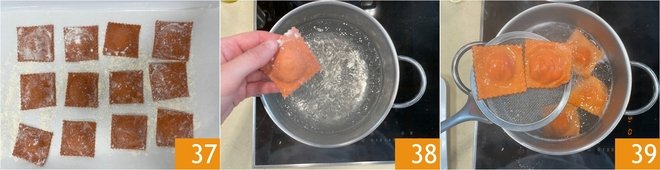
As you form them, transfer them to a floured tray 37. Cook the ravioli in boiling salted water 38, drain them as they float to the surface; it will take just a few minutes 39.
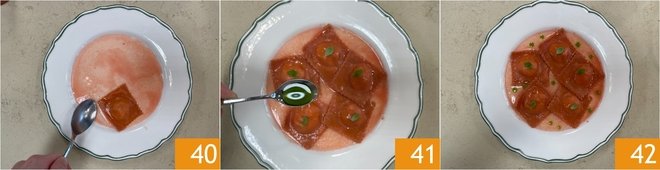
Serve the egg-free tomato ravioli with the ramato tomato sauce 40 and the basil oil 41. Finish with fresh basil leaves 42.


