

Potato Focaccia
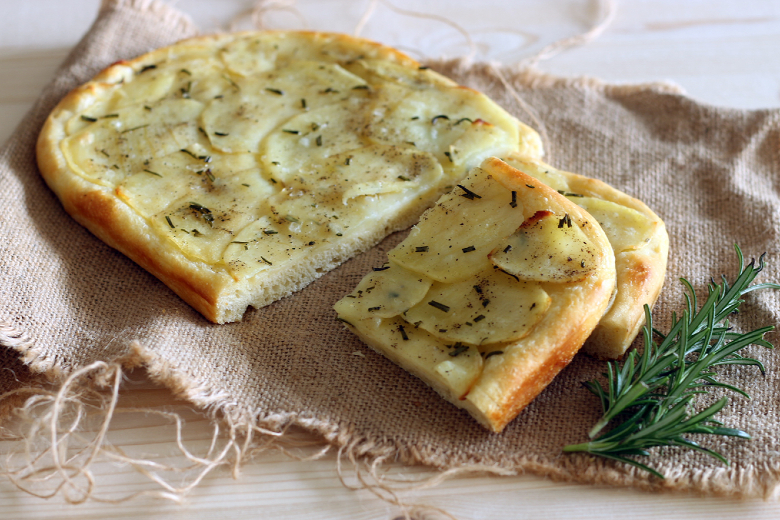
The potato focaccia is crispy on the outside and soft on the inside, ideal for appetizers with cold cuts or to be served in the bread basket.
- Average
- 60 min
- Kcal 185
If you're craving a taste of Liguria, this easy potato focaccia is seriously good. In this beautiful Italian region, focaccia isn’t just bread—it's, you know, a staple of daily life. Of all the delicious varieties, this one—super tasty—stands out with its thinly sliced potatoes and fresh rosemary. Plus, the dough is really convenient, needing just 45 minutes to rise. No all-day wait here. What makes this focaccia special is its fluffy and moist interior, achieved with a simple dough and a drizzle of extra virgin olive oil. The crispy, golden edges? A fan favorite for sure. Locals keep it pretty simple, using coarse salt and fresh herbs to boost the flavor. As it comes out of the oven, the aroma is so so tender and savory, making it almost impossible not to tear off a piece right away.
For those hectic days or impromptu gatherings, quick potato focaccia is a lifesaver. Can't go wrong with it. It's perfect as a snack or a side dish, and, really, no one will believe it is such a simple potato focaccia recipe. In Liguria, people sometimes mix things up with different kinds of potatoes or herbs—pretty much whatever's fresh—but the classic rosemary touch is always a winner. What's fantastic about this bread is that you do not need any special skills. It's essentially a homemade potato focaccia that turns out soft and flavorful every time. Whether you serve it as an appetizer, pair it with soup, or grab a piece on the go, it remains light and fresh. There's a reason this potato focaccia is a specialty in Italian bakeries—it fits any occasion perfectly. Try it once, and I gotta say, it'll quickly become your go-to for a quick, satisfying bite that feels homemade without any hassle.
And the sauce? Totally optional, but add your favorite if you like!
You might also like:

To prepare the easy and quick potato focaccia, start with the dough: dissolve the yeast in a bowl with water 1, then pour in the oil 2 and mix. Finally, add the flour while continuing to stir 3.

When it starts to take shape 4, turn the dough onto a lightly floured surface and continue to knead 5. At this point, incorporate the salt 6.

Continue working until you obtain a smooth dough 7. Transfer the ball into a bowl, cover with plastic wrap 8, and let rest for 45 minutes or until it doubles in size, under a wool blanket 9.

Meanwhile, peel the potatoes 10 and slice them thinly with the help of a mandoline or knife 11. Place the slices in a bowl and season with 1 tbsp of extra virgin olive oil 12.

Add salt, pepper 13, and a bit of chopped rosemary 14, then mix everything and let it marinate 15.

After the rising time, quickly work the dough on a floured surface by pressing it with your fingertips 16. Transfer it to a greased 10 x 8 inch pan and spread it to a thickness of about 1/4 inch, using 1 tsp of extra virgin olive oil poured on the surface 17. At this point, distribute the potato slices on the surface, slightly overlapping them 18.

Season with 1 tsp of extra virgin olive oil and a pinch of coarse salt 19. Bake in a preheated static oven at 375°F for about 20 minutes 20. Take it out and enjoy your easy and quick potato focaccia while it's still warm 21!