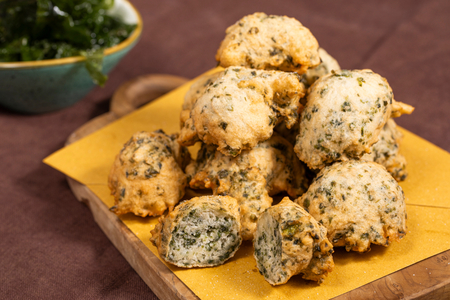



Artichoke Zeppole
Artichoke zeppole are fried dough balls, easy to prepare and perfect to serve as an appetizer, best enjoyed hot!
- Easy
- 25 min
Baked vegan castagnole are popping up everywhere in Italy during Carnival. They're a fun twist on the traditional fried doughnuts we all know and love. And you know what, by skipping eggs, butter, and milk, these baked vegan castagnole stay light and delicious—perfect for that sweet tooth without the guilt. Really good stuff.
The dough? Soft and a tad moist—you can thank the simple ingredients and quick mix for that. No waiting around for it to rest either. Raisins are classic, but honestly, who doesn’t love chocolate chips? Especially when kids are involved, it’s super fun. Italian Carnival desserts? Yeah, they’re festive and easy to share, and this vegan Italian doughnuts version totally keeps that spirit alive. A healthier twist for sure.
Many love dusting these baked vegan doughnuts with powdered sugar—super super yummy. And the sauce? Some folks dunk them in a thick vegan cream made with plant milk. Either way, you've got a little crisp outside and a tender inside. Grown-ups and kids will love them, no question.
Compared to fried castagnole, these feel lighter—way way lighter—but still hit the spot. Plus, even those skipping eggs or dairy can join in. Pretty simple.
No matter where you are in Italy, baked vegan castagnole are winning fans among those craving flavors without animal products. Really, they make sure you don’t miss out on the sweet, joyful vibes of Carnival. So here's the thing: try this vegan castagnole recipe for your next gathering. It's a fun snack to brighten any afternoon—it’s a great way to bring a touch of golden Italian festivity right into your kitchen.
And honestly, it’s proof that plant-based treats can be just as tasty as the classics. Whether you're into traditional or looking for something new, these delicious bites are sure to be a hit. For real.
You might also like:

To prepare the baked vegan castagnole, first soak the raisins in cold water 1. Meanwhile, pour the flour 2 and the sugar 3 into a bowl.

Add the baking powder as well 4 and mix with a whisk to combine the powders, then add the liquids: the vegetable oil 5 and the oat milk 6.

At this point, drain and dry the raisins 7, then incorporate them into the mixture 8 by stirring with a spatula 9.

You should obtain a homogeneous dough 10. Take a silicone mold with semi-spheres 2 inches in diameter (alternatively, you can use paper cups) and fill it with the obtained dough 11. Bake in a preheated static oven at 350°F for about 20-25 minutes 12 or until golden.

Meanwhile, prepare the cream: in a saucepan, combine the corn starch and powdered sugar 13, then add the warm oat milk 14 and mix well with the whisk. Place the saucepan over the heat and continue stirring until the desired thickness is reached 15.

If desired, you can color the cream with a pinch of turmeric 16. Once thickened 17, transfer the cream to a bowl, cover with cling film in contact, and let it cool. After the cooking time, remove the mold with the castagnole 18.

Unmold them and let them cool on a wire rack 19, then dust with powdered sugar to taste 20. Your baked vegan castagnole are ready to be enjoyed accompanied by the vegan cream 21!