
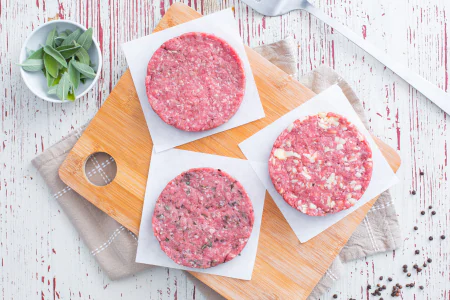
Homemade Beef Burger Patties: Classic, Herbed & Cheese-Stuffed
High-quality ground beef, three variations, and the technique that makes homemade patties worth the effort. Classic, herbed, and cheese-stuffed.
- Very easy
- 20 min
Pastrami starts in Romania and ends in New York — the journey took the late 19th century and a wave of Jewish immigration to complete it. The brisket was the cut that made the crossing: tough, cheap, and transformed by brining, spice-rubbing, and low slow cooking into something that became one of the defining foods of American deli culture. This homemade pastrami recipe follows that logic with a process accessible for a home oven: a 34-hour brine with toasted spices, a rub of black pepper, coriander, mustard seeds and smoked paprika, and two stages of slow cooking — uncovered first to develop the crust, then wrapped in parchment and foil to push the internal temperature to 203°F where the collagen fully breaks down and the meat becomes cuttable with a spoon.
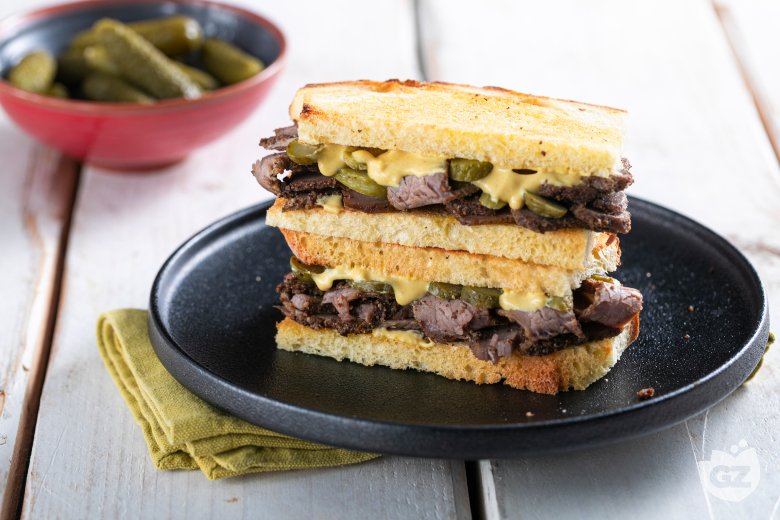
The total time is just over 33 hours including the marinade, which sounds like a project until you account for the fact that most of it is unattended. The result slices thin and cold as well as it serves warm — which means it works as a main course with roasted potatoes or, more faithfully, between two slices of toasted bread with Dijon mustard and pickles. The New York pastrami sandwich is the reason most people make this at home at least once.
If you are looking for other beef street food recipes, also try:
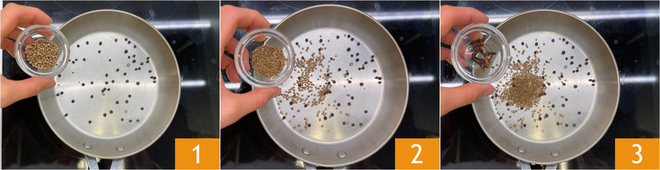
To prepare the pastrami, start with the marinade. In a pan, place the black pepper, coriander seeds 1, cumin 2, and cloves 3.
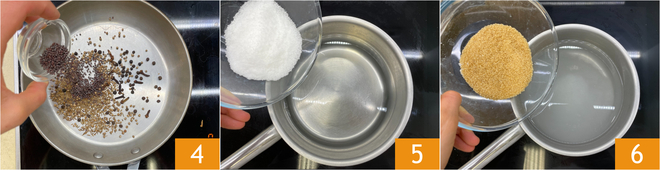
Finally, add the mustard seeds 4, toasting over medium-low heat for about 7-10 minutes. The spices should be well heated and release their aroma. Set aside. Pour the water into a pot and add the kosher salt 5 and brown sugar 6.
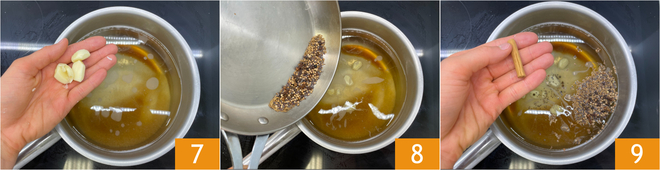
Continue with the crushed garlic, with the core removed 7, the toasted spices 8, and the cinnamon 9.
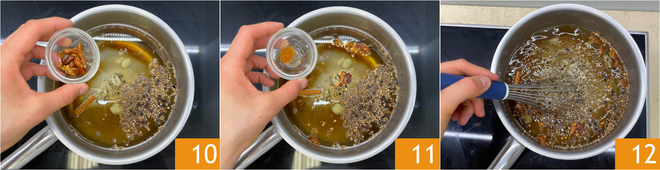
Add the chili pepper 10 and paprika 11. Stir 12, bring to a boil, and then let it cool completely.
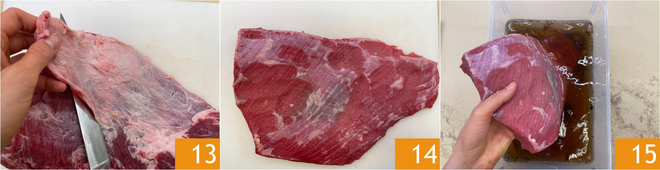
Meanwhile, clean the meat, removing the external fat 13 and also removing the larger, visible muscle bundles 14. Submerge the meat in the now-cold brine 15, ensuring it remains completely submerged, possibly placing a weight on it, like a meat tenderizer. Place it in the refrigerator, covered with plastic wrap, and let it marinate for 34 hours.
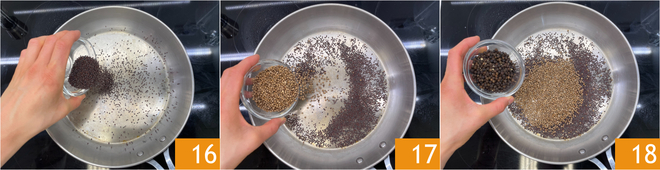
To prepare the rub, place the mustard seeds 16, coriander seeds 17, and black pepper 18 in a pan and toast for 7-10 minutes over medium-low heat.
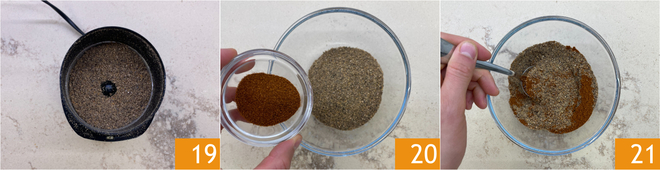
Transfer everything to a coffee grinder and grind to a medium-fine grain 19. Add the smoked paprika 20 and mix 21.
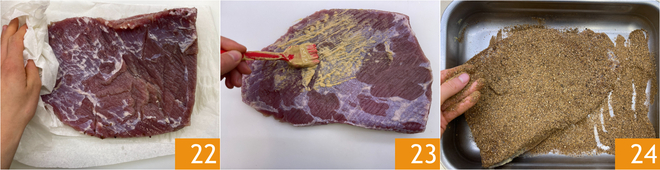
After the 34-hour marinade, take the meat and dry it thoroughly 22, then brush all sides with mustard 23. Cover the entire surface of the meat with the rub 34.
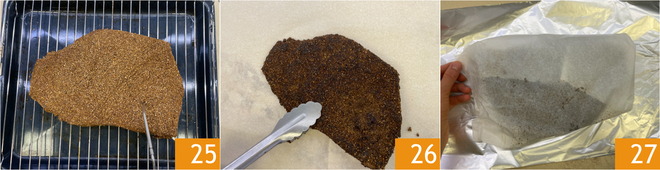
Place the meat on a rack 25 and cook in a static oven at 230°F for 4 hours or until the meat reaches an internal temperature of 160-162°F 26. At this point, wrap the meat in parchment paper 27.
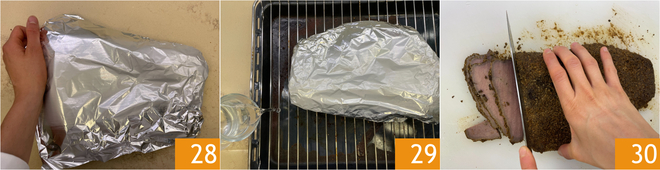
Then in aluminum foil 28. Place it back on a rack with a tray underneath into which you will pour 2 glasses of water 29. Continue cooking the meat in a static oven at 250°F for another 3-4 hours or until the internal temperature reaches 198-203°F. Remove from the oven, let it cool completely, and slice the pastrami thinly 30.
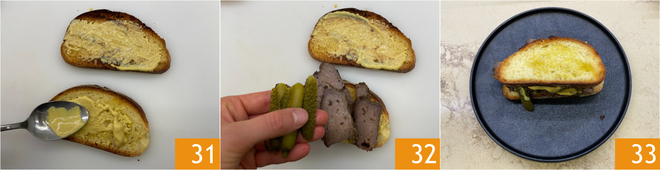
Now you can assemble the sandwich: spread Dijon mustard on two slices of toasted bread 31, fill with pastrami and pickles 32. Your pastrami is ready to be served 33.