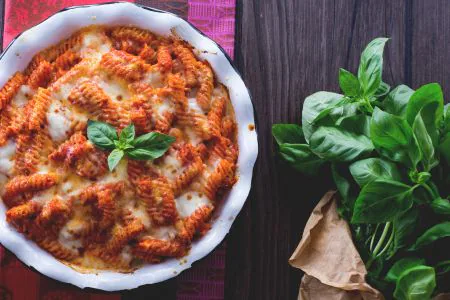
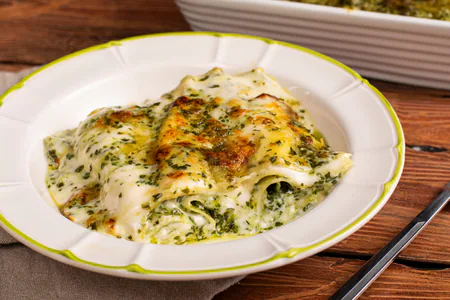
Microwave Pesto Lasagna
Microwave pesto lasagna is much quicker to prepare and just as tasty, it will become your ace in the hole... here is the recipe!
- Easy
- 45 min
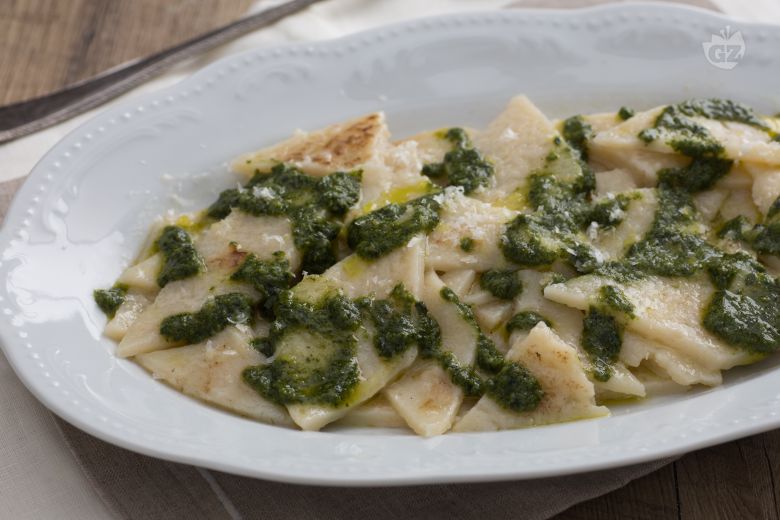
Testaroli from Lunigiana—nestled right where Tuscany and Liguria meet—really brings out the oldest vibes in traditional Italian pasta. It's an ancient Italian dish that's kinda like a cross between pancakes and pasta, but it's got its own unique flair. In Pontremoli, folks get really, really excited about it. And they even throw an event called Testarolo Pride. The secret? Well, it’s in the special testaroli cooking method: a batter made from just wheat flour, water and salt gets poured onto a super-hot stone plate called a testo, often heated with beechwood. This old-school way of cooking gives the finished testaroli a tender, slightly crispy edge. You get this earthy, toasty aroma you just don’t get with regular pasta. Disks can be large or small, and here's the thing—they aren't boiled like other pasta. Instead, they get a quick dip in hot water to soften up before they hit your plate.
In Lunigiana, everyone has their own favorite way to enjoy these, but the most classic move? A splash of good olive oil, a little basil, and fresh cheese. Makes everything taste so rich and moist. Folks in the Ligurian part of the region love testaroli with pesto—especially the famous Pesto alla Genovese. That tangy, herby kick from the pesto works so, so well with the mellow, almost nutty testaroli. And you know what? Even though you can find packaged versions in stores these days, people still love making testaroli at home. Keeps that real Lunigiana cuisine feeling alive. It’s a dish that's stuck around since the days of the Etruscans. Honestly, it is still a symbol of the area’s food culture. There's just something cool about eating a testaroli recipe that’s both simple and loaded with history—especially knowing it's been cooked on the same kind of hot stone for centuries. Every bite comes with a story—and a little taste of golden tradition.
You might also like:

To prepare the testaroli, start with the dressing: clean the basil leaves with a soft cloth and place them in the tall glass of a blender. Add the Parmesan 2 and the oil 3.

Blend everything with an immersion blender 4 until you obtain a smooth mixture 5. Set aside and move on to the testaroli: heat a cast-iron skillet very well, over medium-low heat. Meanwhile, place the flour, salt 6 in a large bowl.
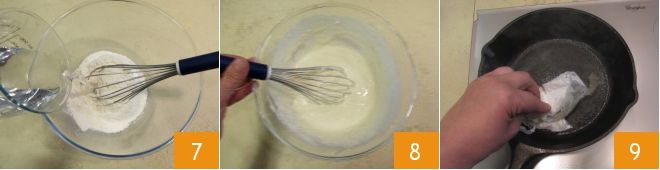
and pour in the water gradually while stirring with a whisk 7. You should obtain a smooth and homogeneous batter 8. When the skillet is hot, grease it with a little oil spread with a paper towel 9.
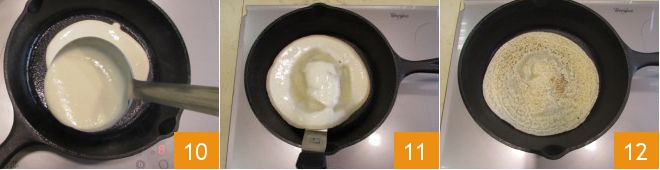
Take a ladle of batter and pour it from the outer edge 10 until it fills the whole pan evenly. The thickness of each testarolo should be between 1/8 and 3/16 inches. Let it cook for about 3-4 minutes, then use a spatula to flip it to the other side 11, cooking for about 1 minute. Gradually transfer the testaroli to a cutting board to cool them.
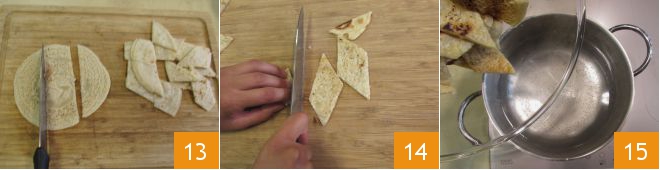
Once the batter is finished, cut the now cold testaroli first into strips 13, then into diamonds about 2 inches per side 14. Once ready, gradually revive the testaroli in salted boiling water for about 2-3 minutes 15. Prepare the serving plates by greasing the bottom with a little oil.
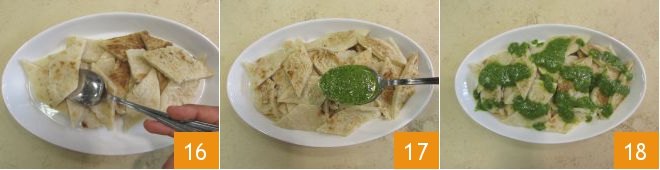
Drain the testaroli well onto the plate 16, dress them with a little more oil 17 and sprinkle with the basil and cheese dressing 17 18. Serve the testaroli immediately!