

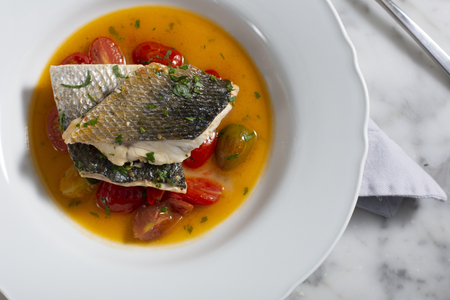
Seabass in Crazy Water
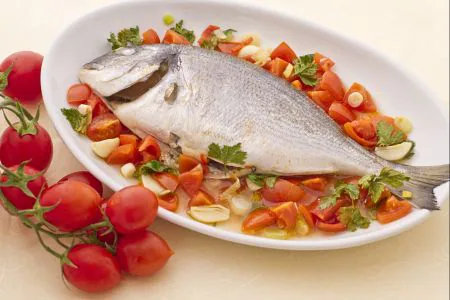
Seabass in crazy water is a homemade fish main course, easy and tasty. Discover here the quantities and procedure to prepare the recipe.
- Average
- 40 min
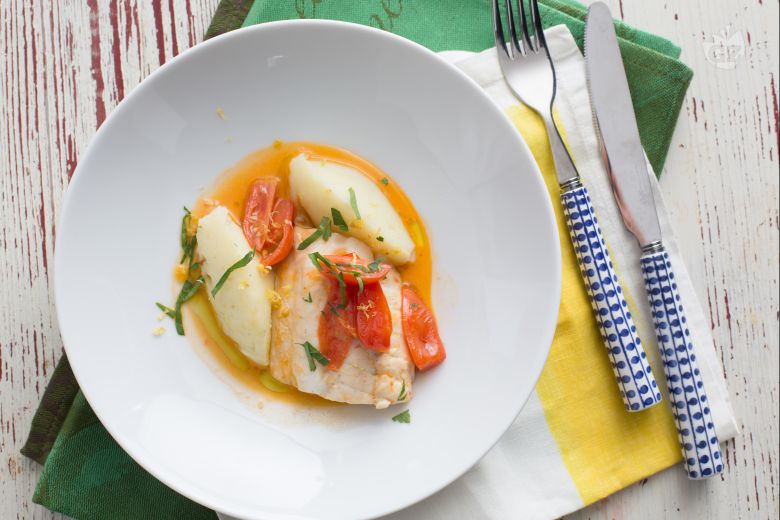
Pezzogna fillets in acqua pazza with mashed potatoes bring the flavors of the Gulf of Naples right to your table. This dish hails from the fishing villages near Capri and Ischia, where local fishermen have their own ways of making meals taste fresh and authentic. Pretty much. The pezzogna, or 'occhione,' is a prized fish in Campania, known for its tender, almost moist texture. And look, what’s cool about this recipe is the acqua pazza method. It began with fishermen using seawater instead of regular salt, giving the fish a light, briny vibe, letting you taste the sea with every bite. Really, every bite. The addition of Sorrento lemons—famous all along the coast—adds a tangy aroma and lifts the dish in a way only Italian fish recipes can manage.
And listen, it’s all about keeping things simple and letting the natural flavors shine, which is such a big part of Mediterranean cuisine. This isn’t just any old acqua pazza recipe—it’s a real taste of Campania’s food traditions, especially when paired with a creamy mashed potatoes side dish. The potatoes soak up some of that golden, lemony broth, making every forkful feel extra comforting. Seriously comforting.
Folks in this part of Italy always focus on what’s local and fresh, and you can totally tell. You really can. The pezzogna’s delicate flavor doesn’t get covered up by heavy sauces or complicated spices; instead, everything works together in a really easy, relaxed way. Whether you’re after healthy fish meals or just want an easy fish dinner that feels like a trip to the Italian coast, this dish checks all the boxes.
For real, people who love traditional Italian seafood appreciate how the flavors are honest and straightforward, with a mix of crispy edges from the pan and that soft, dreamy mash on the side. Every bite is like a snapshot of the southern Italian seaside, combining the taste of the sea, zesty citrus, and real comfort food all on one plate. This dish captures the heart of Southern Italian culinary magic. Can't go wrong.
You might also like:

To prepare the red seabream fillets in crazy water with mashed potatoes, first put the potatoes to boil 1. By pricking them with the tines of a fork, you will be able to check their cooking. It will take about 30-40 minutes depending on the size of the potatoes. When the potatoes are cooked, drain them and set them aside, keeping them warm. In the meantime, deal with the fish. Place it on a cutting board and with the opposite side of a knife blade, descale it, passing it several times from the tail to the head 2. With a sharp knife, make a slightly oblique cut under the head 3.

Then cut into the tail and the dorsal part of the fish along the vertebral column 4, starting from the top, and proceed moving the blade horizontally relative to the work surface to obtain the first fillet 5. Remove the part of the fillet near the belly, containing more bones 6.

Flip the fish over and obtain the second fillet in the same way 7, then remove any bones with tweezers 8. If you prefer, you can have this operation done by your trusted fishmonger, or buy about 1.1 lbs of red seabream fillets. Now cut each fillet in half 9, to obtain 4 portions.

Move on to the cherry tomatoes, wash them and after removing the stem 10, cut them into 4 pieces 11. Take a bunch of parsley and separate the stems from the leaves 12; the latter will be used for plating, transfer them to a small bowl and set them aside.

Move on to the sauté. In a pan, pour a drizzle of oil, 1 clove of garlic in its skin, slightly crushed 13, and the whole parsley stems. Let the base brown and flavor well, then remove the garlic and stems 14. Pour in the cherry tomatoes and add a pinch of salt 15, which will aid cooking as it will allow the tomatoes to release their water.

Deglaze with white wine 16 and when the alcohol has completely evaporated, add the red seabream fillets 17 and the water 18.

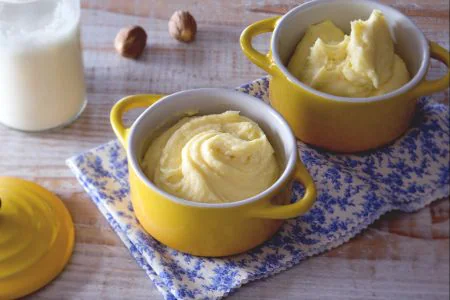
Adjust with salt and white pepper. Cover with a lid 19 and let the fillets cook for 8-10 minutes on a low flame without turning them. In the meantime, focus on the mashed potatoes. Cut the potatoes in half and without peeling them, mash them with a potato masher, collecting the puree in a bowl 20. Add a drizzle of oil 21,

salt, white pepper 22, and the grated zest of half a lemon 23. Mix until you obtain a smooth and homogeneous mixture 34.

At this point, the fish will also be ready; you will notice that it appears glossy on the surface 25. All that's left is to plate. Using two spoons, shape two quenelles of mashed potatoes 26 and place them on a plate 27.

Place the red seabream fillet in the center of the plate 28 and drizzle it with the sauce 29. Add a grating of lemon zest 30

the parsley leaves, cutting them with scissors 31, and a drizzle of raw oil 32. Serve the red seabream fillet while it's still hot 33.