

Mantuan Mustard
Mantuan mustard is a typical specialty of Mantua's cuisine and is one of the variations of the original French mustard.
- Easy
- 3 h 30 min
- Kcal 591
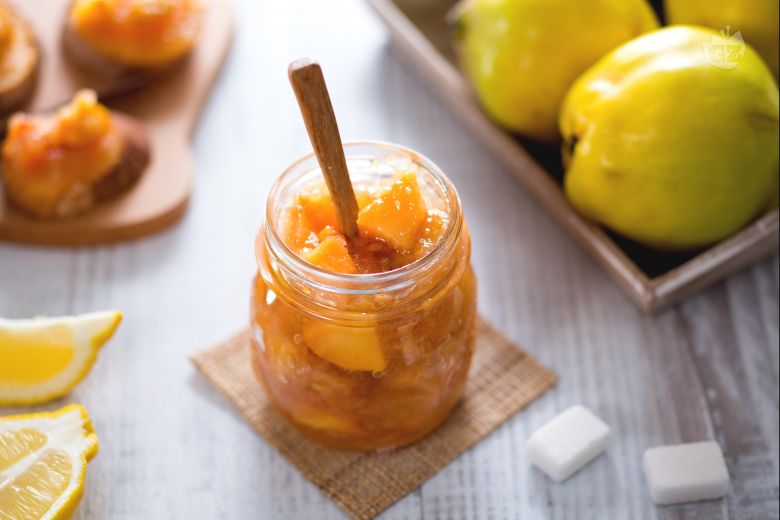
Quince jam? Honestly, it's like a little seasonal secret here in Liguria. Every fall, when these golden beauties show up at the markets, you know it's time. The quince fruit—kinda old-school—comes from the Middle East. It's got this tart bite that's nothing like apples or pears. And the transformation? So so cool. Starts out almost too astringent to bite into, but once it cooks down, it turns into this sweet, fragrant flavor that's really really unique.
Folks in Liguria have been at it forever. They're pros. And the thing is, there's a classic way of using it—gobeletti. Those little buttery cookies? Perfect with a spoonful of homemade quince jam inside. Plus, it pairs super super well with rich meats. Back in medieval times, they'd use it to cut through fattiness—smart, right? Try it with roast pork or some fancy cheese, and you'll totally see how those flavors just click.
Every year, families in northern Italy whip up this basic quince jam recipe to keep that fall flavor around a bit longer. It's like a little tradition, you know? Filling jars with this moist, glossy spread that smells kinda floral and sweet at the same time. And you know what? It's super versatile. Spread it on toast, layer it in a cake, or glaze some poultry. People think quince jam is just another preserve, but once you try it with meats or in Ligurian desserts—wow. It’s got a lot more going on.
The tender texture and deep aroma feel special, like tasting a bit of history. Even though the fruit starts out wild, the jam brings out the best parts. Turns it into something folks keep around for months. Whether you're into savory or sweet, having quince jam handy means you’ve got a touch of Ligurian autumn, ready when you are. It's like having a jar of tradition right on your shelf. And can't go wrong with that.
You might also like:
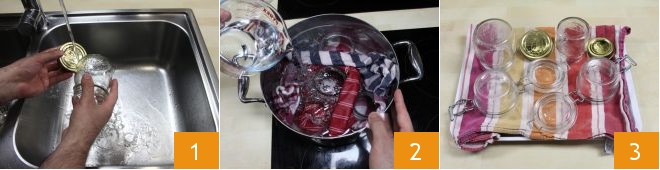
To prepare quince jam, start by sanitizing the jars in which to store it as indicated in the guidelines provided by the Ministry of Health and reported at the end of the recipe. After rinsing them thoroughly under a stream of plenty of running water 1, place the glass jars in a large, deep pot taking care to place a clean cloth between them so that the jars do not bump into each other during boiling. Fill the pot with water to completely cover the jars. Bring the water to a boil: at that point, lower the heat and let it boil for 20 minutes. Then insert the jar lids to sterilize them and let them boil for another 10 minutes. Finally, turn off the heat and let the water cool. When it reaches room temperature, remove the jars from the pot and let them drain upside down on a dry, clean cloth so they can dry completely 3.
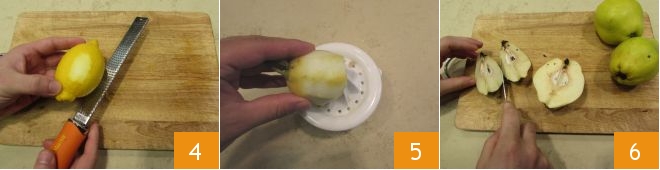
Then focus on preparing the jam. Take the untreated lemons and grate their peel 4, which you will set aside. Then squeeze the lemons to obtain the juice 5. Wash and dry the quinces thoroughly. Remove the stem and then cut them into quarters 6. It is not necessary to peel them.
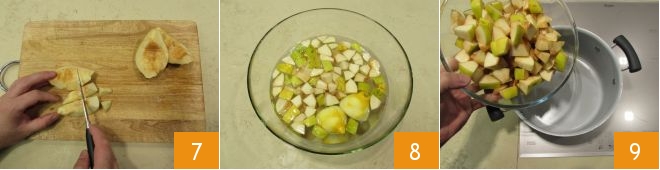
Remove the core and cut into cubes of roughly equal size to ensure even cooking 7, placing them as you cut into a bowl with acidulated water (you can also use the squeezed lemons) to prevent browning 8. Once you have finished preparing the quinces, drain them using a skimmer to drain the excess water and place them in a deep pot 9.
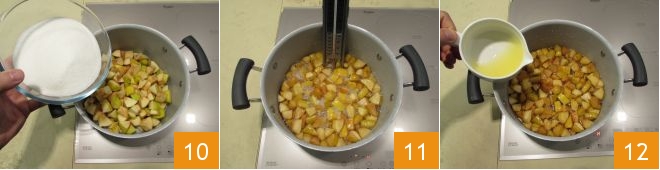
Add the sugar 10 and cook over medium heat until the fruit has softened. Continue stirring to promote even cooking. When the mixture nearly reaches a temperature of 226°F (about 30 minutes) 11, measured with a kitchen thermometer, add the lemon juice 12.
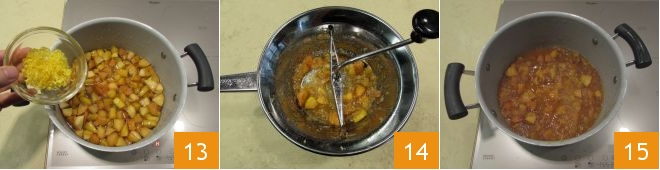
Also pour in the grated lemon peels 13 and mix well to flavor your jam. Then turn off the heat and remove about 3/4 of the jam from the pot: pass it through a food mill 14 to make it creamier and smoother. Add it back into the pot with the whole quince pieces 15.
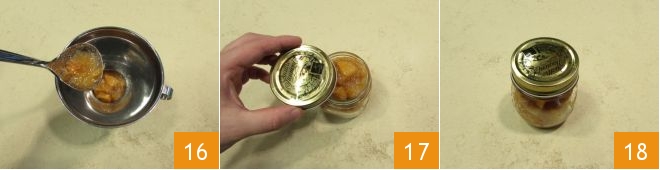
At this point, transfer the still hot jam directly into the jars you previously sanitized following the Ministry of Health guidelines reported at the end of the recipe. If you prefer, use the special jam funnel 16. Be sure to leave 0.4 inches from the edge, then screw the lid onto each jar well 17, without tightening too much, and let cool 18. With the heat of the jam, a vacuum will be created, allowing the product to be stored for a long time. Once the jars have cooled, check if the vacuum has occurred correctly: you can press the center of the lid, and if you don't hear the typical "click-clack," the vacuum has occurred. When needed, enjoy your quince jam on a slice of bread or in delightful preparations!