

Taralli lard and pepper
The taralli lard and pepper are typical of Campanian cuisine, very famous and tasty doughnuts. Discover how simple it is to prepare them at home!
- Average
- 2 h 10 min
- Kcal 299
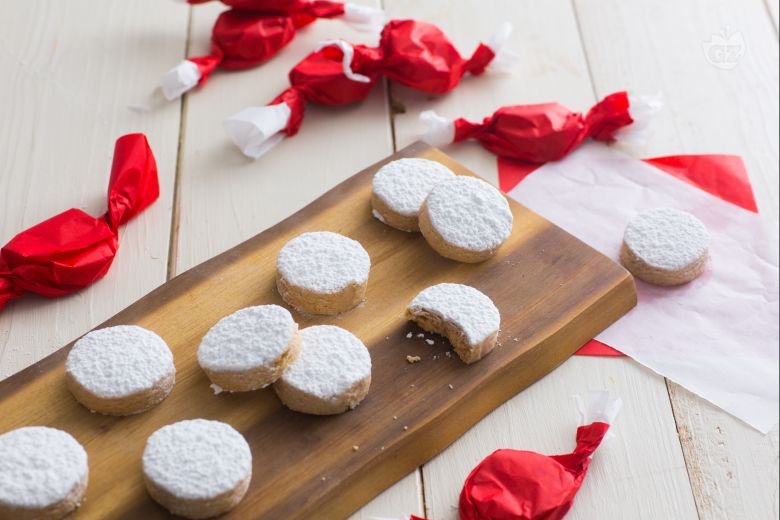
When the Christmas holidays approach, a magical atmosphere fills Spain, and just like in Italy, food plays an even more important role as it becomes a bearer of symbols and traditions. At the stroke of midnight on December 31st, it is customary to eat 12 grapes as a wish for good luck and prosperity, while on Epiphany Day, the Roscón de Reyes (Kings' ring cake) must not be missing from the table, enjoyed for breakfast with the family. Polvorones are traditional sweets that are prepared throughout the Christmas season and are customarily offered as gifts to guests and friends, wrapped like candies, to enrich DIY Christmas hampers. They may seem very simple at first glance, and small enough to be eaten in one bite, but these Christmas cookies reveal the origin of their name only when tasted: their texture is so crumbly that it reminds of a powder that melts in your mouth with every bite. The secret to this peculiarity is due to the toasting of the flour, which is dried in the oven before being mixed with the other ingredients, among which we also find lard, which is often replaced with butter. Let yourself be swept away by the melt-in-your-mouth goodness of polvorones, delightful tea cookies that can turn into an original gift idea: it will be a sweet way to share new, delicious traditions!
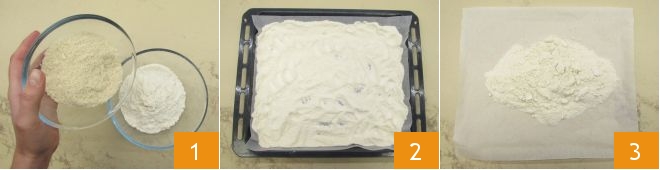
To prepare the polvorones, first combine the all-purpose flour and almond flour in a bowl 1, mix well and spread the mixture on a baking sheet lined with parchment paper 2. Toast the flours in a preheated fan oven at 266°F for about 20 minutes, then remove and let cool for at least 30 minutes 3. If your oven fan is too strong, to prevent them from dispersing, you can toast the flours in a static oven at the same temperature.
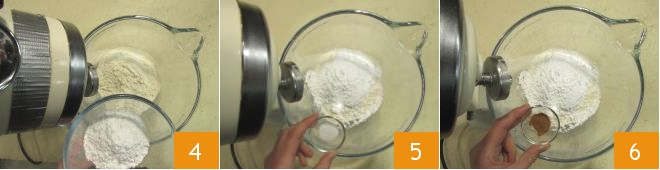
Once cooled, transfer the toasted flours to the bowl of a stand mixer (or a large bowl if working by hand), then add the powdered sugar 4, the salt 5, and a pinch of ground cinnamon 6;
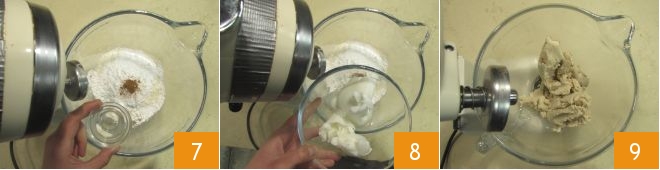
also pour in the anise liqueur 7 and the cold lard (alternatively, as indicated in the advice, you can use butter) 8 and mix with the paddle attachment until the ingredients are combined 9.
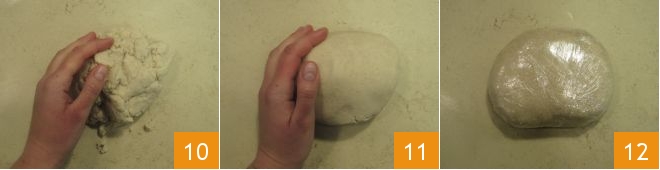
Transfer the obtained mixture to the work surface and start working it with your hands 10: being egg-free, the mixture will initially be difficult to compact, but you will eventually manage to obtain a smooth and uniform dough 11. Wrap the dough in plastic wrap 12 and let it rest at room temperature for 20 minutes.
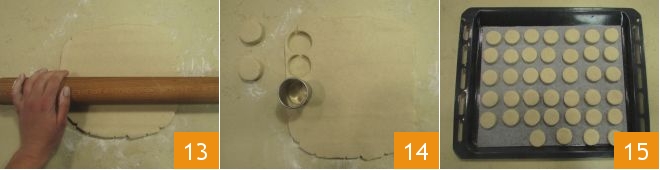
After the resting time, roll out the dough to a thickness of about 3/8 inch 13, then cut out the cookies using a round cookie cutter with a diameter of about 1 1/2 inches 14. Gently place the cookies on a baking sheet lined with parchment paper 15 and bake in a preheated static oven at 320°F-338°F for about 20 minutes, placing the tray on the middle rack.
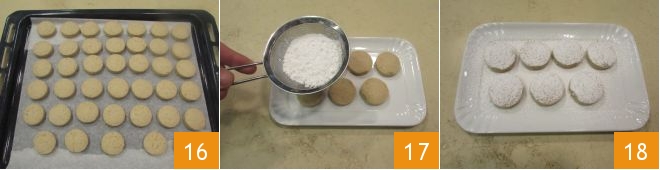
Once baked, the cookies will still be a bit soft, so that touching them with your fingertip will leave some dough on it: don’t worry, they will firm up once cooled 16. After letting them cool, dust with plenty of powdered sugar 17 and serve the polvorones to your guests 18 or wrap them in tissue paper to give to your friends as a gift!