

Cabbage and potato soup
- tastycorner
Prefer to listen to an audio summary? We use an advanced AI-generated voice to make our content accessible to everyone.
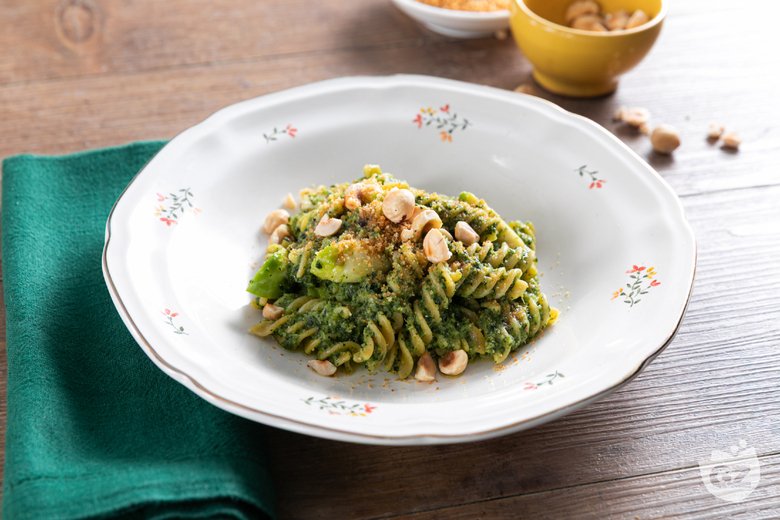
Pasta with Cabbage puts the same vegetable to work three different ways in one bowl. Chickpea fusilli—fusilli ai ceci—is coated in a velvety cream built from cavolo nero and white cabbage, blended until smooth and deeply savory. Pan-roasted Brussels sprouts are folded in separately, keeping their edges caramelized and their texture distinct from the sauce, so every forkful moves between something silky and something with a little resistance. It is a genuinely surprising combination, the kind that makes a weeknight vegetable dish feel considered rather than convenient.
Breadcrumbs toasted with thyme and a handful of hazelnuts finish the dish. Both go on at the end, dry and nutty, adding a crunchy, toasted contrast that cuts through the richness of the cream below. The thyme keeps the topping from reading as purely textural—it ties the breadcrumbs back into the dish rather than leaving them sitting on top. Together, the three cabbages, the creamy sauce, and the hazelnut crumb make this a pasta worth coming back to whenever the season calls for something hearty but not heavy.
You might also like:
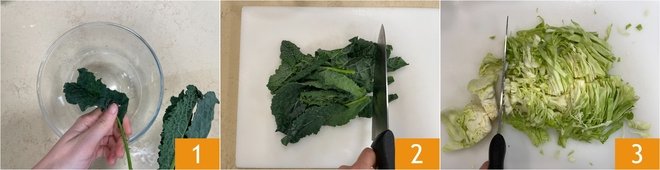
To prepare the pasta with cabbage, remove the leaves from the black cabbage, cutting away the tougher central rib 1, then roughly chop the leaves 2. Finely slice the green cabbage as well 3.
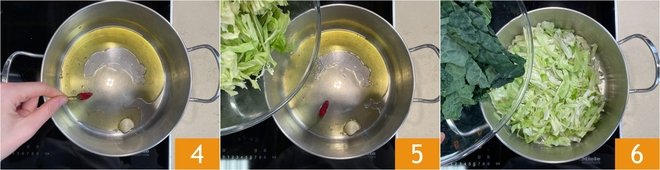
Pour the oil into a pot, add the garlic clove in its skin and the chili pepper 4 and let them infuse for a few minutes. Add the green cabbage 5, then the black cabbage 6 and cook over medium-high heat for about ten minutes, stirring occasionally.
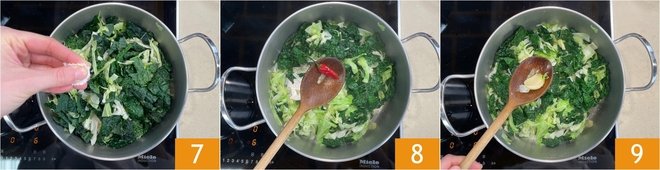
Lower the heat and season with salt 7, then remove the chili pepper 8 and the garlic clove 9.
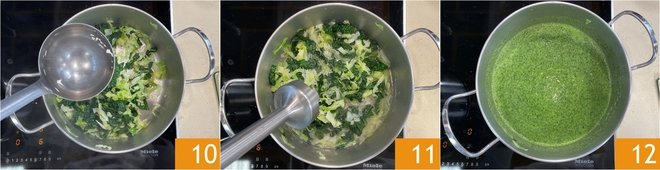
Add two ladles of water 10 and blend with an immersion blender 11 until you obtain a smooth cream, which you will set aside 12.
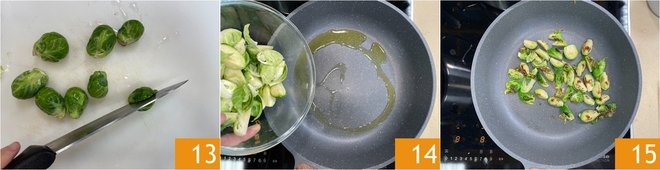
Clean and quarter the Brussels sprouts 13, then place them in a nonstick skillet with a drizzle of oil 14. Sauté over very high heat for 3–5 minutes, until well browned 15, then transfer them to a bowl and set aside.
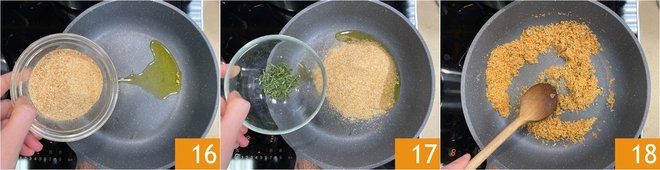
In the same skillet pour another drizzle of oil and add the breadcrumbs 16. Add the fresh thyme leaves 17 and toast over medium heat for a few minutes, stirring often, until the breadcrumbs are golden and crunchy 18.
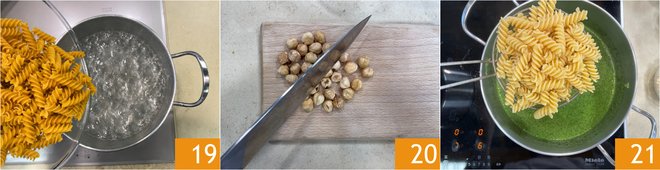
Bring a pot of salted water to a boil and add the pasta 19. Meanwhile, roughly chop the toasted hazelnuts 20. Drain the pasta after about 6–7 minutes, that is, 3 minutes before the package's indicated cooking time, and transfer it to the pot with the cabbage cream 21 to finish cooking.
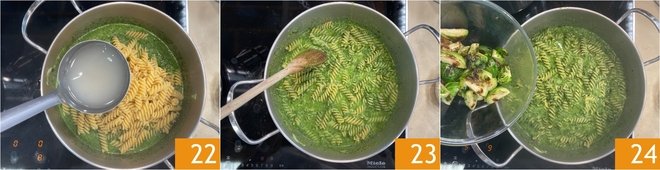
Add a little of the pasta cooking water 22 and finish cooking, stirring and adding more water if necessary 23. Turn off the heat and add the sautéed Brussels sprouts and a drizzle of oil 34.
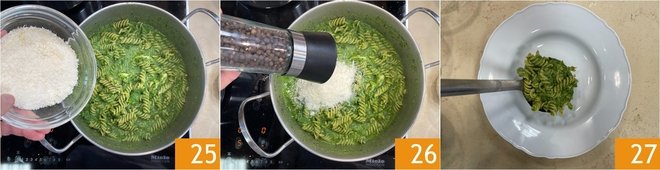
Add the grated Parmesan 25 and a grind of black pepper 26, then toss well and adjust the salt if needed. Divide the pasta among plates 27.
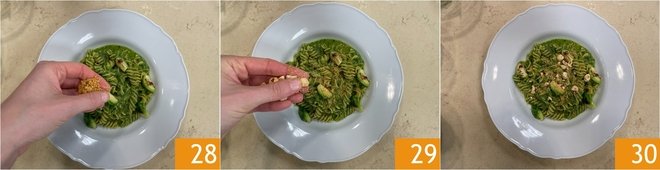
Finish with the crispy thyme breadcrumbs 28 and the toasted, chopped hazelnuts 29, then serve the pasta piping hot 30.


