

Pork Tenderloin
Pork tenderloin is an excellent main course, inexpensive and sure to impress!
- Very easy
- 30 min
- Kcal 785
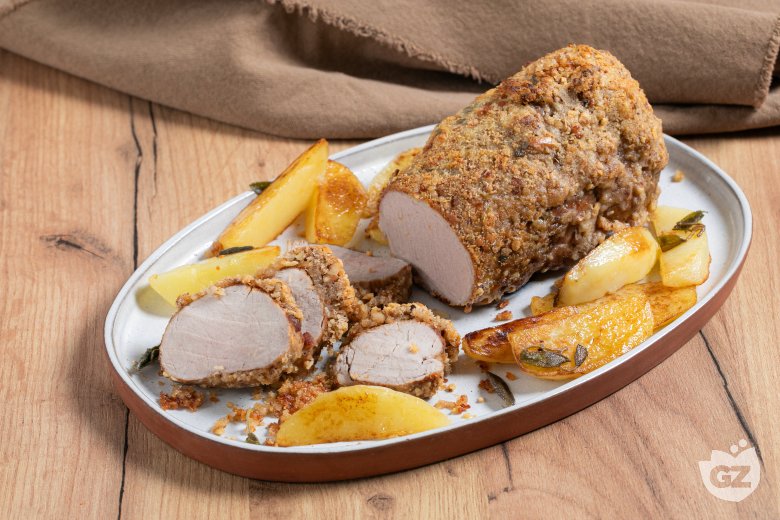
Parmesan-crusted pork tenderloin gets its character from a crust of Parmigiano Reggiano DOP, walnuts, and hazelnuts—richer and more textured than a standard breadcrumb coat. That combination delivers real flavor contrast against the mild, lean meat, and the deep golden color the crust develops makes it a natural choice for a Sunday lunch, a holiday table, or any occasion when you want something a little more special than the weeknight usual. The Parmigiano Reggiano DOP designation matters here: the quality of the cheese carries the crust, so it's worth using the real thing.
A probe thermometer takes the guesswork out of the internal temperature, letting you pull the pork at exactly the right moment so it stays tender and juicy rather than dry. If you don't own one, there's no need to worry—the recipe is built around a specific weight and calibrated cooking times that get you to a good result either way. Oven-roasted potatoes seasoned with garlic, rosemary, and sage round out the plate, turning this into a complete, well-balanced main course rather than a standalone centerpiece.
You might also like:
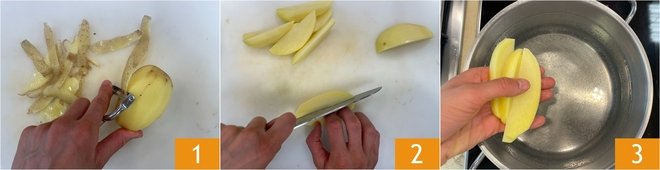
To prepare the Parmesan-crusted pork tenderloin, start by peeling the potatoes 1 and cutting them into wedges of similar size 2 so they cook evenly. Transfer them to a pot with cold water 3, bring to a boil and cook for about 15 minutes. They should still be slightly firm.
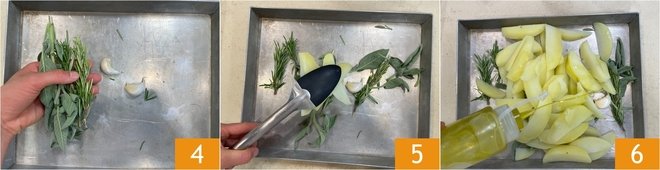
Meanwhile, arrange the garlic, rosemary and sage in a roasting pan 4. When the potatoes are ready, drain them carefully and place them in the pan. Season them with extra virgin olive oil 6.
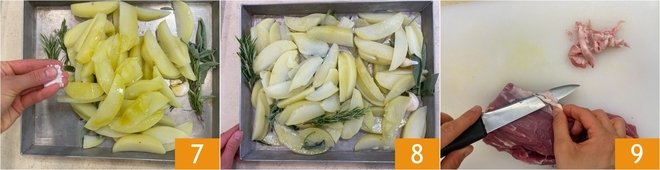
Add salt 7 and pepper as well. Spread them well on the pan 8 and roast in a preheated conventional oven at 392°F for 20–30 minutes, until nicely golden and crisp. In the meantime, trim any external fat from the pork tenderloin 9.
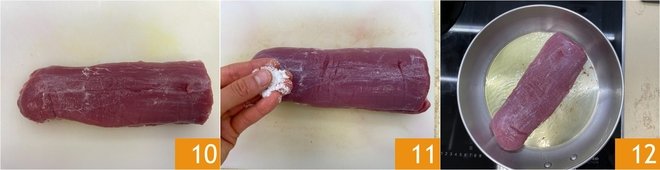
When it is well trimmed 10 season it with salt 11 and massage it with your hands. Heat a pan suitable for oven use with plenty of oil and place the tenderloin inside 12.

Brown the tenderloin on all sides over medium heat until you obtain a golden crust that seals the meat 13. Remove the potatoes from the oven 14, lower the oven temperature to 374°F and put the tenderloin in the oven, inserting a probe into the center to measure its temperature. Cook it until it reaches an internal temperature of 136°F (about 30 minutes). Meanwhile, prepare the Parmigiano Reggiano PDO crust. Finely chop the hazelnuts in a food processor 15.
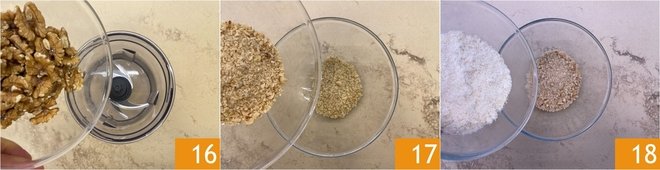
Do the same with the walnuts 16, then collect both in a bowl 17 and add the grated Parmigiano Reggiano PDO 18.
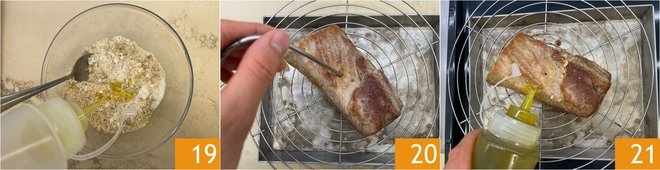
Add a drizzle of oil 19 and a pinch of salt. Mix thoroughly until you obtain a moist, well combined breadcrumb mixture. When the tenderloin has reached the correct temperature, remove it from the oven and take out the probe 20. Brush it with a thin layer of oil 21.
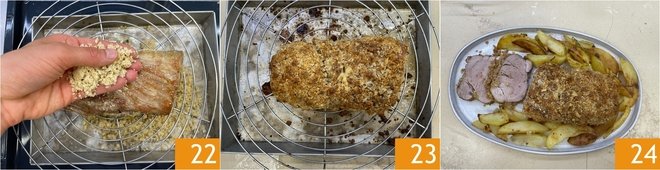
Spread the Parmigiano, walnut and hazelnut mixture on top 22, pressing it so it adheres well to the entire surface. Return the tenderloin to the oven and continue cooking until it reaches an internal temperature of 149°F; this will take about 20–25 minutes. In the last minutes of cooking, put the potatoes back in the oven as well so they are served hot and perfectly crispy with the meat. Once the desired temperature is reached, remove the tenderloin from the oven 23 and let it rest for 5 minutes. Slice and bring to the table accompanied by the roast potatoes 34.