

ITALIAN RECIPES NEW YEARS eve MENU
- ciacookitalianabroad
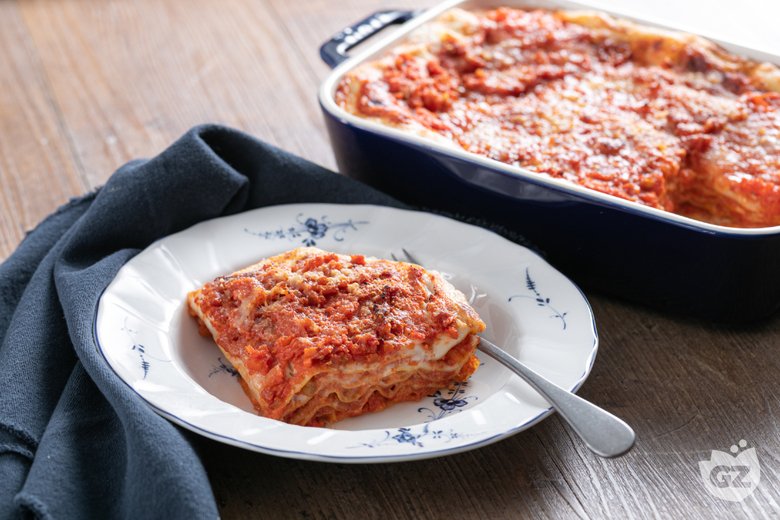
Lasagna with Cauliflower Ragu is not a compromise dish. The cauliflower is chopped into two distinct textures and slow-cooked with tomato and aromatic herbs until it functions as a genuine ragù — one that earns its place without leaning on meat. Creamy béchamel binds each layer, and the finished dish comes out of the oven with a gratinéed top and a soft, yielding interior throughout.
Ready-made fresh egg pasta sheets go in without pre-cooking, which removes a step without affecting the result. The two-texture approach to the cauliflower is what keeps this vegetarian lasagna from being a simple vegetable bake — it gives the filling real body and an enveloping, slow-cooked flavor that holds up to a Sunday lunch.
You might also like:
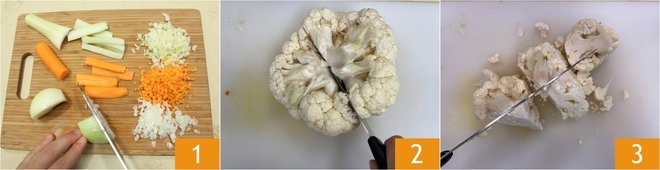
To prepare the lasagna with cauliflower ragù, start with the vegetables for the soffritto: clean the celery, carrot and onion and cut them into very small dice, obtaining a brunoise 1. Clean the cauliflower and divide it into florets 2, then coarsely chop half by hand with a knife 3.
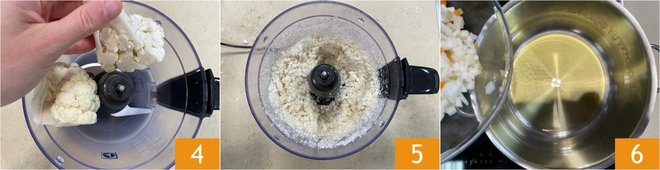
Put the other half into a food processor 4 and pulse briefly until you obtain small granules 5. Pour the oil into a large pot and add the chopped celery, carrot and onion 6.
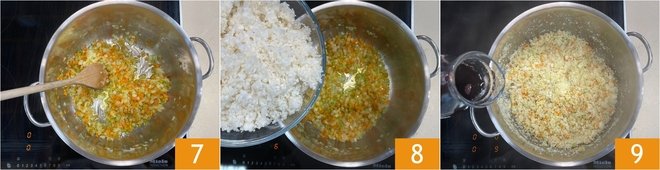
Let them soften over medium-low heat for about 10 minutes, stirring occasionally 7. Add the cauliflower, both the hand-chopped and the processed portions 8, increase the heat and sauté well. Deglaze with the wine 9 and let it evaporate.
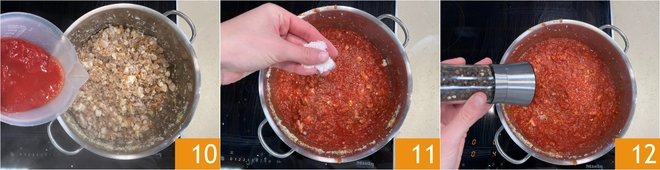
Add the tomato purée 10. Season with salt 11 and add a grind of black pepper 12.
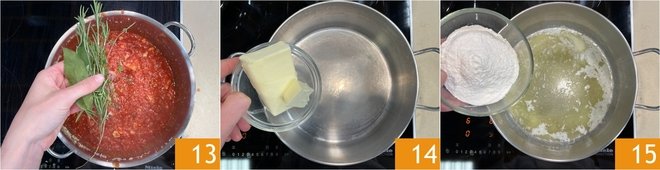
Add the bundle of aromatic herbs 13. Cook over medium heat, uncovered, for about 45 minutes to 1 hour, stirring often. Meanwhile prepare the béchamel: put the butter in a small saucepan and let it melt 14, then add the flour 15 and stir until you obtain a golden roux.
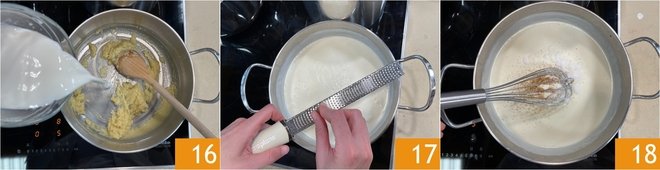
Pour in the milk little by little 16, continuing to whisk to prevent lumps. Once all the milk has been incorporated, continue cooking, still stirring, until it comes to a boil and reaches a creamy consistency. Turn off the heat and flavor with grated nutmeg 17, then season with salt and mix well 18. Set aside to cool.
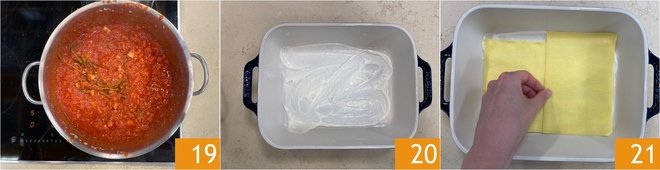
When the ragù is ready 19, remove the bundle of herbs. Move on to assembling the lasagna: spread a thin layer of béchamel on the bottom of a baking dish measuring 10 5/8 × 7 7/8 in (27×20 cm) 20. Lay down the pasta sheets 21.
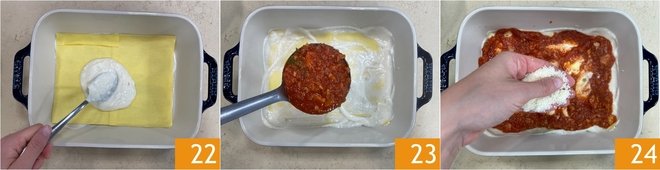
Cover them with two tablespoons of béchamel 22 and add two tablespoons of cauliflower ragù 23, distributing them evenly. Finish with grated Parmesan 34.
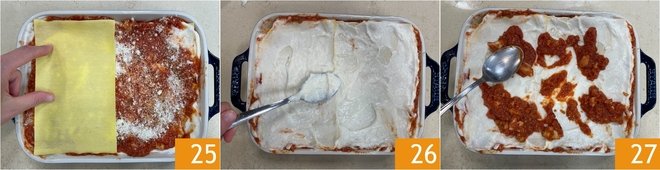
Cover with more pasta sheets 25. Continue in the same way for four more layers, alternating pasta, béchamel, ragù and Parmesan. Finish with the last pasta sheet, cover it with béchamel 26 and spread the ragù over the surface 27.
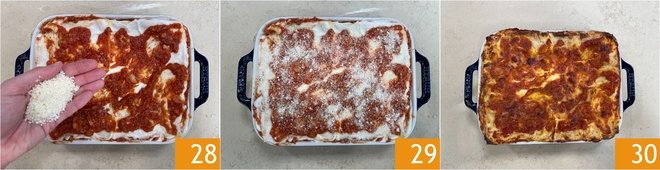
Finish with grated Parmesan 28. The lasagna is ready for cooking 29: bake it in a preheated conventional oven at 392 °F for 20 minutes, then switch to grill (broiler) mode at 446 °F and continue for about 8 minutes, until a golden crust forms. Remove your lasagna with cauliflower ragù from the oven 30 and let it rest for a few minutes before serving.