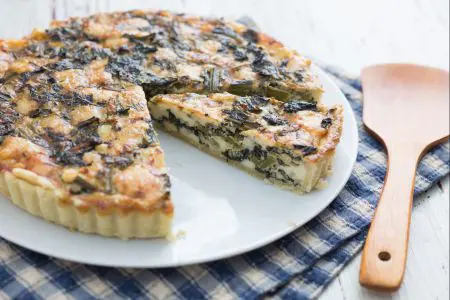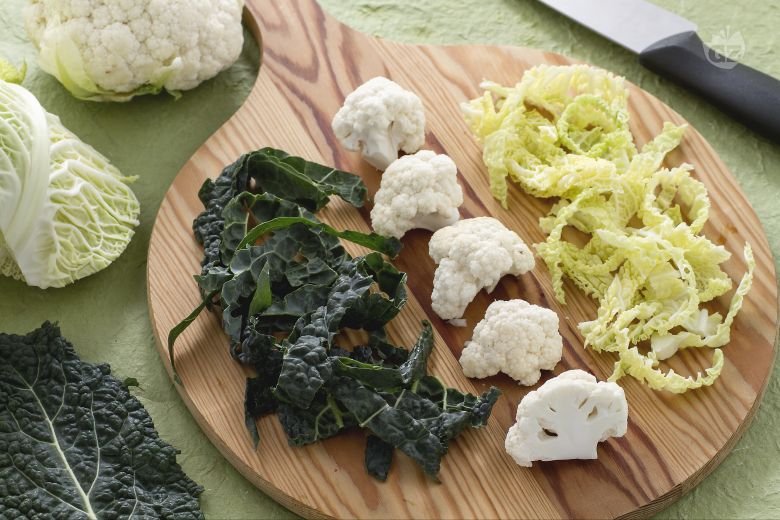


Penne with five types of cabbage
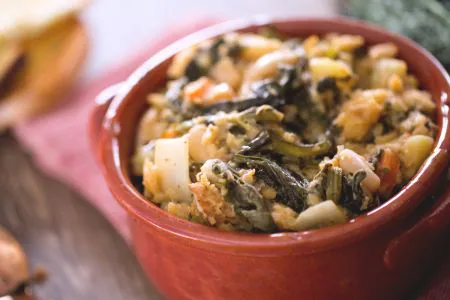
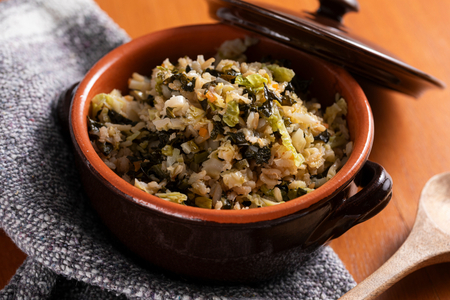
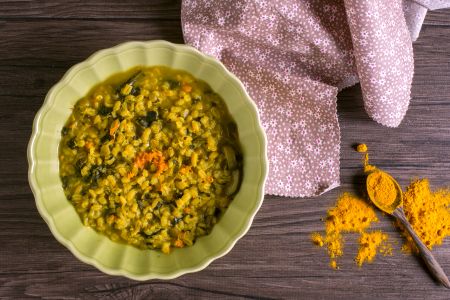
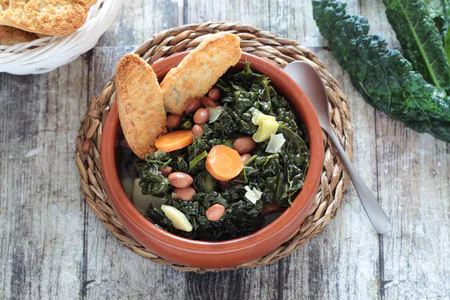
Penne with 5 types of cabbage is a tasty and colorful vegan main course that will surprise you with its cheerful roundabout of flavors and textures!
- Average
- 1 h 10 min
- Kcal 504
Cabbage and cauliflower are such beloved staples in Italian kitchens, especially when winter rolls around. Seriously good stuff. These veggies, along with their cousins like cavolo nero and verza, find their way into all sorts of dishes—from tender raw salads to creamy soups. Knowing how to clean cabbage and how to clean cauliflower is really essential for keeping your food fresh and safe. I mean, Italians have totally nailed the art of selecting the best heads: Look for ones with crisp leaves and steer clear of those yellow spots. And you know what? The outer leaves should snap rather than wilt. Pretty simple, right? This ensures a moist, flavorful bite whether you’re steaming, boiling, or tossing them into a stew.
In places like Tuscany and Lombardy, these vegetables are a winter go-to. There’s a big focus on washing cabbage and cauliflower before starting any recipe. It's kinda like a ritual in northern Italy. It's not just about dirt—people are really thorough. You gotta rinse each leaf, soak everything, and check for any brown bits. Ensures it's crisp and safe. Some even add a splash of vinegar to the water to remove pesticides from cabbage. To be honest, there’s a real sense of pride in knowing your food is clean. It makes enjoying seasonal dishes so much better.
Whether you’re prepping a simple boiled cabbage or a golden cauliflower gratin, good food safety practices and smart vegetable cleaning methods totally elevate every recipe. And listen, this attention to detail is why, for many Italians, the first step in great cooking is always a careful, clean start. Embracing these practices doesn’t just connect you to the rich culinary traditions of Italy, but it also ensures every meal is both delicious and nourishing. For sure. And the sauce? You'll love it.
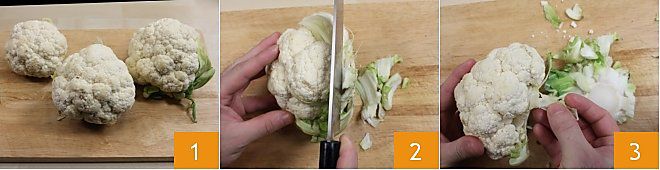
Choose firm, white cauliflowers without spots on the florets 1. Place the cauliflower on a cutting board and set it aside, holding it firmly with one hand. Use a knife to remove the stem and the outer leaves (2-3).
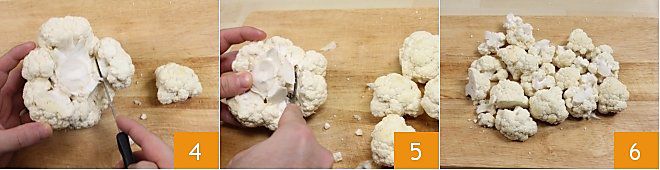
After removing the terminal part of the stem, use a small knife to separate the florets from the central stem, detaching them one by one (4-5). If the florets are particularly large, divide them further 6.
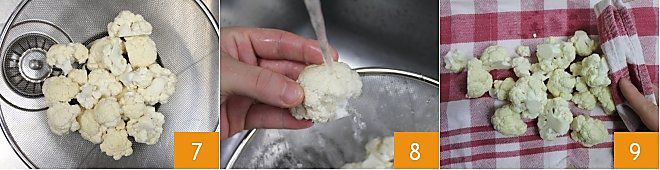
Once the operation is complete, place the florets in a colander 7 and rinse them one by one under cold running water 8. Finally, dry them with a clean cloth 9.
Now you can prepare a tasty pasta, turn it into a delicious soup, or dip it in a delightful batter and fry it. Click here to discover all the recipes with cauliflower.
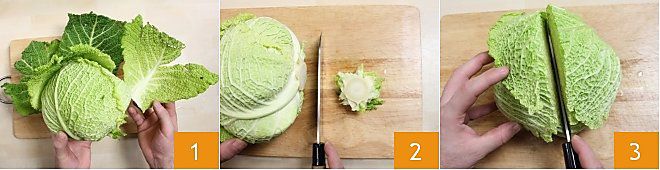
To prepare the savoy cabbage, start by removing the outer leaves if damaged and not firm 1. Place it on a cutting board and, holding it firmly with one hand, remove the final part 2, split it in half with a knife down to the end of the stem 3.
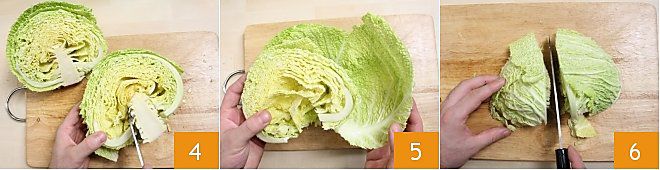
Now, from each half, use a small knife to cut out the stem and remove it 4. This way, you will detach each leaf from its root. If you need the whole leaf, for example, to prepare Savoy Cabbage Rolls, detach the leaves one by one 5 and rinse them under running water, and your savoy cabbage leaves are ready to be used. If you need to julienne the savoy cabbage, cut it in half again to create quarters 6.
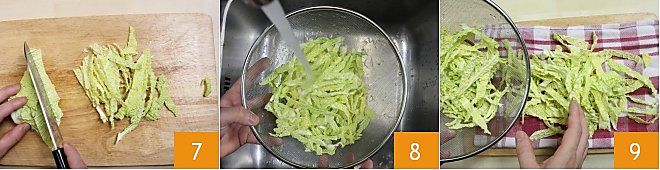
and cut each quarter into very thin strips 7. Transfer the savoy cabbage to a colander and rinse it under cold running water 8. Then dry it with a clean cloth 9. At this point, the savoy cabbage is ready to be cooked as you like or to add flavor to a salad! Click here to discover all the recipes with savoy cabbage!
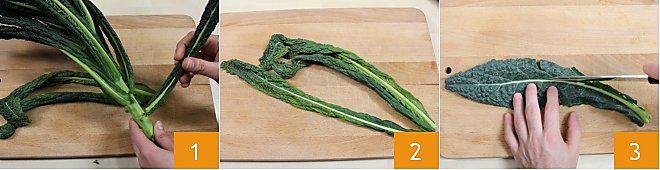
To clean black cabbage, remove the outer soft or damaged leaves from the central stem (1-2). Detach and set aside all the others, place them on the cutting board, and use a small knife to cut along the entire central vein 3.
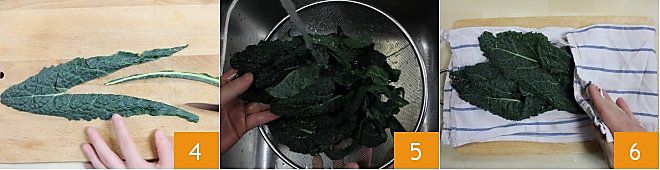
and remove it 4 as this is the hardest part and is not suitable for cooking. Rinse the cleaned leaves under cold running water 5 and dry them with a cloth or paper towel 6.
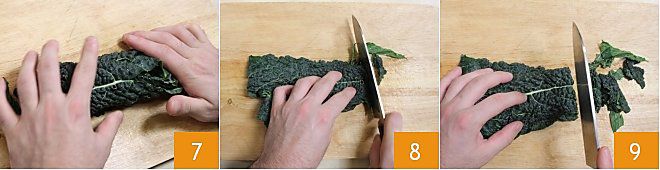
Now take two or three leaves, depending on their size, roll them up 7, and cut them crosswise into strips (8-9). Your black cabbage is ready to be cooked! Click here to discover all the recipes with black cabbage!