

Cacio e pepe ravioli
Cacio e pepe ravioli revisit the typical Roman recipe by transforming it into a rich first course of fresh stuffed pasta, topped with guanciale!
- Average
- 1 h 10 min
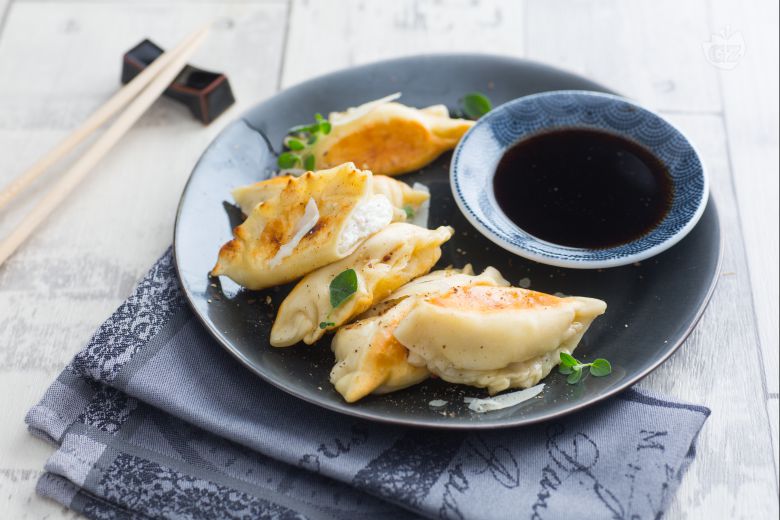
Ever thought about mixing the flavors of Rome with the colorful taste of Japan? Meet cacio e pepe gyoza—a fusion that’s honestly really good. It combines the creamy, peppery goodness of Rome’s beloved pasta with the crispy, savory bite of Japanese dumplings. So here's the thing: instead of the usual pork and cabbage filling, these gyoza have a luxurious blend of Pecorino Romano, ricotta, and black pepper. Really rich. That tender and rich sensation inside is unbeatable. The pan-fried wrapper stays crispy and slightly chewy—making a perfect contrast. And listen, what makes this Italian-Japanese fusion recipe different is the sansho—a Japanese pepper that adds a tangy and mildly spicy kick.
The blend of salty cheese and citrusy sansho ensures every bite is an adventure. Plus, when you dip these dumplings in soy sauce, it elevates the flavors, nodding to Japanese traditions while celebrating Italian roots. It’s like two friends from different worlds creating something super exciting. Unlike classic boiled ravioli or standard steamed gyoza, this version goes for a pan-fried method. Achieving that golden edge—so so good—that seals in all the cheesy goodness.
You might think Romans would be surprised to find cacio e pepe filling inside a dumpling, but for real, it works. Even the soy dipping sauce gets a twist with extra black pepper, bringing it full circle back to those Italian flavors. These gyoza with cheese aren’t exactly traditional in either culture, but that’s what makes them exciting. They’re a perfect choice for anyone who loves to experiment with fusion cuisine. I mean, who doesn’t want to try something a bit different? Whether you’re serving them at a party or just enjoying them as a snack, they’re sure to get people talking and reaching for more. Have the unexpected and savor the rich, flavorful journey these gyoza offer. Pretty much a must-try!
You might also like:
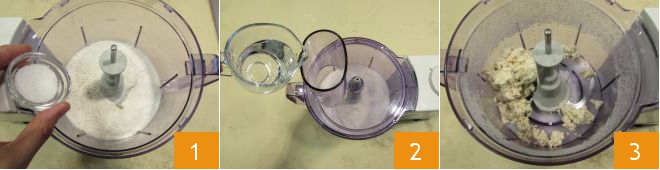
First, make the dough for the gyoza cacio e pepe wrappers. Pour the flour and salt into a mixer with blades 1. Start the blades and gradually pour in the hot water into the machine 2. Continue to mix until the dough is well combined 3.

Transfer to a work surface and knead quickly 4. Form a ball, place it in a bowl, and cover with plastic wrap 5. Let it rest for about half an hour at room temperature. After this time, transfer the dough to a lightly floured work surface 6.

Using a dough scraper, divide the dough into 16 pieces, each weighing 0.63 oz 7. Form them into equally sized balls 8. Keeping the remaining balls covered with plastic wrap to prevent them from drying out, take a rolling pin and roll each ball into a disc about 1/8 inch thick 9. To give them a regular shape, you can cut them with a 3.5-inch cutter.

In a bowl, add the ricotta, grated Pecorino 10, and plenty of ground pepper 11. Given the saltiness of Pecorino, it might not be necessary to add salt, but adjust according to the type of Pecorino you've chosen. Mix well, take a not-too-heaping tablespoon of the mixture, and place it in the center of the first disc 12.

Then, using your fingertips, fold the ravioli into a half-moon shape 13, pinching the dough along the sealing line to secure the filling inside and give the ravioli its typical dumpling appearance 14. Proceed in the same way with all the ravioli 15.

At this point, pour a drizzle of oil into a pan 16 and let it heat. Add the dumplings to the pan 17 and wait a few seconds before turning them. They should be well browned 18.

Deglaze with water 19, cover with a lid 20, and wait a couple of minutes 21.

Serve the gyoza cacio e pepe with a small bowl of soy sauce. Finish with a pinch of pepper 22, some Pecorino shavings 23, and a few fresh oregano leaves 34.