

Pasta with the Three P's
Pasta with the Three P's — cream, tomato and pesto: discover a creamy, fragrant and flavorful pasta dish that's easy to prepare and perfect…
- Easy
- 55 min
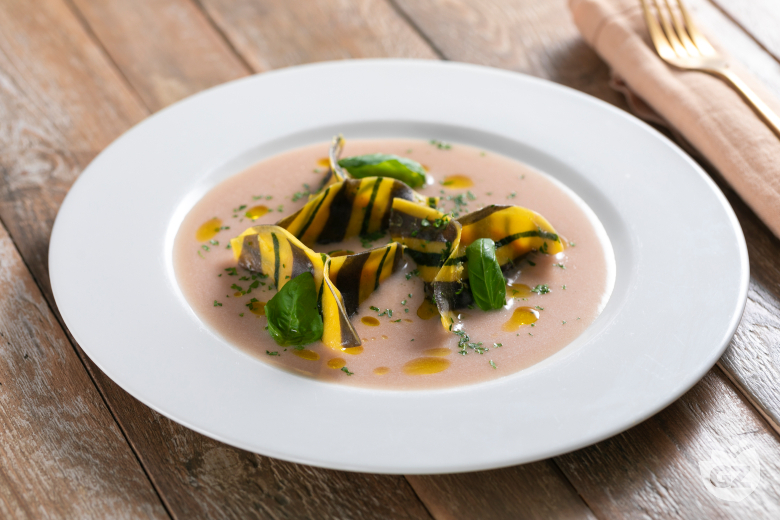
Ravioli with fish in three doughs from Campania is really a standout creation in the world of fish ravioli recipes. And seriously, this is not your average seafood pasta. Inside each tender pasta pocket, you'll find a flavorful blend of red shrimp, octopus, mussels, and clams, all mixed with potatoes, parsley, and a hint of lemon zest. So moist and sweet—each bite is a delight.
The real magic? It's in the homemade ravioli dough. Crafted from three types: classic egg, spirulina for a fun green twist, and cuttlefish ink for a deep black color. The result is a super eye-catching tricolor look that's pretty much authentic to Campania's innovative seafood traditions. Locals, for sure, take great pride in their homemade ravioli dough, especially when it’s assembled in such an artful way.
For special occasions—or any time you want to show off your skills with seafood pasta dishes—this recipe gives you something that feels fancy yet grounded in the rich tradition of Naples and the wider Campania coast. And the sauce? It's where the velvety magic happens—blending potatoes and shellfish broth to soak into the pasta, bringing all the tangy ocean flavors to life. In Campania, such dishes are often served around Holy Thursday, where mussel soup is a big deal, but this ravioli offers a unique spin that impresses anyone who loves fish ravioli recipes or is searching for new ways to enjoy seafood filling for ravioli.
Regional specialties like this inspire so much experimentation and playfulness, with crispy dough edges and a soft interior. That's the real joy of making seafood stuffed pasta at home—combining tradition with fresh colors, textures, and tastes, all while keeping things deliciously Neapolitan. Whether you're a fan of traditional Southern Italian techniques or just love trying new flavors, this dish is a true celebration of Campania's culinary creativity. For real.
You might also like:
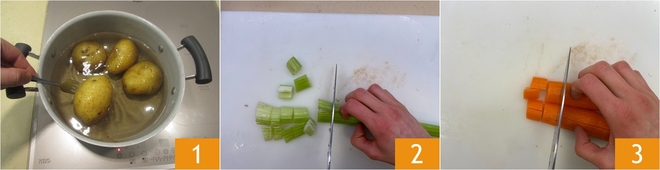
To prepare the fish ravioli with three doughs, first boil the potatoes in boiling water for about 30 minutes after boiling, until they are soft 1. Meanwhile, prepare the vegetables that will cook with the octopus: clean and cut the celery 2 and the carrot 3 into pieces.
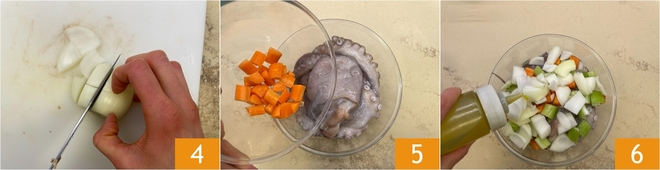
Also clean and coarsely chop the onion 4. Place the cleaned octopus in a bowl, add the vegetables 5, and season with oil 6 and salt, massaging well with your hands to flavor.
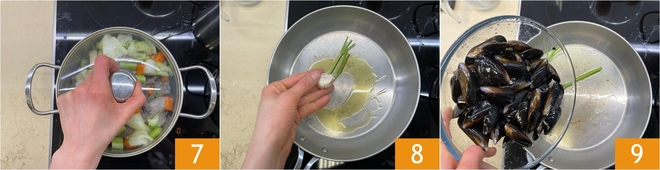
Heat a large pot, transfer the octopus and vegetables inside, and, with a quick movement, cover with the lid 7. Cook for 30 minutes on low heat. Let it rest for another 30 minutes with the heat off, lid on. Meanwhile, attend to the mussels: heat the oil with the garlic and parsley stems in a pan 8, then add the cleaned mussels 9 and water.
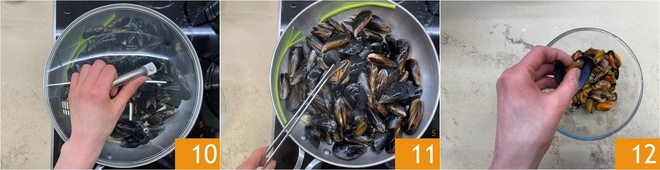
Cook with the lid on 10 until they open; it will take about 5 minutes. Once opened, remove the garlic 11 and shell them 12, then place them in the refrigerator.
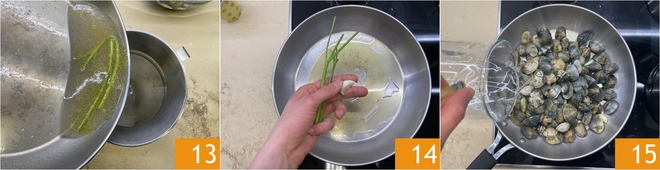
Strain the cooking liquid and set it aside 13. Now cook the clams in the same way: heat the garlic and parsley stems in the pan 14, then add the clams and water 15.
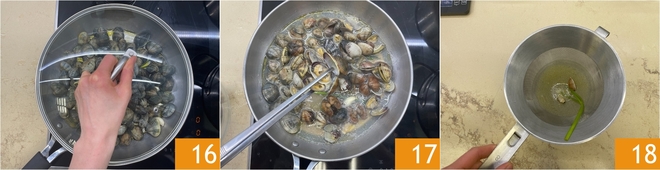
Cover with the lid 16 and cook for about 5 minutes, until they open 17. Shell the clams, strain their cooking water 18, and place them in the refrigerator.
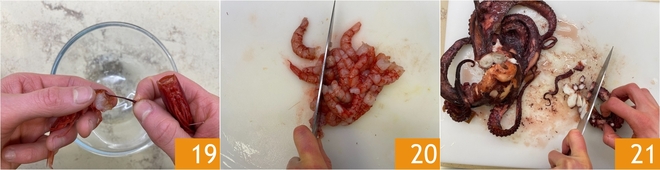
Clean the red shrimp: remove the head and shell, then extract the intestine 19. Chop the shrimp finely to reduce them to a tartare 20. Take the cooked octopus and also strain its water, then combine it with the mussel and clam water to create a cooking base. Remove the octopus head and coarsely chop the tentacles 21.
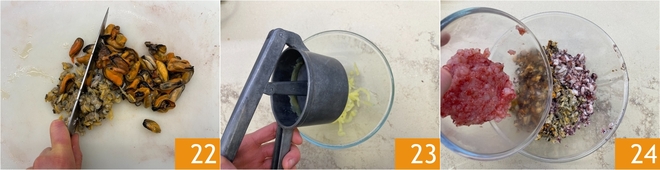
Cut the cooled mussels and clams into pieces of the same size 22. After the cooking time, mash 500 g of boiled potatoes in a bowl 23. Add all the fish to the mashed potatoes 34.
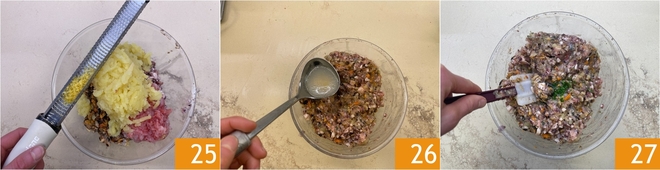
Season with lemon zest 25, a drizzle of oil, and chopped parsley leaves. Mix to combine, then adjust the consistency of the mixture by adding a ladle of the cooking water from the octopus, mussels, and clams 26. Transfer the filling to a piping bag without a nozzle and store it in the refrigerator.
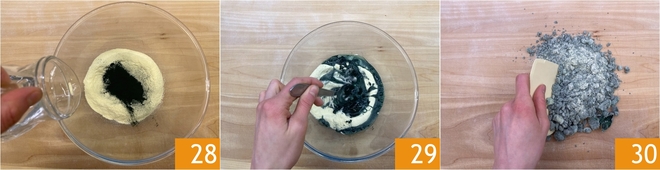
Start with the green dough: in a bowl, pour the semolina, spirulina algae, and water 28. Mix first with a spoon to gather all the liquid 29, then knead by hand on the work surface, using a dough scraper 30.
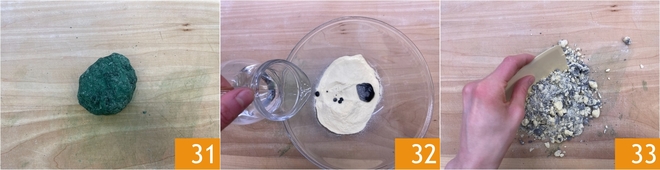
You should obtain a compact dough 31; it doesn't matter if it's not homogeneous as semolina is firmer. Wrap it in plastic wrap and let it rest for 30 minutes in the refrigerator. Move on to the black dough: in a bowl, pour the semolina, cuttlefish ink, and water 32. Proceed in the same way, mixing first with a spoon and then by hand on the work surface 33.
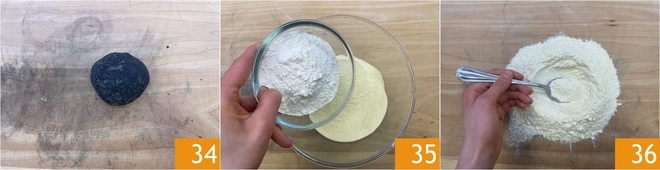
Form a dough, cover it with plastic wrap, and let it rest for 30 minutes in the refrigerator 34. Finally, prepare the third dough, the egg one: in a bowl, mix the semolina and all-purpose flour 35. Transfer the flour to the work surface and make a well 36.
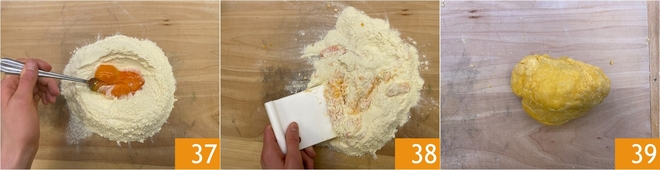
Pour the yolks into the center 37 and knead 38 until you get a homogeneous dough 39. Wrap it in plastic wrap and let it rest in the refrigerator for 30 minutes.
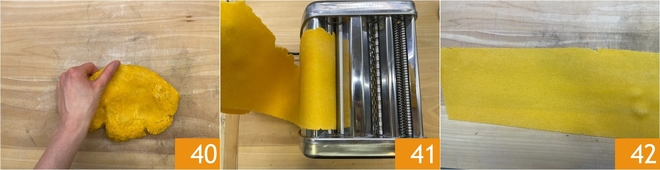
Take the egg pasta dough and slightly flatten it 40, then pass it through the rollers of the pasta machine 41: dust it with semolina and start from the widest thickness until you reach the thinnest (you should see the shadow of your hand through the dough) 42. Cover the sheets with a cloth to prevent them from drying out.
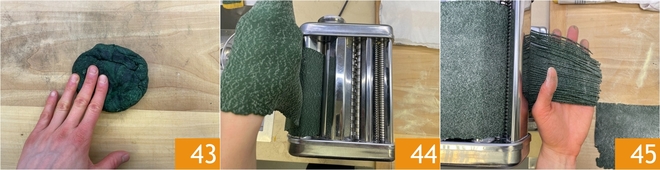
Roll out the spirulina pasta: flatten the dough 43, pass it through the rollers of the pasta machine until the penultimate thickness 44, then cut tagliolini using the appropriate roller 45.
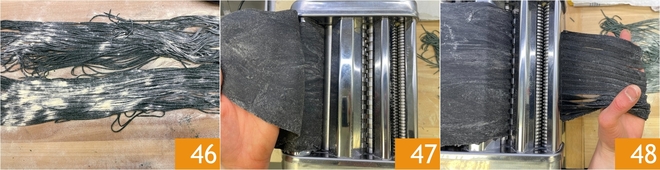
Dust the tagliolini with semolina and set them aside 46. Finally, roll out the black dough until the penultimate thickness 47 and then make tagliatelle with the machine 48.
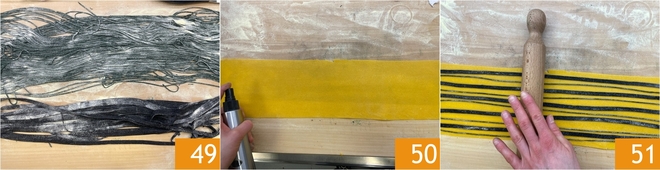
After making the green tagliolini and black tagliatelle 49, you are ready to create the tricolor pasta. Take an egg pasta sheet, spray it with water 50, and lay tagliatelle and tagliolini on top, alternating them. Press well with a rolling pin to adhere 51, then pass everything through the pasta machine to obtain a uniform thickness.
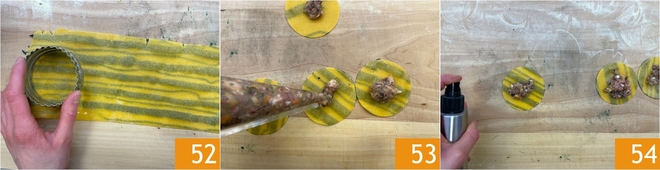
Compose the ravioli: turn the tricolor sheet over and cut out discs with a smooth round cutter of 2.75 inches in diameter 52. Fill the center of the pasta discs with the fish filling 53, then spray the edges with water 54.
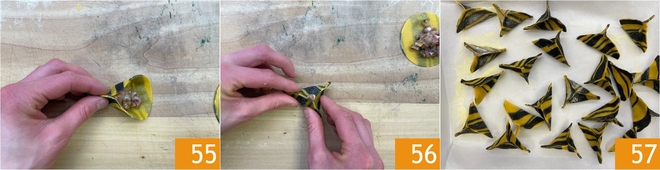
Fold the pasta 55 so that the edges meet in three points, forming a propeller shape 56. Place the ravioli on a tray lined with baking paper 57.
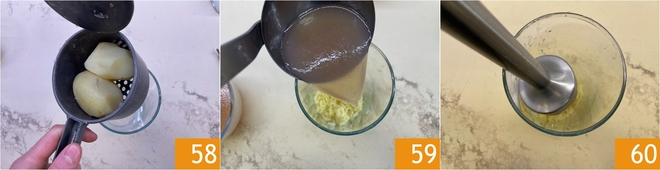
Finally, prepare the velouté: boil the potatoes for about 30 minutes or until soft, then mash them with a potato masher 58. Add 25 oz of the seafood cooking base 59 to the puree, or as much as needed to achieve a smooth consistency. Blend with an immersion blender 60.
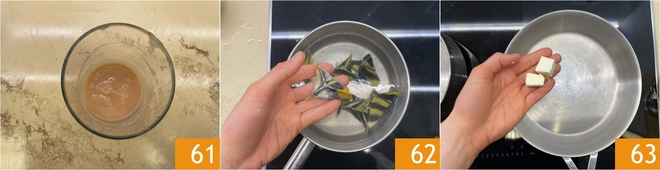
The velouté is ready 61; heat it in a saucepan, bringing it to a boil, just before serving. Now cook the ravioli in salted boiling water 62 and, in the meantime, melt the butter in a large pan 63.
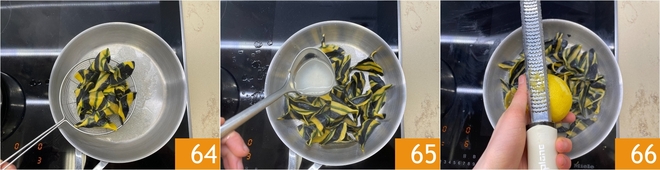
When the ravioli float to the surface (it will take a couple of minutes), drain them 64 and transfer them to the pan. Sauté the ravioli gently in butter, adding a ladle of cooking water 65, then scent with lemon zest 66.
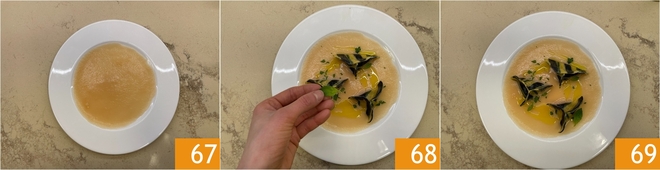
Pour the potato velouté at the base of the plate 67, then place the ravioli and garnish with chopped parsley and basil leaves 68. The fish ravioli with three doughs are ready to be served 69!