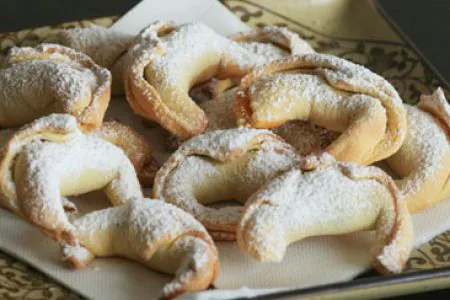


Zeppole di San Giuseppe
Fried Zeppole di San Giuseppe is a typical dessert prepared to celebrate Father's Day. The classic version is filled with custard cream, even…
- Average
- 1 h 20 min
- Kcal 650
Filled castagnole are a must-have treat during Carnevale in Central Italy, adding a special touch to the festivities. These Italian fried dough balls are everywhere in Lazio. And seriously, you see them from bakeries to street stalls. And look, it’s no wonder people love them. Every year, the dough is mixed fresh—some families keep it simple, others add a chocolatey twist. But here's the deal, the real star is the filling. Each ball is stuffed with a creamy pastry cream, or crema pasticcera. This filling stays just dense enough to keep that round shape, making every bite a really, really good experience. Flavors like orange, lemon, vanilla, or chocolate can be added, depending on what’s on hand or who’s visiting. Biting into these custard-filled castagnole is like tasting the festival itself—moist and tender, with a sugary exterior and a burst of filling inside.
Exploring Italian carnival desserts is a treat, and these cream-filled castagnole are definitely a highlight. You know, they're part of a rich tradition where people create all sorts of fried or baked sweets just for Carnevale. Think about other delights like frappe or chiacchiere—these little balls be different with their rich cream surprise inside. Some families even make ricotta-filled versions or try new twists each year, yet the classic version with pastry cream never fails to please. The exterior turns golden and a bit crispy, while the filling remains cool and soft. Whether you’re grabbing a few at a festival or making a big plate for a party, these treats bring people together, letting you enjoy both traditional and new flavors. And you know what? That’s the magic of Italian pastries like these—they transform any day into something sweet and festive. Plus, when you experiment with different fillings and savor them fresh, they’re not just desserts. They’re a delicious way to celebrate Italian culture and indulge in a taste of tradition.
You might also like:

To prepare the filled castagnole, start with the custard cream, which will need to cool down. In a saucepan, heat the milk and cream with the vanilla pod, which has been split open and scraped 1. You can use the seeds in the milk or add them to the egg yolks and sugar to be worked in another saucepan with a hand whisk 2. Add the cornstarch to this mixture and mix again to combine 3.

Once the milk and cream are hot, remove the pod, pour over the yolk mixture 4, and mix well. Then transfer everything back onto low heat to thicken the cream, stirring to prevent it from sticking to the bottom. When the cream is thick, remove it from the heat and stir vigorously for a moment 5, then transfer the cream to a low and wide bowl, covering with plastic wrap in contact with the surface 6. Let it cool first at room temperature and then in the fridge.

Work on the castagnole dough: in a bowl, pour the sifted flour and baking powder, add the sugar with the seeds of a vanilla pod 7. Pour in the eggs and softened butter 8. Grate the zest of half a lemon 9.

Pour in the anise liqueur 10 and a pinch of salt. Mix everything first with a fork and then by hand 11. Transfer the dough to a lightly floured work surface and handle it with the help of a scraper 12.

Form a ball and then a log 13, from which to cut pieces of about 0.7 oz 14. Shape each into a round form 14, then fry a few balls at a time in hot peanut oil at 285°F (measured with a kitchen thermometer) 15, until golden.

Drain them on paper towels to absorb excess oil. While still hot, roll them in granulated sugar 16. Now you can fill them with the custard cream placed in a piping bag with a very narrow nozzle 17. Serve your filled castagnole 18!