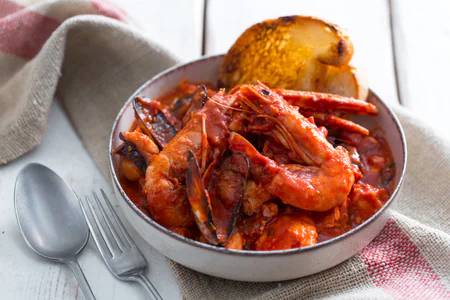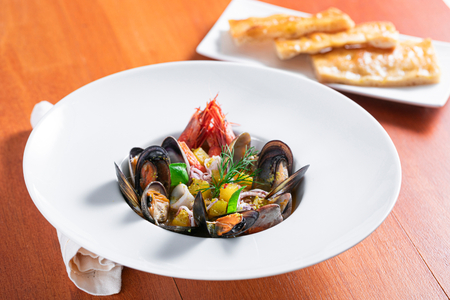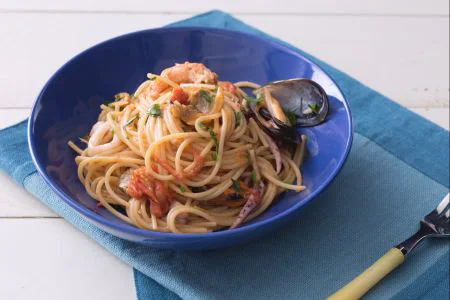


Guitar spaghetti with cuttlefish ink, mussels and prawns
Guitar spaghetti with cuttlefish ink, mussels, and prawns: a first course that elegantly combines fresh pasta and seafood. Discover the recipe!
- Average
- 1 h 30 min
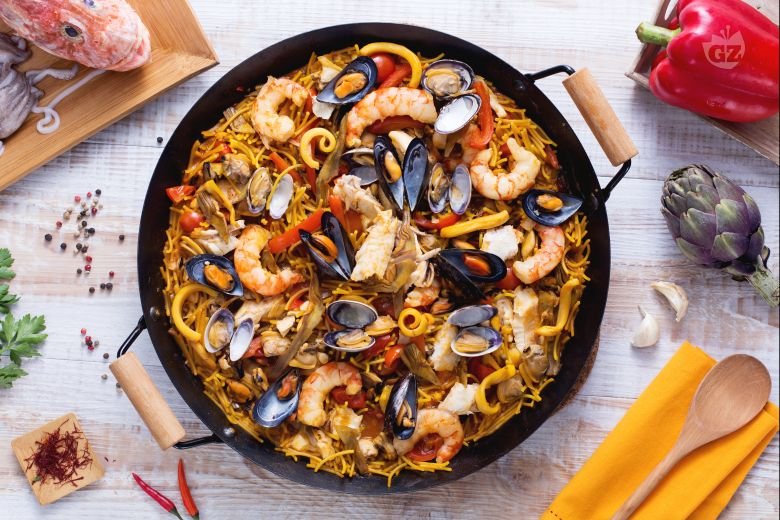
Fideuà is a dish that pretty much whisks you away to the heart of the Spanish coast—especially around the stunning beaches of Gandia in Valencia. It’s got the crowd-pleasing vibes of paella, but instead of rice, you dive into those short, thin fideos noodles. They soak up all the flavors in a way that's super unique. When folks mention an authentic fideuà or even just a fideuà recipe in Valencia, you know you are in for a real treat with bright colors and a moist finish. The mix of seafood, like scorpion fish, mussels, clams, shrimp, and cuttlefish, offers a taste of both land and sea—seriously good.
Add in fresh peppers, artichokes, and cherry tomatoes, and you get a burst of tender veggies that really pop against the golden pasta. It’s the kind of meal meant for sharing, served right in a big pan on the table, so everyone can dig in together—and probably fight for seconds.
Some say Catalan fideuà is like paella’s fun cousin—same spirit, different style, and just as crispy on the bottom if you get it right. What makes a Spanish seafood pasta like this so special is how every bite is a little party of flavors. The seafood gives a sweet and salty punch, while the noodles soak up all the juices and veggie bits. Really, they make things extra rich and filling.
In Valencia, sharing this dish isn’t just about eating. It’s about hanging out, talking, and enjoying the way the food smells when it hits the table. The seafood fideuà is a go-to for gatherings and special days. And you know what? It’s so good you’ll see it pop up whenever people want something special. Whether you call it a fideuà paella or stick with the classic name, it’s a traditional Spanish dish that makes you want to kick back, grab a fork, and enjoy good company by the seaside. With its roots deep in the Valencian region, fideuà captures the heart of coastal Spain—giving you a taste of Mediterranean life. For real.
You might also like:

To prepare the fideuà, start with the How to Clean and Open Mussels: place them in a large bowl, rinse them well under cold running water, use the back of a knife to remove all encrustations and barnacles (parasites that form on the shell), and vigorously detach the beard (or byssus) that protrudes from the valves 1. Use a steel wool pad to scrub the mussels vigorously to remove any impurities 2. At this point, place the mussels in a pot over high heat and cover them with a lid 3: they will open in about 5 minutes.

Once ready, strain the mussel water through a sieve and set it aside, as you will need it for cooking the pasta. Shell them 4 (remembering to keep a few intact to add to the dish for decoration). Then move on to How to clean clams: first check that they do not contain sand by tapping each one on a cutting board on the opening side 5; if dark sand comes out, it means the clams are to be discarded. Then place them in a colander over a bowl and rinse them several times under running water 6, until no more sand is visible in the bowl.
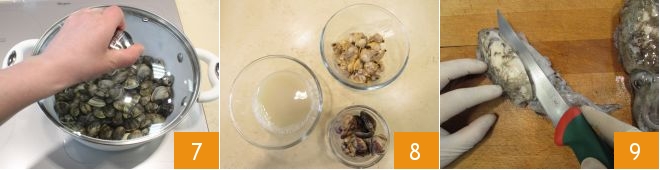
Drain the clams well and place them in a large pot: cover with the lid 7 and turn on the heat: this way the shells will open with the heat. Immediately turn off the heat after they open completely, to avoid overcooking, which can compromise the tenderness of the seafood. Drain the clams, shell them, and retain the cooking liquid 8. Then proceed to How to clean cuttlefish first, put on latex gloves. Apply slight pressure with your fingers on the mollusk's belly to locate the bone, and using a knife, make a transversal cut 9.
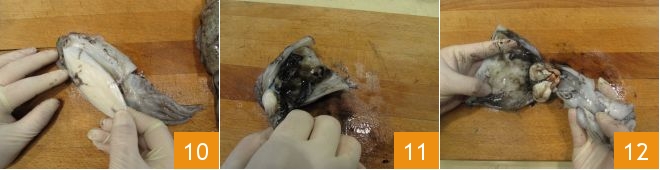
Once the bone is removed 10, try to locate the ink sac and, if present, gently extract it 11, taking it with your fingers but without squeezing it, to avoid breaking it and thus preventing the ink from spilling out. Then separate the head from the body of the cuttlefish 12, holding the latter with one hand and pulling away the tentacle part with the other.
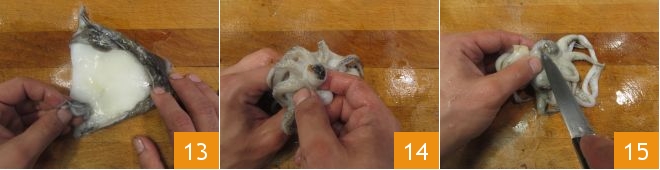
Then remove the small internal appendages 13; peel off the skin by making a small incision and pulling it away with your hands. Remove the beak, or beak, located in the center of the tentacles 14, by pressing with your thumbs underneath the beak to push it upward. Use a small knife to remove the eyes by making a circular incision around the bulb 15, then remove them.
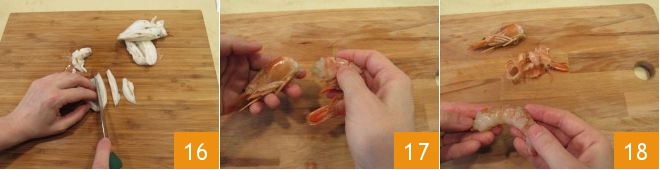
Finally, cut the baby cuttlefish into strips and set them aside 16. Continue with the How to clean shrimp: remove the head 17, the shell 18,

and gently remove the intestine with a toothpick 19. Then proceed to clean the scorpionfish: open the belly of the fish with a knife or scissors 20 and remove the entrails 21.
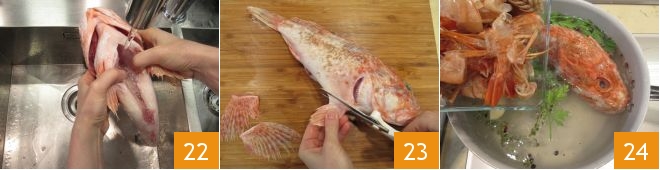
Rinse it well under running water 22, then remove the fins with scissors 23; place it in a large pot along with a clove of garlic, parsley, thyme, and peppercorns, then cover it with water (about 2.5 liters) and let it cook over low heat, along with the scraps from the cleaned fish 34, to obtain a great fish stock.
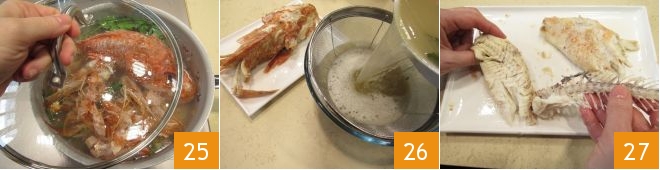
Cover the pot with a lid 25 and let it cook for about 30 minutes. Once cooked, remove the scorpionfish from the water while still intact, let it cool slightly, strain the stock obtained 26, and set it aside. Then debone the fish 27,
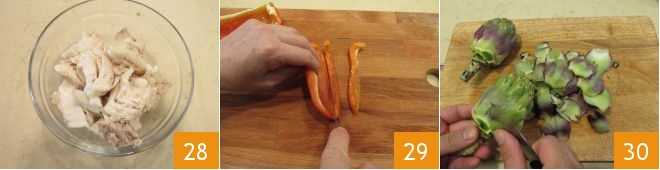
and set aside the flesh 28. Wash the bell peppers thoroughly under plenty of fresh running water and dry them with paper towels. Remove the top part, then use a knife to remove the white filaments and seeds inside; at this point, cut the pepper into strips 29. Then clean the How to clean artichokes: remove the toughest outer leaves 30, continuing until you reach the more tender ones;

remove the end part (which is the toughest) and remove any thorns from the remaining part of the stem 31, then remove the outer fibrous layer 32. Also, remove the inner fluff, or artichoke choke, then cut the hearts into strips 33.

Chop the shallot 34 and the chili pepper 35 and quarter the cherry tomatoes. Put the oil in a paella pan or large pan and add the garlic 36 (crushed, if you want to leave it, or whole, if you want to remove it after browning).

Add the chopped shallot 37 and chili pepper, let them soften, then add the bell peppers 38, the artichokes 39,

and the cuttlefish 40, and let them cook until the peppers are tender but still intact. Deglaze with white wine 41, then add the cherry tomatoes 42, let them soften, and lightly salt.

Add a portion of the stock 43, then dilute the tomato paste in a bit of stock and the filtered liquid from the mussels and clams 44, mix 45 and set aside.
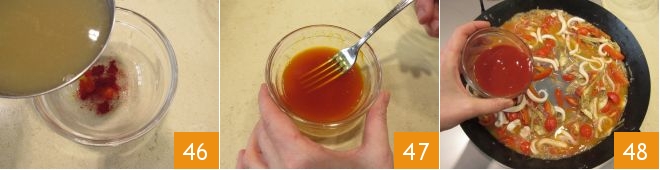
Also dilute the saffron in some stock and fish cooking liquid 46, mix 47 and set aside. Then add the diluted tomato paste 48,
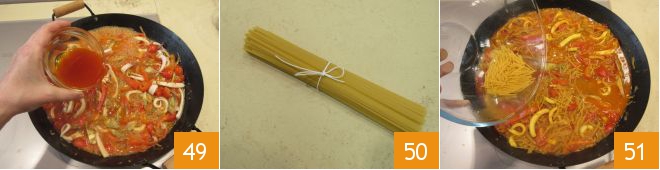
and saffron 49, then measure out the spaghetti 50 and start breaking them into a bowl while maintaining a length of about 1.2 inches, and pour them into the pan 51.

Cover them with the stock 52 and cook the pasta as if it were a risotto, adding a little stock at a time, when needed, and stirring often. Five minutes before the end of the spaghetti cooking time, add the shrimp 53, and after two minutes, the mussels 54
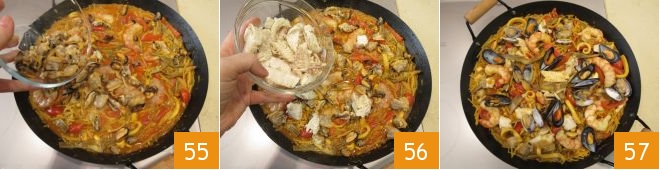
and the clams 55. Finally, add the scorpionfish flesh 56, adjust the salt, pepper, and let the cooking liquids dry out. When the pasta is al dente, turn off the heat and serve your fideuà, garnishing with the whole mussels you set aside! 57.