

Grass pea soup
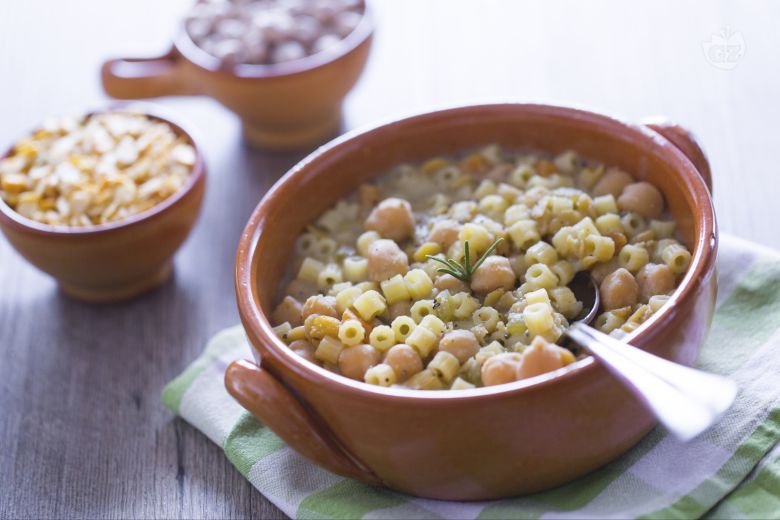
Grass pea soup is a tasty first course made with grass peas, topped with a drizzle of raw oil and slices of toasted bread.
- Easy
- 2 h 15 min
- Kcal 639
Pasta with chickpeas and grass peas is a staple on family tables across central Italy, especially in the beautiful Apennine hills and those charming countryside towns. And you know what? This pasta with chickpeas really shows how simple, local ingredients can give you something hearty and comforting without much fuss. Locals love using ditalini rigati—those small pasta tubes that capture every bit of flavor—and mix in both chickpeas and cicerchie, also known as grass peas. This combo makes the Italian chickpea pasta different from the classic pasta e ceci you might find in the southern regions. The earthy hints of rosemary and bay leaves simmered with the beans really, really shine. You’ll often get a big bowl served up hot or just warm, depending on the time of year, fitting perfectly with the comforting vibe.
In these central Italian regions, families have long relied on traditional Italian pasta recipes like this to make the most of what's in the pantry. Using legumes such as chickpeas and grass peas gives the dish a creamy, filling bite that feels great, especially when it's chilly outside. Pretty much perfect. Some versions even add cavolo nero (that’s Tuscan black kale) for extra texture and a bit of color, though the main stars are always those tender beans and the pasta soaking up all the flavors. Many say this kind of chickpea pasta dish is the heart of honest, everyday food—nothing fancy, just real, wholesome stuff. It’s quite forgiving: enjoy it hot and steamy or let it cool a bit for a soft, almost silky texture. No question, this pasta with grass peas shows the spirit of old-school, homey Mediterranean pasta meals, reminding us that comfort food doesn’t have to be complicated. Rediscovering these recipes is a fun way to explore new flavors and keep family traditions alive and well, bringing a taste of Italy’s heart right to your table. Super tasty.
You might also like:

To prepare chickpea and grass pea pasta, start by soaking the legumes in cold water for 12 hours. After the soaking time, drain the legumes, rinse them and set them aside, then prepare the Vegetable broth following our recipe (alternatively, you can use the same amount of water). Now proceed to make the soffritto: clean and finely chop the onion 1, the carrot 2, and the celery 3;

heat the oil in a saucepan, sauté the peeled garlic and chopped rosemary 4 (or you can leave the whole sprigs, as you prefer), then add the chopped onion, carrot, and celery 5 and the whole chili pepper 6, cooking over low heat for about ten minutes.

When the vegetables have softened, add the chickpeas 7 and grass peas 8 and sauté them for a couple of minutes with the soffritto so they take on flavor. Cover the legumes with vegetable broth or boiling water 9,

add the bay leaves 10 and cook over low heat for about 2 hours, adding a ladle of broth or water at a time as needed. After the cooking time, remove the bay leaves, garlic, and chili with tongs and adjust the salt and pepper. Transfer a third of the legumes to a tall, narrow container 11 and blend them with an immersion blender 12; keep the remaining legumes aside.

Pour the obtained cream into another pan and extend it with a ladle of broth 13. At this point, you can cook the gluten-free ridged ditalini in salted boiling water 14 for the time indicated on the package. When the pasta is cooked, drain it with a slotted spoon, and pour it directly into the pan with the legume cream 15,

then add the chickpeas and grass peas you set aside 16. Stir over low heat to mix everything well 17, adjust salt and pepper, and serve your chickpea and grass pea pasta hot or lukewarm 18!