


Savoy cabbage rolls stuffed with rice
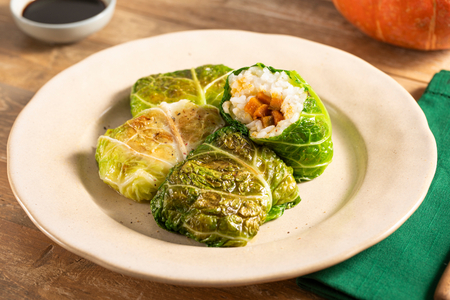
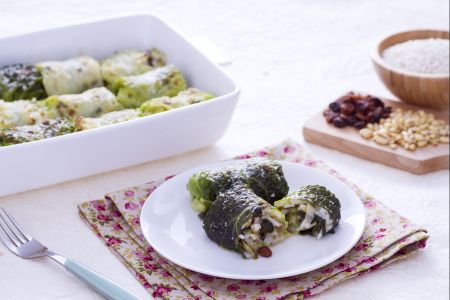
The savoy cabbage rolls stuffed with rice are a truly tasty main dish, rich in sausage and accompanied by a creamy fontina cheese sauce!
- Easy
- 1 h 5 min
- Kcal 363
Stuffed cabbage rolls with rice are a beloved fixture of Piedmontese home cooking, and capunet con riso is one of the most satisfying versions. What sets this particular preparation apart is the rice: before it ever meets the cabbage leaf, it is cooked in milk, which makes the filling noticeably softer and creamier than a standard grain stuffing. The leaves are then wrapped snugly around it and the rolls are finished slowly in the oven, arriving at the table hot and gratinated, with a faint crispness on top.
This is farmhouse food from Piedmont, traditionally made for Sundays and occasions that called for something more deliberate than a weeknight dinner. The dish fills the kitchen with a slow, warming smell as it bakes, and it comes to the table in a way that feels genuinely homey — substantial without being heavy. Serve it as a main course after a first plate, or let it stand alone as a one-dish meal on a cold afternoon. Either way, it holds up well and satisfies in the particular way that honest, rustic food tends to.
You might also like:
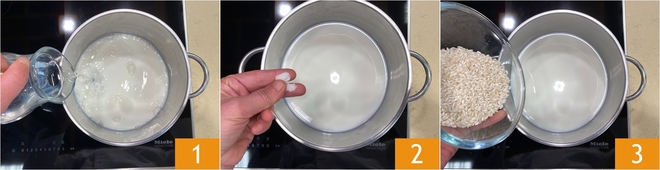
To prepare the capunet with rice, start with the latter: in a saucepan, combine the water and milk 1, add a pinch of salt 2, and heat over moderate heat. When it begins to simmer, pour in the rice 3 and cook for 12-15 minutes.

The rice should be well-cooked, not al dente 4. Drain it 5 and let it cool, being careful to keep the cooking liquid aside 6.
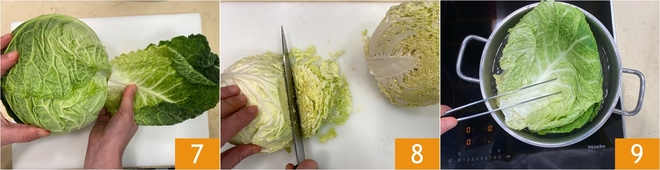
Take care of the cabbage: eliminate the outer and tough leaves, then set aside 10 whole leaves, which will be used to wrap the filling 7. Chop the inner core, which will be used in the filling of the roll 8. Blanch the whole leaves for a couple of minutes 9.
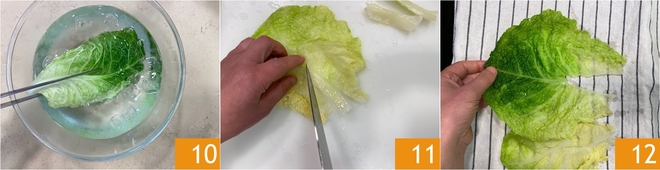
Drain them in ice water to stop the cooking 10. Now cut off the end of the central rib of the leaf, which is the toughest part 11, then lay them on a cloth 12.
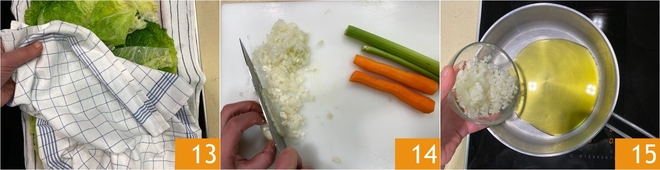
Dry them well 13 and set them aside. Prepare the filling: chop onion, celery, and carrot 14. In a saucepan, pour some oil and add the chopped onion 15.
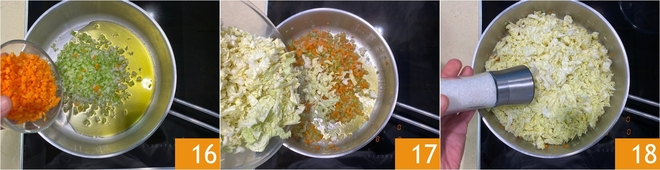
Add celery and carrot 16 and sauté for 5 minutes, then add the chopped core of the cabbage 17 and salt 18.
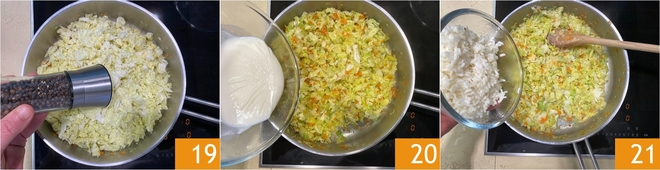
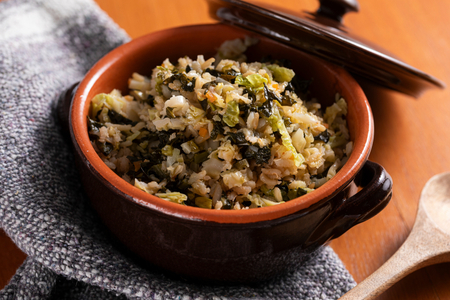
Season with ground pepper 19 and let it brown for 5 minutes. Now pour in some of the rice cooking liquid, just enough to soften the cabbage and aid the cooking. When the cabbage is soft, add the cooked rice 21.
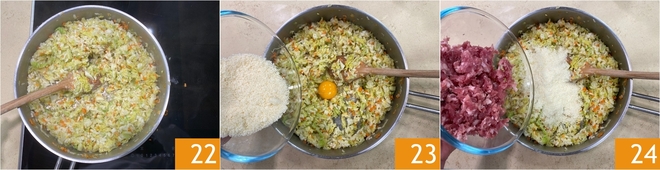
Stir and cook for another 5 minutes, just enough to dry everything well 22. Remove from the heat and let it cool. Then complete with the egg, grated cheese 23, and crumbled sausage 34.
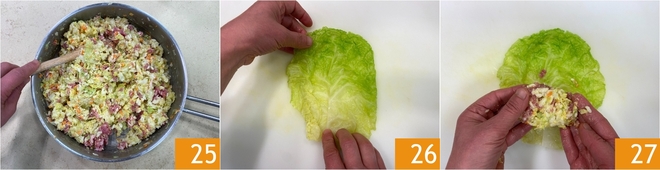
Stir to combine everything 25. Now assemble the capunet: spread the cabbage leaves on a cutting board 26, take a portion of filling and compact it in your hands to form a sausage shape 27, then place it in the center.

Fold over the side flaps 28 and then roll it from the bottom 29, keeping the seam facing down. Set aside the 10 rolls. Separately, season the tomato sauce with salt 30 and oil.

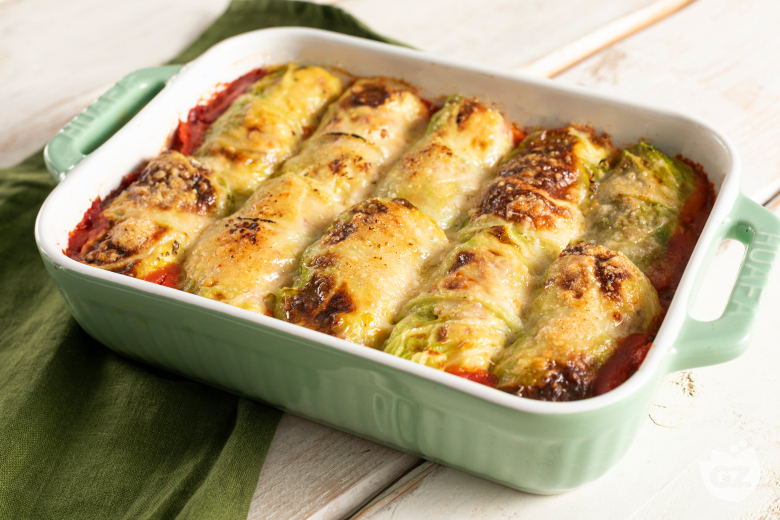
Take a baking dish and spread the tomato sauce at the bottom 31, then place the rolls 32 and distribute some butter chunks on top 33.
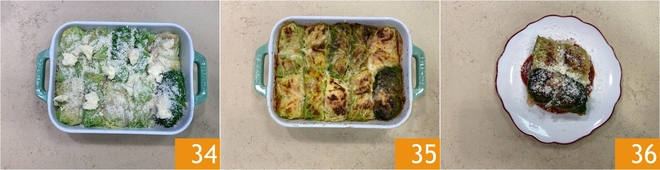
Sprinkle with grated cheese 34 and bake in a preheated convection oven at 350°F for 20 minutes. Take out your capunet with rice 35 and let them cool slightly before serving them 36!