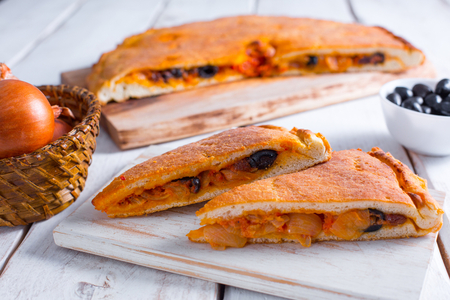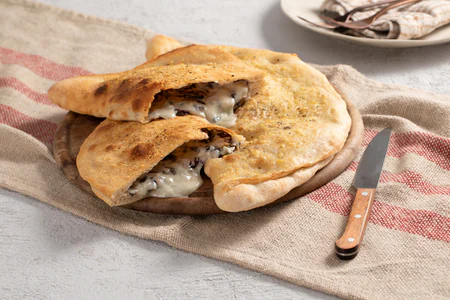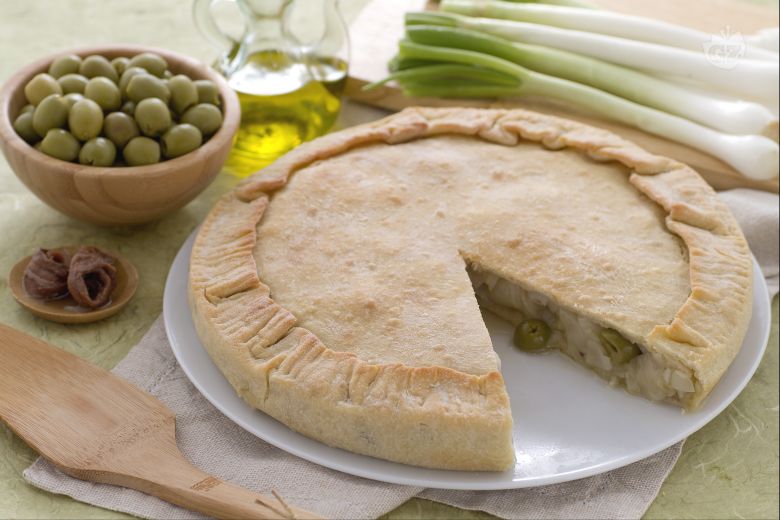

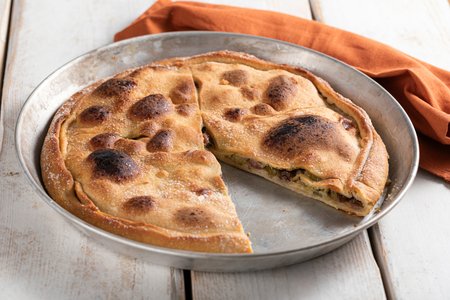
Sweet Onion Calzone
Discover the sweet onion calzone, a typical specialty of Valenzano known for its characteristic sweet-and-sour flavor: here is the traditional…
- Average
- 2 h 15 min
You know, in Puglia—this beautiful, sun-drenched spot in southern Italy—people really know how to take fresh ingredients and make something magical. Seriously good stuff. The calzone di sponsali is one of those treats. It’s not your oversized pizza-style calzone but more of a spring onion calzone, focusing on those sweet, young onions called sponsali. They cook them down with olives and anchovies until everything's just so so tender, and bursting with flavor. Pretty simple, really.
And the aroma? Amazing. It's all about these rustic, local ingredients coming together, making your kitchen smell fantastic. Each bite? It gives you a taste of that slightly moist filling wrapped in a golden, focaccia-style crust. Every family in Bari and nearby towns has its own twist—maybe a different dough, a bit of cod, or some raisins for a surprise. And here's the deal: This homemade calzone feels like something you’d find at a lively Puglian family table.
Thing is, you can swap in leeks or scallions if sponsali aren't around, though those local onions have this special sweetness that's hard to beat. But the magic—really—of this calzone recipe is using what you have and letting those Mediterranean flavors do their thing. People in Puglia love how flexible it is. Some prefer a more crispy crust, while others go for thicker and soft, with different fillings depending on what’s on hand or who's popping over for dinner.
And look, it’s great for lunch, a snack, or part of a bigger meal when you're craving that fresh-baked, golden aroma. If you're digging for calzone filling ideas, this one's like finding a local secret. Whether you call it a green onion calzone or stick to the traditional name, this dish is Italian cooking at its most welcoming. And simple, flavorful, and loaded with history from the heart of Puglia. For real.
You might also like:
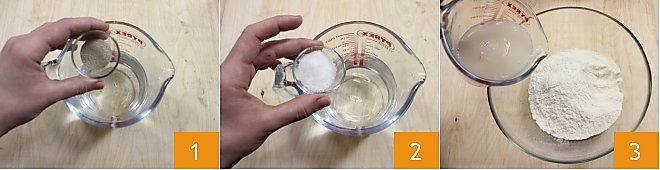
To prepare the calzone with spring onions, make the base dough (we used the recipe for Pizza dough without oil): divide the total amount of lukewarm water into two parts and dissolve the sugar and dry yeast in one part (alternatively, you can use 8 g of fresh yeast) 1 and the salt in the other 2. Mix until everything is well dissolved and then pour the liquids into a bowl where you have sifted the flour; first, pour the water with yeast and sugar 3 and
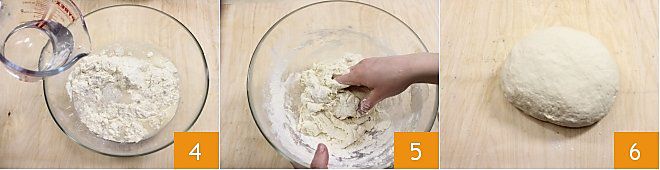
then gradually add the water with salt 4. Gather the ingredients with your hands, kneading well, and when you have collected them all 5, turn the dough onto a work surface and continue to work it with your hands until you reach the desired consistency, which should be soft and elastic. You can perform these operations with a stand mixer, first gathering the ingredients at medium speed with the paddle and then continuing to knead with the hook. Once your dough is smooth and soft, form a ball 6 and place it in a bowl, covered with plastic wrap, to rise for 1-2 hours, in a warm environment, until it has doubled in volume.
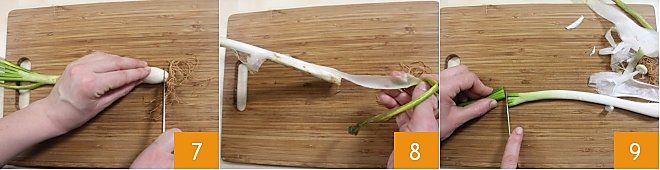
In the meantime, clean the spring onions: remove the root at the bottom 7; pull off the outer membrane 8 and also cut the less tender upper green part 9.
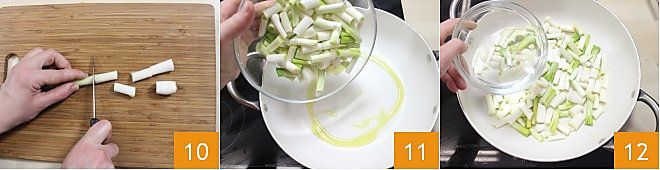
Coarsely chop the spring onions 10 and stew them with a drizzle of oil, over low heat, in a non-stick pan 11. The spring onions should cook slowly: add a bit of water 12 and let them wilt for about 15 minutes. The spring onions should remain white and not take on too much color (otherwise they will be indigestible) but they should soften.
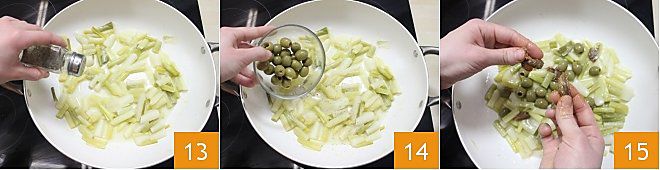
At the end of cooking, lightly salt and generously season with black pepper 13, then add the pitted olives (whole or in pieces) and the anchovies, breaking them with your hands 15. If there is a lot of liquid in the pan, let the spring onions dry out for a few more minutes. Stir with a spoon, turn off the heat, and let the filling cool.
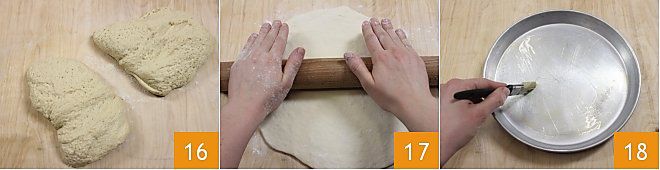
Take your dough, which will be well puffed, divide it into two equal parts 16 and roll out the first piece with the help of a rolling pin into a round sheet 17, about 12-12.5 inches in diameter (approximately 1.5 inches larger than the diameter of the baking tin), about 1/8 inch thick. Grease a low-edged baking tin with a diameter of 9.5-10 inches with oil 18 and
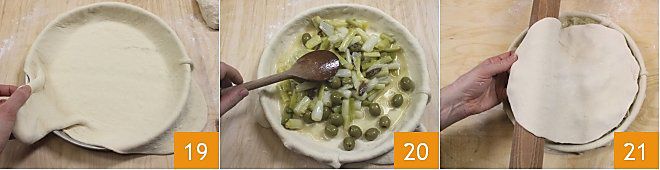
line it with the sheet of dough, leaving a few inches of dough outside 19. Fill the calzone with the spring onion filling, spreading it evenly over the entire surface 20. Roll out the remaining dough into a smaller disc, about 9-9.5 inches in diameter, and cover the calzone with it 21. If the top disc is very large, trim the excess dough.
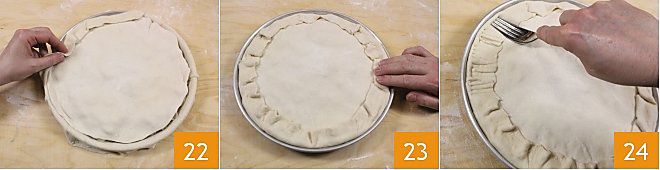
Then close the calzone, folding the edge along the entire perimeter (22-23) and seal the edges by pressing with the tines of a fork 34.
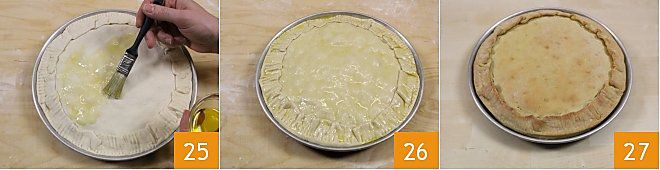
Brush the entire surface of the calzone with oil, so it will brown in the oven (25-26) and bake it in a preheated static oven at 356°F for about 30-40 minutes (if convection, 320°F for 25-35 minutes). Remove your spring onion calzone from the oven 27, let it cool slightly and succumb to its irresistible aroma!