Beyond Cornbread and Grits: 5 Ways Northern Italy Cooks With Cornmeal
Is cornmeal only for cornbread and grits? These five Italian recipes, from sausage over soft polenta to a lemon and almond cake, show what Northern Italy does with it.
Same Grain, Very Different Dinners
In the US, cornmeal mostly means cornbread and grits. In Northern Italy the same grain, cooked slowly in water, becomes polenta: soft and creamy fresh from the pot, firm enough to slice, layer, pipe, or fry once it cools. It also goes into cake. These five recipes show the range, from a sausage supper to a dessert, for the cold days ahead.
Sausage with Red Wine and Polenta
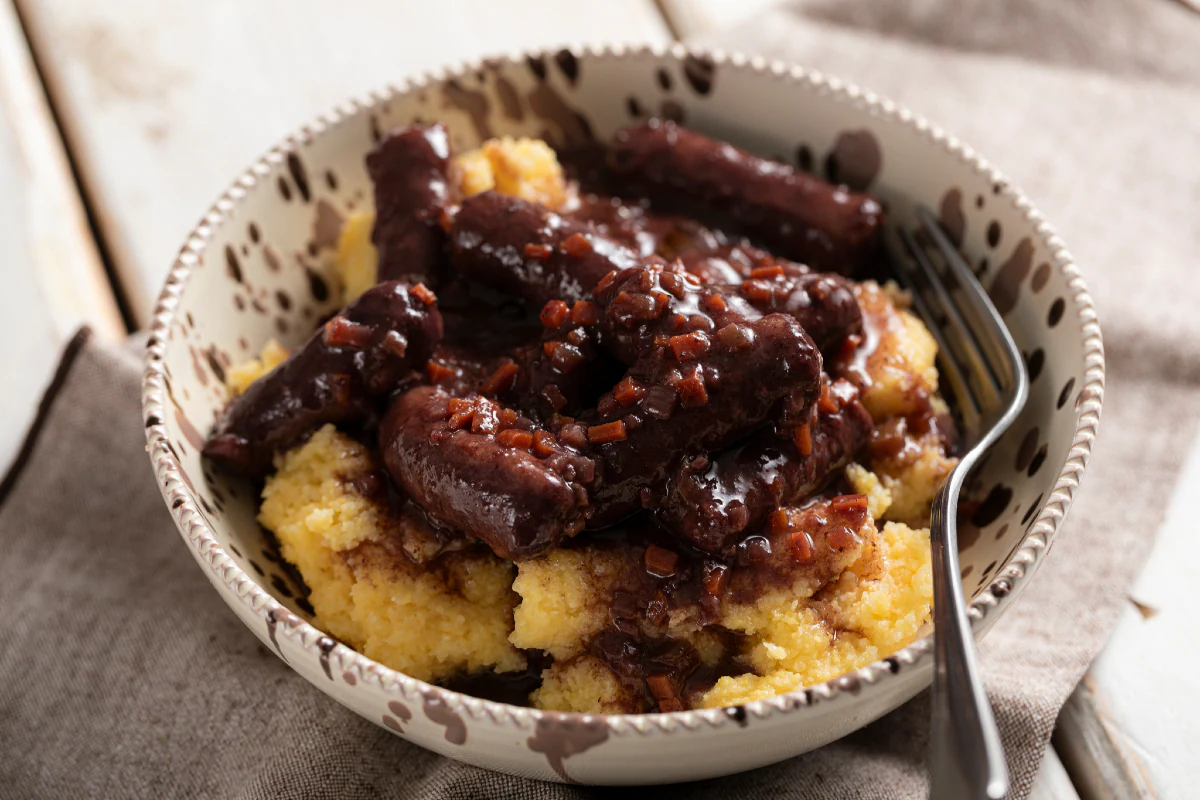

Sausage with Red Wine and Polenta is the classic pairing. Floured sausage pieces brown, then simmer for 45 minutes under a lid in red wine with sage, rosemary, and juniper berries. The polenta cooks alongside, and the sausage goes into a well in the middle of the plate.
Pro tip: dredge the sausage in just a thin coat of flour and shake off the excess. That’s what thickens the wine into a sauce.
Baked Polenta


Baked Polenta is popular in Piedmont, Lombardy, and Veneto. Cooked polenta goes into a baking dish in four layers, with cubes of Asiago, fontina, and gorgonzola between them and grated Grana Padano on top. It bakes at 356°F for about 20 minutes, until golden and gooey. The recipe is vegetarian and gluten-free.
Pro tip: short on one of the cheeses? The recipe says mozzarella, smoked scamorza, or brie all work.
Polenta Fries
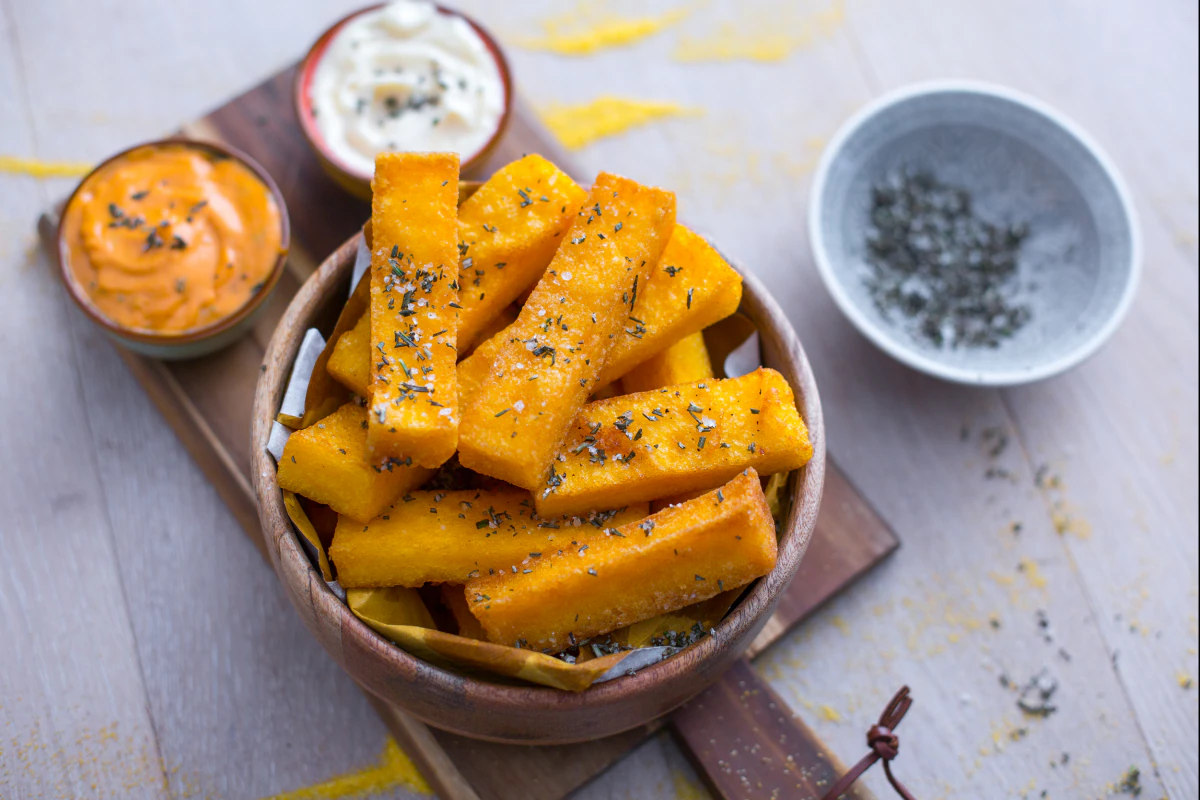

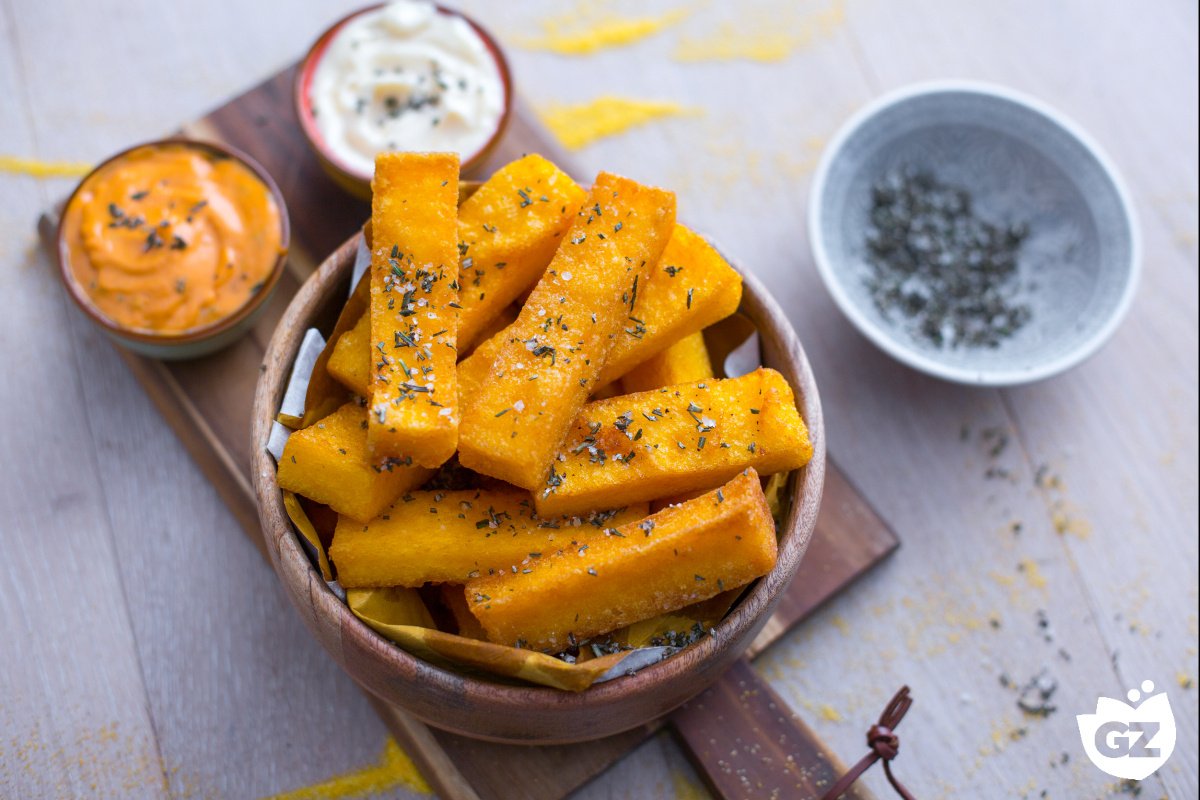
Polenta Fries turn polenta into a snack. It’s spread about half an inch thick, chilled for at least two hours, cut into sticks, and fried at 355°F for about eight minutes. A mix of chopped rosemary and coarse salt goes on top. They’re vegan, and a lighter version bakes at 430°F for about 15 minutes.
Pro tip: level the surface with parchment paper and a rolling pin before chilling. The sticks come out even and smooth.
Savory Polenta Tart

Savory Polenta Tart has no pastry at all. A Lombard twist on a savory pie, it gets its crust from polenta piped into the pan in concentric circles and along the rim. The filling is luganega sausage with porcini and champignon mushrooms in béchamel, finished with a polenta lattice. It bakes at 392°F for 45 minutes and is naturally gluten-free.
Pro tip: let the polenta cool before you pipe it into the pan, so it holds its shape.
Amor Polenta
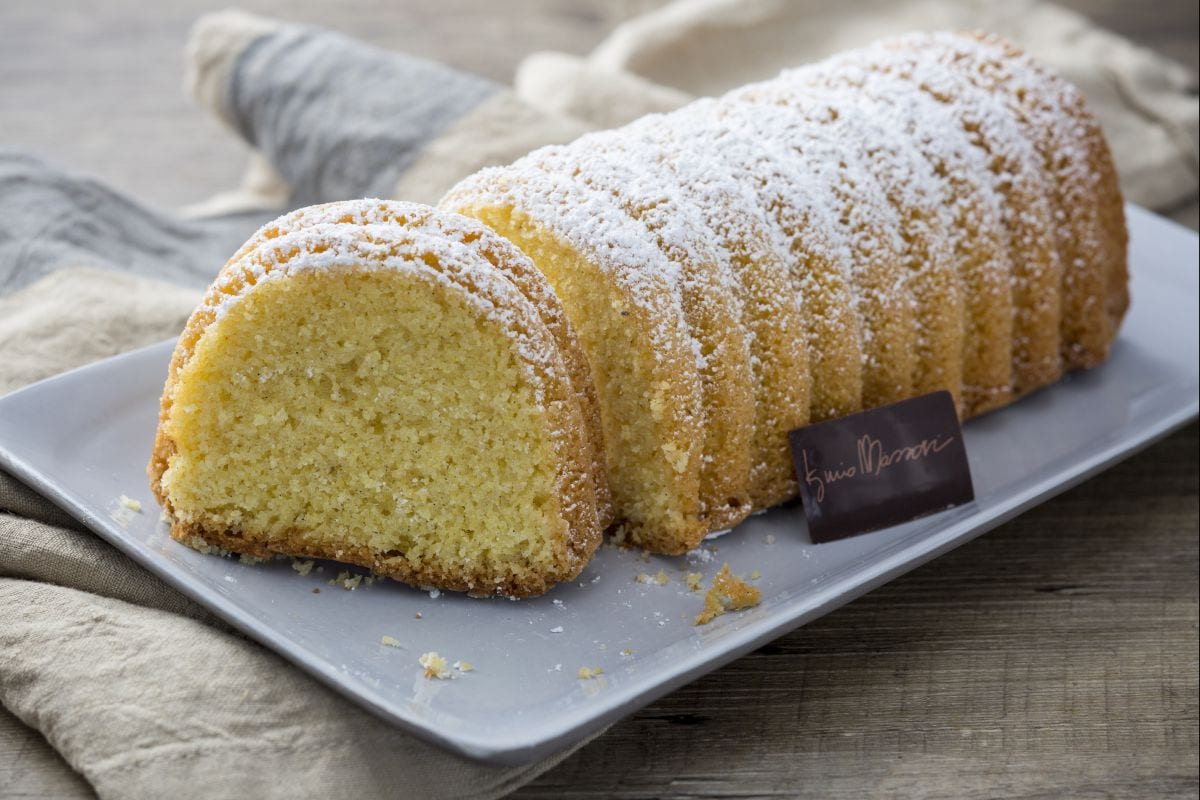

Amor Polenta is the Lombard cake from Varese, also called Dolce di Varese, in a recipe by pastry master Iginio Massari. Fine cornmeal gives it a golden color, and it’s mixed with almond flour, butter, vanilla bean, and the grated zest of an untreated lemon. It bakes for an hour at 330°F in the traditional ridged mold, and Massari’s advice is to serve it with nothing but powdered sugar. The cake keeps for a week at room temperature.
Pro tip: let the cake cool before you take it out of the mold. No ridged mold? A plum cake pan of the same size works, and the recipe suggests pine nuts on top.
More Than a Side Dish
Corn gives all five their golden color and a mild flavor that cheese, sausage, and almonds can lean on. It can be the backdrop to a stew, the crust of a tart, a crunchy snack, or the base of a cake, which is a wider range than most cornmeal ever gets.