What Italy Does With Grapes Besides Making Wine
What does Italy actually do with grapes besides turning them into wine? These six recipes, from a Parmesan and grape tartlet to a veal roast finished with the fruit, show just how far it goes.
What's Actually Inside a Grape
Underneath the skin, a grape is mostly juice and just enough acidity to keep it from tasting flat — which is exactly why it works in both directions, sweet and savory. Cooked down, that juice concentrates into something close to a light syrup, able to stand in for wine in a sauce or for stock in a risotto. These six recipes lean on that range.
Boats with Parmesan Cream and Grapes
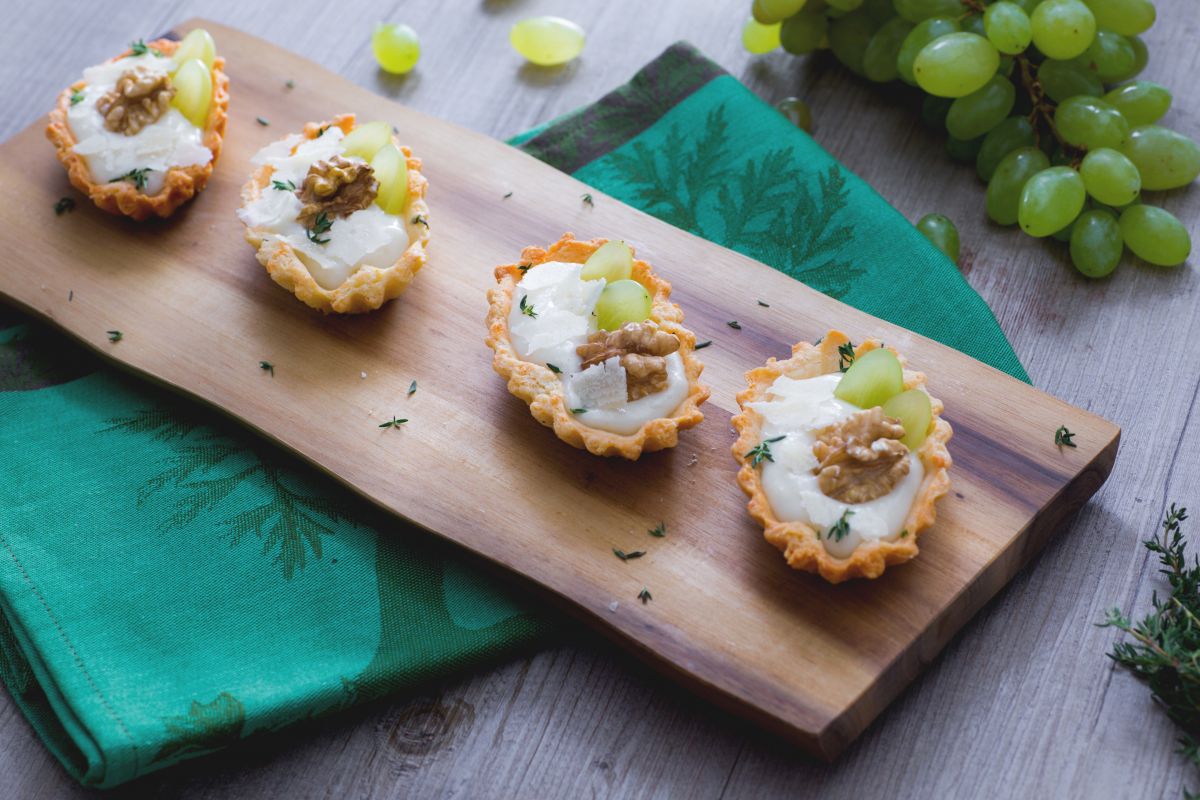
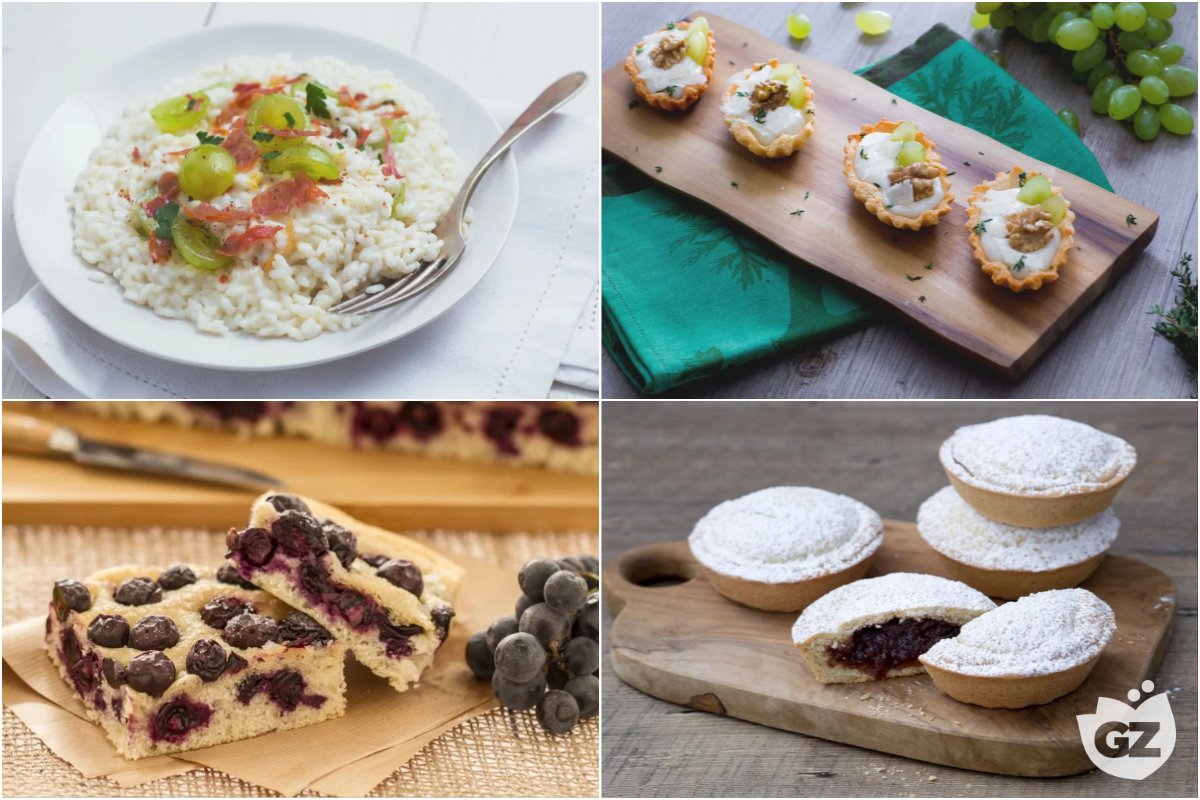
Boats with Parmesan Cream and Grapes blind-bakes small boat-shaped tartlet shells from a Parmigiano shortcrust, fills them with a velvety Parmesan béchamel, then tops each one with three slices of white grape, half a walnut, and a few Parmigiano shavings. Northern Italy's favorite move — pairing cheese with fruit — shrunk down to a single bite.
Pro tip: slice the grapes lengthwise into thirds rather than crosswise into rounds — the elongated pieces fit the narrow boat shape and show off more of the fruit on top.
Grape Risotto
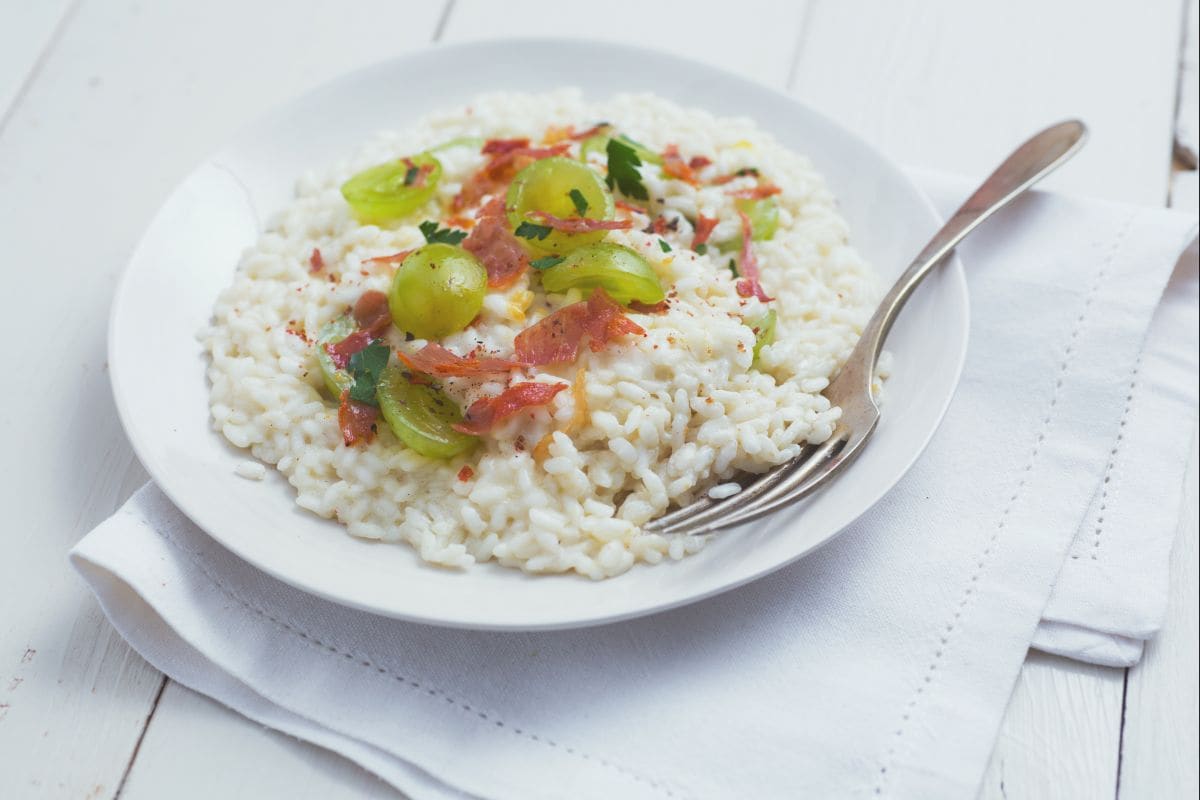

Grape Risotto deglazes the rice with fresh grape juice instead of wine, finishes with quartered grapes and Robiola for creaminess, and plates it with crisped prosciutto crumbled on top. Sweet fruit, salty cured meat, and a fresh cheese doing the work butter usually does.
Pro tip: don't stir the rice too often while it cooks — frequent stirring releases more starch than this dish needs, and the grape juice already does a lot of the creaminess work on its own.
Chicken Bites with Grapes
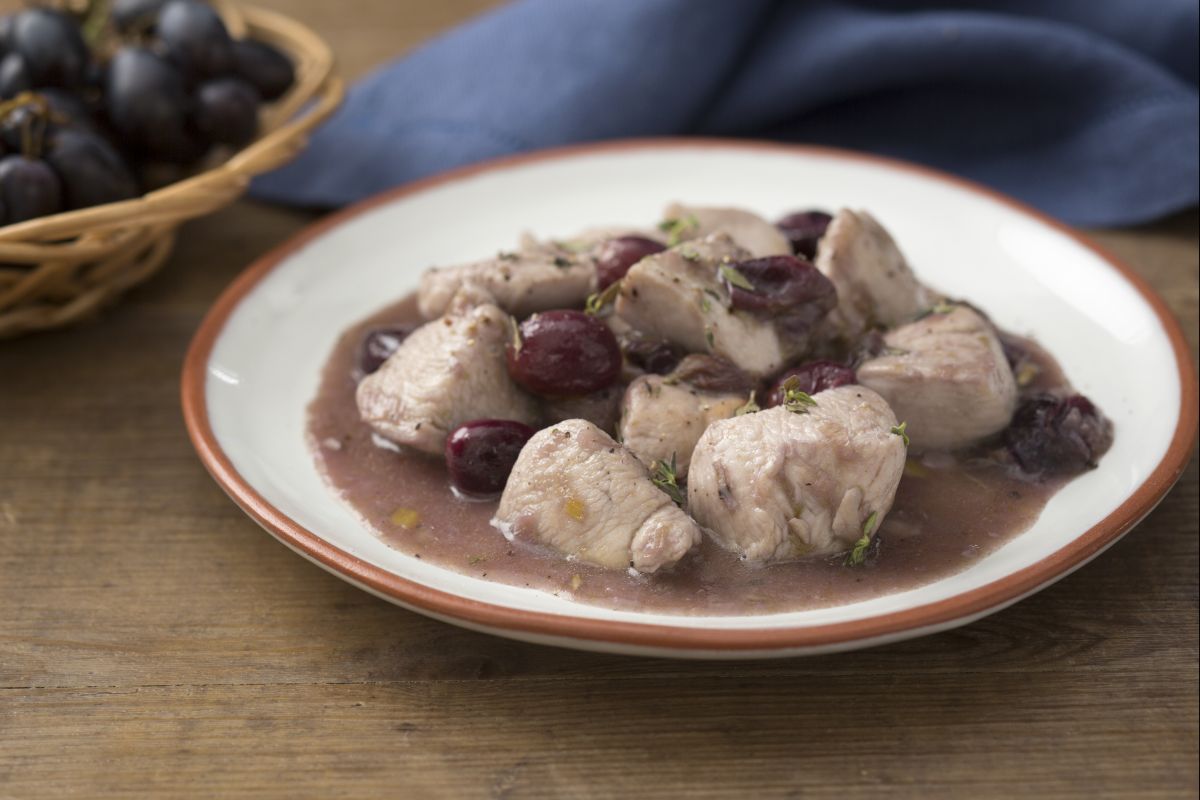
Chicken Bites with Grapes browns chicken breast with leeks and fresh ginger, deglazes with Marsala wine, then finishes with grapes that were separately cooked down in a covered pan until soft. Cornstarch thickens everything into a sauce built for the first cool nights of the year.
Pro tip: cook the grapes covered and separately from the chicken before combining them — steaming them first softens the skins so they melt into the sauce instead of staying firm and distracting from the texture of the chicken.
Veal Roast with Grapes
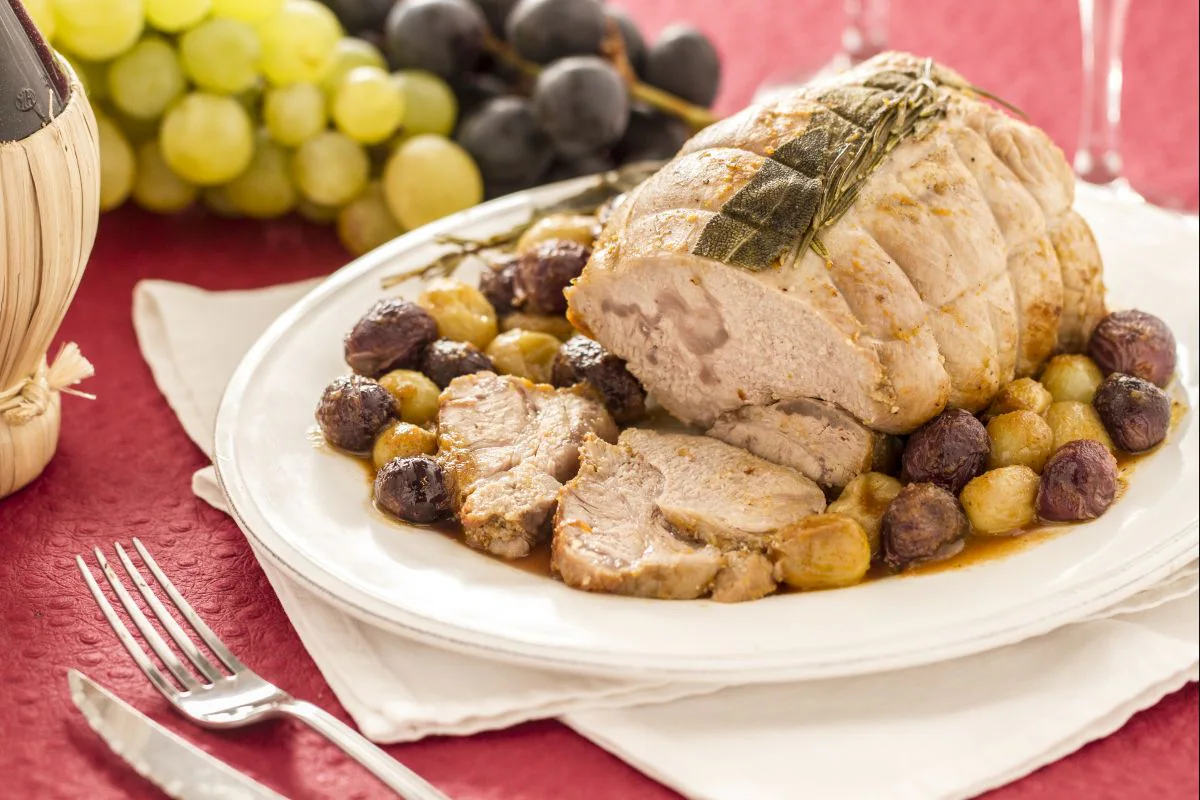
Veal Roast with Grapes browns a veal roast with herbs before finishing it slowly in the oven with white wine and vegetables, adding both white and black grapes only in the last 20 minutes so they soften without turning to mush. A Sunday roast built around the grape harvest instead of around it.
Pro tip: let the wine fully evaporate before the roast goes into the oven — skipping this step leaves a sharp, unresolved edge that the long cooking time won't correct later.
Grape Flatbread
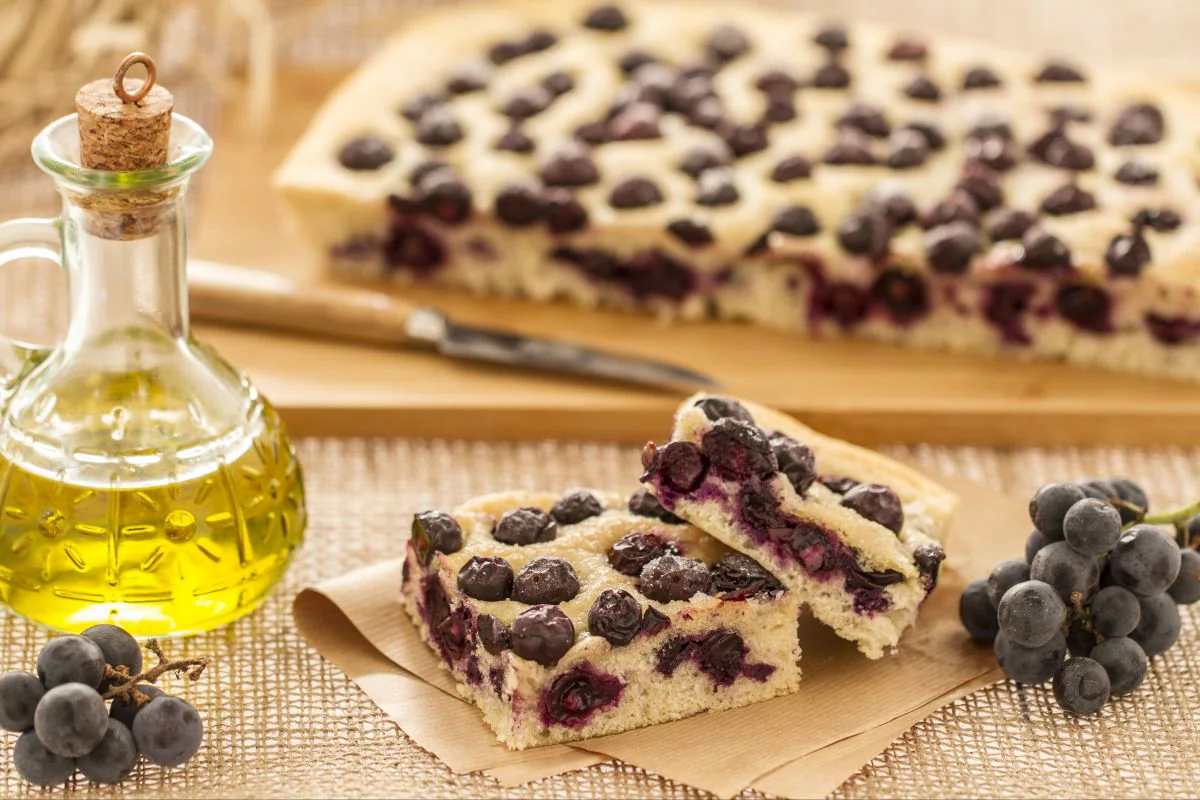
Grape Flatbread layers a sweetened bread dough with whole grapes and sugar twice over, sandwiching the fruit between two sheets before a long bake turns the grapes soft and jammy inside. Tuscany's answer to what to do with a harvest that's bigger than the winery needs.
Pro tip: don't skip letting the dough rise the full two hours — a shorter rise leaves the bread dense enough that it can't hold up under the weight of two full layers of grapes.
Bocconotti

Bocconotti encases a filling of homemade black grape jam, dark chocolate, and almond flour inside a cinnamon shortcrust, sealed into small inverted-cone pastries and baked until golden. An 18th-century Abruzzo recipe that turns the same grape jam found on toast into something considerably more architectural.
Pro tip: let the grape jam cool completely before mixing in the chocolate and almond flour — adding them to warm jam melts the chocolate prematurely and turns the filling runny instead of holding together inside the pastry.
A Fruit That Plays Well With Almost Anything
Sharp Parmesan, rich veal, warm chocolate, simple bread dough — grapes slide into all of it without ever fighting for attention. Sweet enough to work with cheese, mild enough to sit next to meat, sturdy enough to hold its shape in an oven for an hour: that kind of range is rare in a single piece of fruit. Wine gets the glory every autumn, but the grape itself was always capable of more.