Five Italian Sweets Made to Welcome Back the Dead
Long before trick-or-treating, Italian families honored their dead with almond cookies, spiced breads, and chocolate. Here are five regional sweets that still fill bakery windows every November.
In Sicily, children used to go to bed on the night of November 1 hoping the dead would pay them a visit. By morning, if they had been good, they’d find small gifts and trays of sweets left behind by grandparents and great-grandparents they had never met. Italy’s Day of the Dead falls on November 2, and while it has nothing of the costumes and candy of Halloween, it shares something with Mexico’s Día de los Muertos: the idea that remembering is a reason to gather, and that the dead deserve something sweet. Every region answers that idea with its own recipe, and bakeries from Milan to Cagliari stock them for just a few weeks a year.
Pan dei Morti (Bread of the Dead)

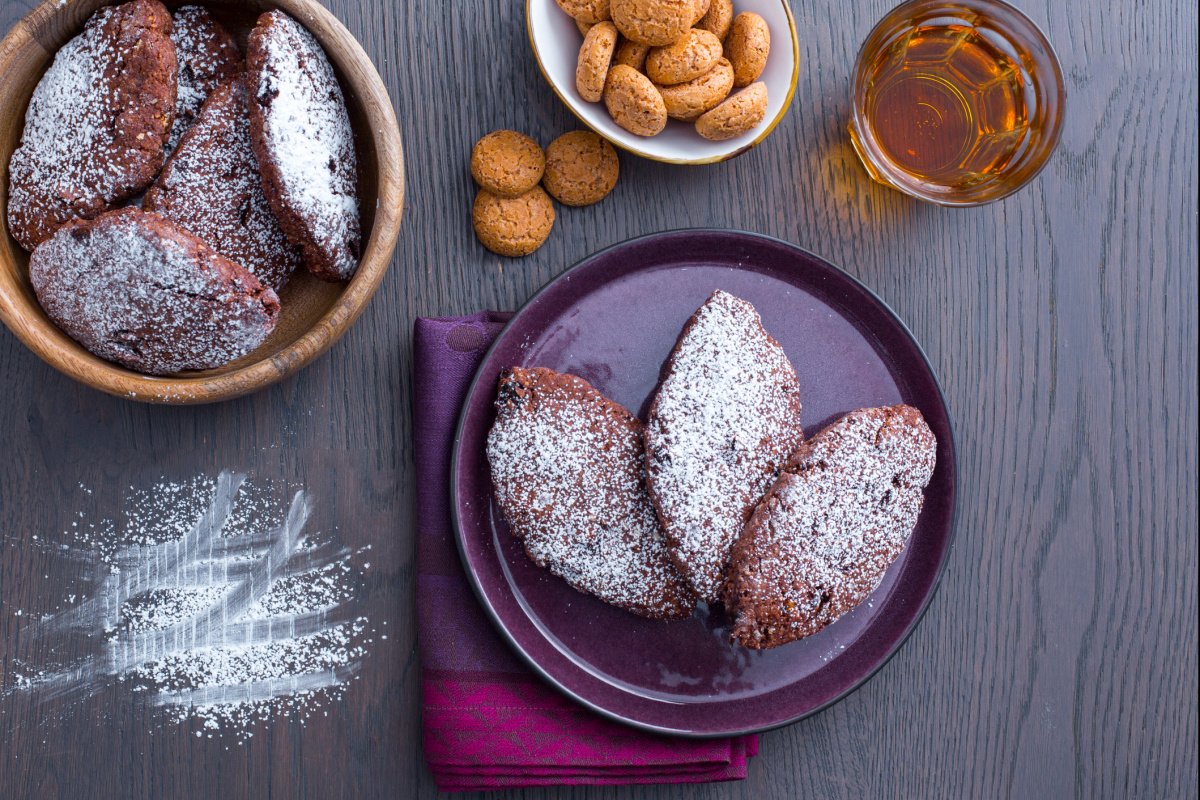
Pan dei Morti is Milan’s contribution to the holiday, a dense, flat, oval cookie dusted with powdered sugar that shows up in Lombard pastry shops as early as September. The dough is a clever use of the pantry: crushed amaretti, ladyfingers, and dry cookies, bound with egg whites and studded with dried figs, raisins, and almonds. Cocoa, cinnamon, nutmeg, and a pour of vin santo give it a deep, spiced flavor that recalls gingerbread. The texture is chewy rather than crisp, and it gets better as the days go by. Mexico has its own pan de muerto for the same occasion, a sign of how far this tradition reaches.
Fave dei Morti

Fave dei morti are tiny round almond cookies made from Umbria to Veneto, and their name means “beans of the dead.” Fava beans were tied to the memory of the departed since ancient Roman times, and these cookies keep the shape while swapping in something much sweeter. Ground almonds and pine nuts form the base, perfumed with lemon zest, cinnamon, and a splash of grappa. They bake just until lightly golden, staying tender at the center. A single batch makes dozens, which is exactly the point: they’re meant to be shared.
Rame di Napoli

Rame di Napoli come from Catania, in Sicily, despite a name that points straight to Naples. The most popular story ties them to a copper coin minted under the Bourbons after the Kingdoms of Naples and Sicily were joined; Sicilians answered with a cookie shaped like the new money. They’re soft cocoa cookies with a warm, spiced flavor, brushed with orange marmalade and dipped in dark chocolate. A shower of ground pistachio finishes each one in true Sicilian style. In Catania they sit alongside other holiday treats on trays that families pass around all through early November.
Torrone of the Dead


Torrone of the Dead is Naples’ answer to the holiday, and it has nothing to do with the hard honey nougat Italians eat at Christmas. Here, a chocolate shell is filled with creamy hazelnut spread and whole hazelnuts, then sliced into thick, rich bars. Neapolitans affectionately call it ‘o murticiello, and in early November stalls across the city sell it in every flavor imaginable, from coffee to pistachio. No oven is needed, which makes it the most approachable recipe of the five. The hard part is waiting for it to set before cutting the first slice.
Papassini Sardi

Papassini sardi are Sardinia’s diamond-shaped All Saints’ Day cookies, impossible to miss with their bright white icing and colorful sprinkles. The name comes from papassa, the Sardinian word for raisins, which give the dough its sweetness alongside toasted almonds. Some families add sapa, a cooked grape must syrup, for an even deeper aroma. The glossy white topping, which locals call the cappa, sets crisp over a tender, crumbly cookie. They keep well for a week, so a tin of papassini often lasts well past the holiday.